Resignation 'to relieve the government' raises question: How are ministers chosen in Egypt?
Resignation 'to relieve the government' raises question: How are ministers chosen in Egypt?
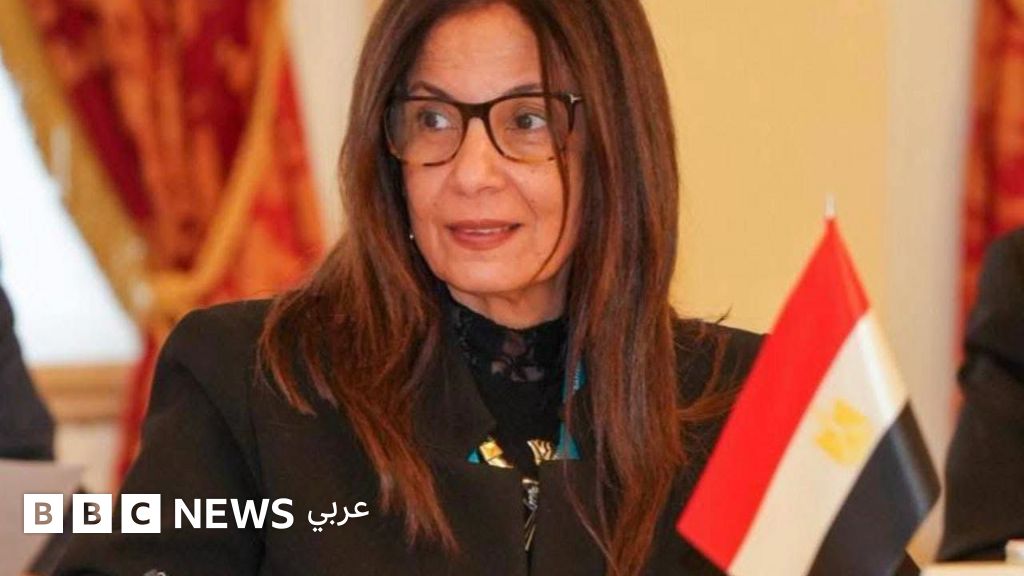
Image caption: Minister of Culture Jehan Zaki submitted her resignation, saying she made the decision 'to relieve the government'
Article Information
Author, BBC News Arabic - Cairo
Published 2 hours ago
Reading time: 6 minutes
About five months after being appointed Minister of Culture in Egypt, Jehan Zaki submitted her resignation last Tuesday to Prime Minister Mostafa Madbouly, saying she made the decision 'to relieve the government', after the Court of Cassation rejected her appeal against a court ruling in a case involving accusations of violating the intellectual property rights of Egyptian writer Soheir Abdel Hamid.
Zaki's resignation reignited debate about the mechanism for selecting ministers in Egypt, especially since an initial ruling against her was issued before she assumed office, and whether procedures for vetting candidates for ministerial positions are sufficient before their appointment.
The Court of Cassation had rejected two appeals filed by Zaki, making the ruling final, as the verdict was based on an expert report indicating verbatim copying and lengthy quotations between her book 'Coco Chanel and Qut al-Qulub.. Braids of Formation and Treason' and the book 'Lady of the Palace: The Assassination of Qut al-Qulub al-Demerdashia' by writer Soheir Abdel Hamid.
Under the ruling, Zaki was ordered to pay compensation of 100,000 Egyptian pounds (about 2,000 US dollars) to the writer, and to withdraw the disputed book from the market.
Zaki had previously denied that what was in her book constituted plagiarism, and said in a statement after the ruling that she respects the rulings of the Egyptian judiciary, and that she will continue to take available legal measures, including seeking a review of the verdict as permitted by law.
Resignation or dismissal?
The controversy was not limited to the reasons for the resignation, but extended to the nature of the decision itself: Was it a voluntary resignation by the minister, or a dismissal in the form of a resignation?
Khaled Dawoud, a member of the Egyptian Social Democratic Party, believes that the continuation of the judicial process after the initial ruling was issued before Zaki assumed the ministry should have led to her not being appointed in the first place, or to her resigning later.
Dawoud says the minister found herself in an awkward position after the final ruling, considering that what happened was 'closer to forced resignation'.
Skip to most read and continue reading
'Scandal' or 'correct decisions': Refereeing controversy after Egypt's dramatic World Cup exit
Trump says latest escalation with Iran will end 'quickly'
Approval of Fadel Shaker's release: How did the story begin and where did it go?
Iraqi Shiites between Saddam's era and Khamenei's procession
He links this to the ongoing controversy about other ministers in the government, including the Minister of Education regarding the validity of his doctorate, and the Minister of Housing who faced investigations into violations during her previous work at the ministry, according to him.
In contrast, Talaat Taha, Managing Editor of Al-Gomhuria newspaper, believes that the resignation is a credit to the Egyptian government even if it was coordinated before its announcement, 'because it reflects respect for judicial rulings'.
As for Amr Hashem Rabie, Deputy Head of Al-Ahram Center for Political and Strategic Studies, he believes that what happened was 'a dismissal in the form of a resignation' to preserve Zaki's image as a minister, but he also considers that handling the ruling reflects the government's keenness to respect the judiciary.
He adds: 'The government was late, but it settled the matter by respecting the judicial ruling, and better late than never.'
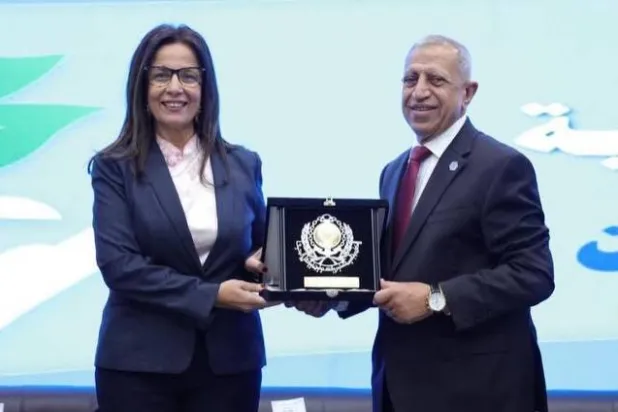
Image caption: Zaki took the constitutional oath as Minister of Culture in February of this year
Unusually rapid resignation
Zaki's resignation came shortly after she assumed office, making it one of the rare cases in the history of ministerial resignations in Egypt.
Amr Hashem Rabie says ministerial resignations in Egypt are limited, often related to moving to a higher position, major incidents, or health reasons.
Zaki's resignation is the third fastest resignation of an Egyptian minister, after the resignation of Foreign Minister Mohamed Riad in 1977, hours after his appointment, in protest of the late President Anwar Sadat's visit to Jerusalem, and the resignation of Culture Minister Gaber Asfour in 2011, only nine days after assuming office for health reasons.
Zaki had assumed the presidency of the Grand Egyptian Museum in May 2024, before leaving the post after about four months, in a step whose reasons were not officially announced at the time. She was also appointed by the Egyptian president as a member of parliament.
The Octagon: Why is the new Egyptian Defense Ministry building controversial?
Image caption: Zaki had previously denied that what was in her book constituted plagiarism
Mechanism for selecting ministers
Skip podcast and continue reading
Worth paying attention to
In-depth explanation of major events and topics, to help you understand the most important changes around you and their impact on your life
Episodes
End of podcast
The Jehan Zaki case reignited debate about the way ministers are chosen in Egypt, a process whose full details are not announced to the public, but which experts told the BBC is subject to screening and verification procedures before appointments are announced.
Amr Hashem Rabie, Deputy Head of Al-Ahram Center for Political and Strategic Studies, believes that the mechanism for selecting ministers faces a number of challenges, including the large number of ministerial portfolios, which total about 30, increasing the likelihood of errors in selection compared to other countries where the number of ministries is around 20.
Rabie points out that the process of selecting ministers is also affected by the multiplicity of entities that vet the nominated names, in addition to time constraints, which may affect the accuracy of the screening process.
He says: 'There is a duplication of work and confusion between the sovereign bodies that vet the nominated names, which makes the vetting of names inaccurate, and thus ministers may be chosen without thorough vetting.'
According to Rabie, the vetting of candidates for various ministries in Egypt is carried out by several entities, most notably the National Security Agency under the Egyptian Ministry of Interior, and oversight bodies such as the Administrative Prosecution, the Administrative Control Authority, and the General Intelligence.
Image caption: Cover of the book 'Lady of the Palace: The Assassination of Qut al-Qulub al-Demerdashia' by writer Soheir Abdel Hamid
But Khaled Dawoud believes the discussion is not only about screening and vetting mechanisms, but also about the way the names themselves are chosen, considering that personal and political considerations may play a role in some cases.
The member of the Egyptian Social Democratic Party says personal relationships and political loyalty may influence the selection of ministers in Egypt, which in his view is reflected in the evaluation of the names put forward, and was among the factors that led to the selection of Zaki for the Ministry of Culture.
He adds: 'This mechanism is inaccurate, as evidenced by the recent ministerial changes that led to the dismissal of ministers whose performance was good and the retention of unworthy ministers, and perhaps this also led to the welcome of her resignation. No one explains to us as journalists or as workers in the general political field why a decision is made to keep the current prime minister in his post for all these long years, even though his track record on the ground is not necessarily the most positive. The general feeling is that the government and its ministers are not the ones making and taking decisions.'
Original source: BBC Arabic



Comments (0)
Be the first to comment.