South Korea Seeks North's Help to Find Missing Sailor
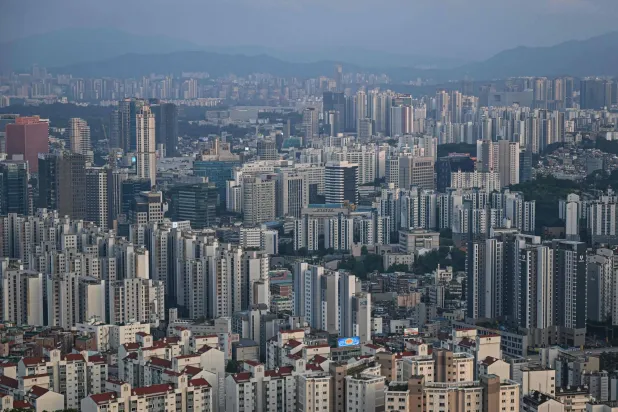
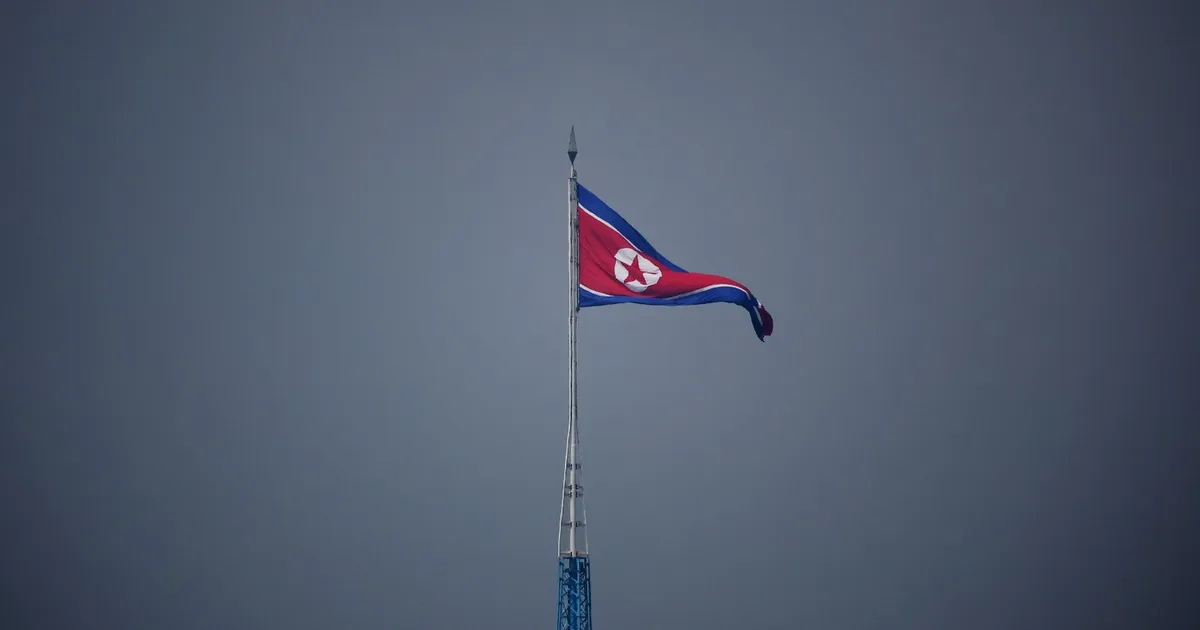
South Korea's Unification Ministry said Sunday it is seeking North Korea's assistance in locating a missing sailor near the inter-Korean border on the east coast.
Shortly after Russian forces invaded Ukraine in February 2022, Western countries expelled hundreds of Russian spies from their capitals and blacklisted companies linked to the Kremlin. The aim of this coordinated campaign was to make it harder for Moscow to gather intelligence and obtain vital equipment and technologies such as microchips, transmitters, and machinery used in weapons manufacturing.
But Western officials say dozens of those agents expelled from Western countries later turned up in an unexpected place: Japan.
Japan's weak counterintelligence laws, combined with its thriving advanced technology sector, have made the country a key part of Russia's efforts to sustain its military capability. According to Ukrainian government estimates, about 90 percent of Russian missiles and drones contain Japanese components.
At the heart of these operations in Tokyo is a secret Russian military intelligence unit called the '20th Directorate,' whose role has not been previously revealed publicly. Current and former officials from five Western intelligence agencies say members of this unit operate under the cover of diplomats or businessmen, seeking to buy or steal military technologies used on battlefields and smuggle them to Russia.
The unit's operations in Tokyo are overseen by a man who maintains a false identity as an employee of the Russian state airline Aeroflot, according to current officials from four Western intelligence agencies. The officials confirm he plays a central role in supplying Russia's war machine with necessary equipment.
The results of these efforts are clearly visible in the night attacks targeting Ukrainian cities and the protracted battles on front lines. Four years into a war that has killed hundreds of thousands and destroyed entire cities, officials say Russia's continued ability to fight is partly due to its acquisition of advanced technologies, including those obtained from Japan.
Spies from Russia's Main Intelligence Directorate (GRU) have used jobs at Aeroflot as a cover for their activities since the Soviet era.
After a Russian Kh-101 missile destroyed a residential building in Kyiv, killing at least 24 people in May, investigators examined the missile's wreckage. According to a Ukrainian assessment, they found the missile relied on Japanese components that are widely banned from export to Russia.
Based on secret government documents, corporate records, and interviews with dozens of intelligence and government officials across three continents, The New York Times has begun to reveal how the '20th Directorate' operates and the critical role Moscow's intelligence station in Tokyo plays in supporting President Vladimir Putin's war in Ukraine.
Most officials spoke on condition of anonymity because they are not authorized to publish intelligence information publicly.
According to documents and interviews, Ukrainian officials provided Japan with evidence of its technologies being used in Russian attacks. However, the Japanese government, despite declaring strong support for Ukraine, has been slow to address the problem.
Japan has long been known as a favorable environment for spies, partly due to restrictions imposed after World War II by the victorious powers that kept Japanese intelligence agencies limited and weak. In fact, Japan does not have a dedicated foreign intelligence service.
Japanese officials say they are aware of the scale of the espionage threat and are working to remove old restrictions that hinder intelligence gathering.
Akihisa Shiozaki, a lawmaker from the ruling Liberal Democratic Party and a former lawyer who handled industrial espionage cases, said: 'We have a sense of crisis about this situation.'
The Japanese Foreign Ministry did not respond to detailed questions about espionage operations, but said the government cooperated with Western allies to ban the export of military-related materials to Russia.
A written statement from the ministry said: 'Russia's aggression against Ukraine is a heinous act that shakes the very foundations of the international order.'
Nevertheless, evidence suggests that Russian spies may be operating directly under the noses of Japanese authorities.
The Aeroflot office in Tokyo is a ten-minute walk from the headquarters of the National Police Agency, the body responsible for investigating espionage cases.
Western intelligence officials say the man responsible for the unit's operations in Tokyo runs his covert activity from the 22nd floor of the company's office.
Arrival of a Spy in Tokyo
His name: Maksim Vladimirovich Velichenkov.
Russia was in dire need of advanced technology components when Maksim Velichenkov, 49, assumed his post in Tokyo in February 2024.
The nature of the war in Ukraine had begun to shift from artillery battles reminiscent of 20th-century conflicts to a war heavily reliant on drones and modern technology, at a time when Ukrainians were making technical advances.
For Moscow to continue fighting, it needed to bolster its conventional military capabilities with new technologies. China was able to provide some help, but for Russia's most advanced weapons, there was no substitute for advanced electronic equipment, precision industrial machinery, and other components that many companies were suddenly banned from selling to Russia after sanctions were imposed.
This is where Velichenkov came in, a veteran officer of the GRU. According to intelligence officials, his previous experience during an earlier assignment in Japan gave him the knowledge needed to find the required equipment and transport it to Russia.
According to business records and interviews, Velichenkov began developing relationships with logistics companies that ship goods from Japan to Russia.
Western authorities have warned Japan that such relationships could help Russian military intelligence officers purchase sensitive technologies under false pretenses and then ship them to Russia, sometimes using forged shipping documents.
Current and former intelligence officials say this is precisely the area where the '20th Directorate' excels.
Although the unit's history is still not entirely clear, officials confirm it existed before the outbreak of war in Ukraine. Since the start of the war, the unit has become a key part of the Kremlin's efforts to obtain prohibited military technology.
Russian military intelligence agents have also used jobs at Aeroflot as a cover for their activities since the Soviet era, while seeking Western technology.
The office of Proco Air, an official partner of the Russian state airline Aeroflot, is located on the sixth floor of this building in Tokyo. The company describes itself as a bridge connecting Japan and Russia.
Aeroflot Office in Tokyo
The entrance to the Aeroflot office in Tokyo resembles a prison door: a narrow window that barely allows visibility, alongside a doorbell.
Original source: Asharq Al-Awsat


Comments (0)
Be the first to comment.