Tehran and Agreements: Survival Strategy and Time-Buying Diplomacy
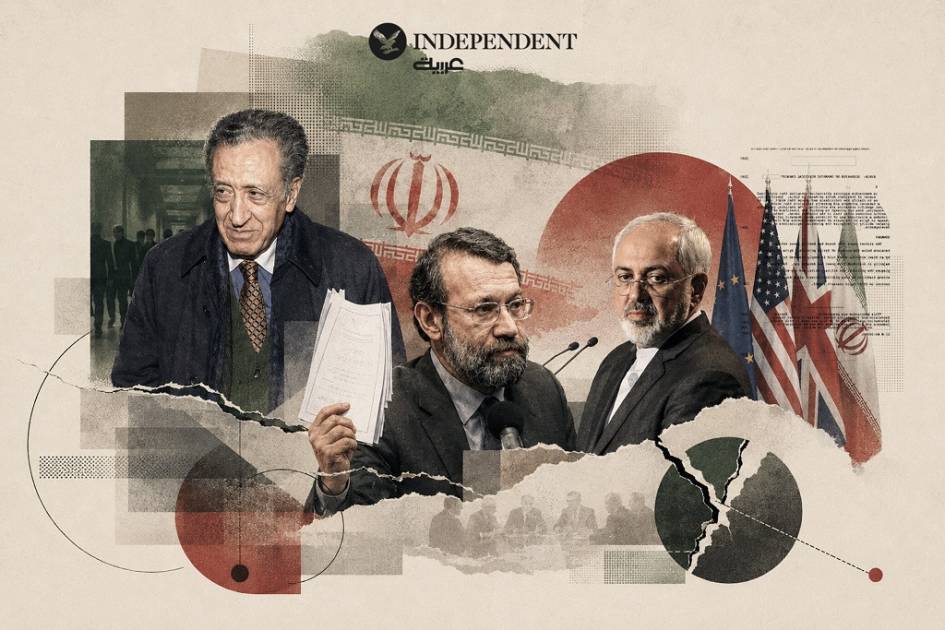
Iran's approach to international agreements is one of tactical maneuvering: using deals to relieve pressure while preserving its nuclear program, missile capabilities, and regional influence. The latest understanding with the US continues this pattern, and historical accords from the Algiers Agreement to the JCPOA have failed to produce lasting change.
Summary: Any new understanding with Iran remains fragile unless it addresses the core of the problem rather than its symptoms. It is not enough for Tehran to open the Strait of Hormuz if it continues to use it as a bargaining chip, or to allow limited inspections if it retains the right to evade, or to receive frozen funds under the pretext of the economy and the Iranian citizen, if the very structure of the regime is based on funding the Revolutionary Guard and its proxies in the region.
The latest understanding between Iran and the United States cannot be read as an agreement separate from a long history of temporary deals between the two sides. It is not a new beginning, but an additional link in the path that Tehran and Washington have consistently followed: the former escalates to the brink of explosion, then negotiates when the cost becomes high, offering minimal commitments in exchange for maximum financial and political gains. The latter, each time the policy of containment or pressure reaches its limits, finds itself facing the same option—returning to negotiations, not in search of a partnership, but in an effort to manage a crisis whose repercussions it cannot ignore.
Negotiations for Iran are protection for its project.
Here lies the core knot: Iran does not enter negotiations to change its project, but to protect it from collapse. When sanctions tighten, it talks about diplomacy; when it needs its frozen funds, it opens back channels; when its facilities or proxies come under pressure, it sells temporary calm as a 'sovereign victory.' But in return, it does not abandon the essence of the equation: the nuclear program, missiles, the Revolutionary Guard, and the influence proxies in the region.
The latest understanding, signed on June 17, clearly reproduces this pattern. The path is not yet based on a comprehensive settlement, but on managing the Strait of Hormuz crisis, frozen funds, de-escalation, and opening a technical negotiating channel. Even the nuclear file itself is postponed to later negotiations, with disagreements remaining over inspections, the fate of enriched uranium, the extent of sanctions relief, and the mechanism for releasing funds. This means the agreement was not born as a final solution, but as a fragile arrangement to postpone an explosion.
According to media reports, the talks in Doha focused on the Strait of Hormuz and frozen Iranian funds, not on a complete final settlement of the nuclear file.
Iranian Parliament Speaker Mohammad Baqer Qalibaf shakes hands with Pakistani Army Chief General Asim Munir in Tehran, April 16 last year (AFP)
The problem, therefore, is not in the text of the understandings, but in the political intent. The West wants the agreement to be the end of the crisis, while Iran sees it as crisis management. The West seeks to freeze the danger, while Tehran invests in that danger. The West negotiates over the centrifuges used for uranium enrichment, while Tehran negotiates over a full influence system extending from the Gulf to Iraq, Syria, Lebanon, and Yemen.
Therefore, any new understanding with Iran remains fragile unless it addresses the core of the problem rather than its symptoms. It is not enough for Tehran to open the Strait of Hormuz if it continues to use it as a bargaining chip, or to allow limited inspections if it retains the right to evade, or to receive frozen funds under the pretext of the economy and the Iranian citizen, if the very structure of the regime is based on funding the Revolutionary Guard and its proxies in the region.
Agreements that buy time for Iran
History says that Tehran does not comply when pressure eases, but only to the extent it fears the cost. Any agreement that does not link money to behavior, does not link its nuclear file to missiles, and does not link regional calm to the arms and funding of proxies, will be just another version of previous agreements—buying time for Iran and selling an illusion to the West. This is precisely why previous agreements did not last; they collapsed because there was no real change in the behavior of the Iranian regime. The 2015 agreement, for example, constrained some aspects of the nuclear program but left missiles, militias, and regional influence outside the equation. The result was that Iran gained economic and political breathing space while its regional project operated at full capacity. When Washington withdrew from the agreement in 2018, Tehran returned to raising the level of enrichment and escalation, as if the agreement had been a technical truce, not a strategic transformation.
From the Algiers Accord of 1981, through the nuclear understandings with the Europeans in 2003 and 2004, then the interim Geneva agreement of 2013, to the nuclear deal of 2015, the problem was not the absence of agreements, but their nature. Each time, the West treated Iran as a state whose behavior could be regulated through incentives and guarantees, while Tehran treated the agreement as a pause within the conflict, not an exit from it.
Drones at an undisclosed location in Iran (Reuters)
Accordingly, Tehran does not sign agreements to end the conflict, but to manage it, buy time, relieve pressure, and rearrange its cards. From 1981 to the present, almost every agreement with Washington or Europe has ended the same way: financial or political gains for Iran, technical commitments open to evasion, then collapse, freeze, or a return to escalation.
What are the most prominent agreements with the international community that Iran has signed?
Algiers Accord 1981: Ending the Hostage Crisis, Not Ending the Hostility
The Algiers Accord of January 19, 1981, was the first major agreement between Tehran and Washington after the Iranian Revolution, ending the hostage crisis involving the detention of US embassy staff in Tehran. It referred to a set of mutual commitments and pledges signed through Algerian diplomatic mediation to end the crisis of the 52 American hostages held in Iran for 444 days. The last 52 American hostages, who had been held inside the US embassy in Tehran since November 4, 1979, were released, coinciding with the inauguration of Ronald Reagan as President of the United States. This was achieved in exchange for financial and legal arrangements that included the release of Iranian assets and the establishment of an arbitration mechanism for claims between the two parties. The diplomatic mediation was led by then-Algerian Foreign Minister Mohamed Seddik Ben Yahia, culminating in the signing of the 'Algiers Declaration,' which spared the region a wide military escalation that was expected at the time.
But this agreement did not open the door to normalization or reconciliation. It practically ended with an exchange of hostages for money and judicial arrangements. Iran emerged from it having established a dangerous equation: it could create a major crisis and then turn it into a bargaining chip. As for US-Iran relations, they remained a relationship of hostility, not a state-to-state relationship.
Iran-Contra Affair: Secret Negotiation Under the Banner of Open Hostility
During the 1980s, the Iran-Contra affair (or Irangate) emerged, one of the most famous political scandals in the United States during the Cold War with the Soviet Union. US investigative committees at the time pointed to the involvement of former President Ronald Reagan. The scandal involved a secret deal in which the Reagan administration, during his second term, sold weapons to Iran through Israeli mediation, during its war with Iraq, despite an arms embargo against Tehran and the US administration's designation of Iran as an 'enemy of America' and a 'state sponsor of terrorism,' and despite Iran considering America the 'Great Satan.'
Read more
Has the Era of the 'Great Satan' Ended?
After the Deal with Israel... Has Hezbollah Entered a Battle for Survival?
Original source: Independent Arabia

Comments (0)
Be the first to comment.