The State's Dilemma in the Iranian Experiment

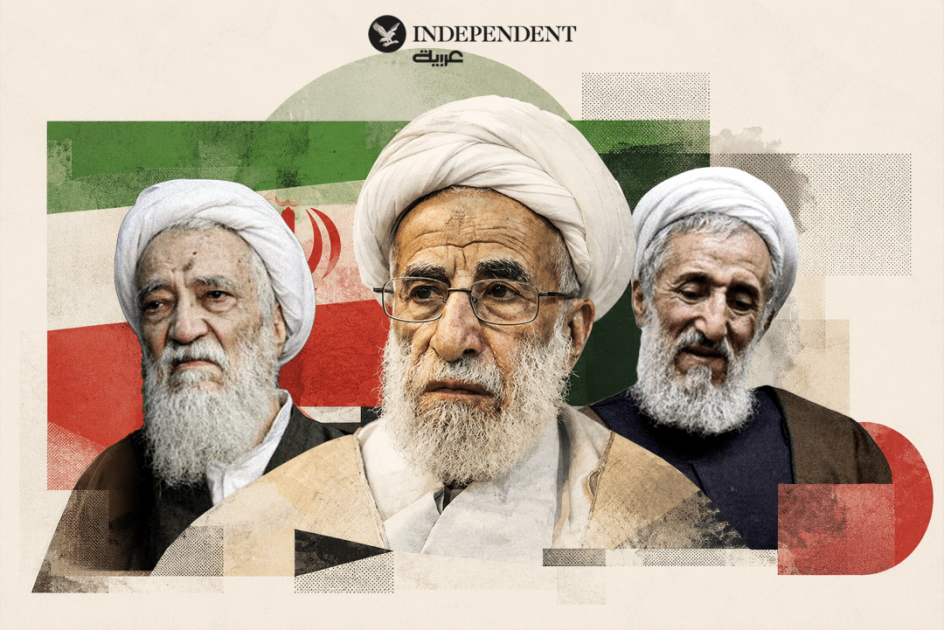
Does the Iranian experiment after 1979 represent a model of political modernity based on religion, or is it closer to a narrative that combines modern populism with traditional social and political structures? That question remains open, because approaching an understanding of post-revolutionary Iran is a complex process in which dogma intertwines with nationalism, with Persian heritage, slogans mix with interests, and political action is entangled with historical legacy. After nearly half a century, the Iranian system does not seem to have produced a new model of the state so much as it has produced a political narrative that managed to combine religion, Persian identity, and the tools of the modern state—not moving towards modernity, but rather a regression to revive an 'empire' that no longer has a place in the present time.
Despite the Islamic slogan in the state's name, those who approach Iranian society—whether Arab or foreign diplomats who have worked there, or researchers who have experienced the experiment closely—notice a striking paradox. Social manifestations associated with the month of Ramadan or the feasts of Eid al-Fitr and Eid al-Adha in major cities are not as present as a visitor would expect in a state that presents itself as the 'Islamic Republic.' In contrast, Nowruz, as a Persian occasion deep in history, occupies a wide social and cultural status. It is linked to the cultural environment in which Zoroastrianism arose. Even in family occasions, such as engagement parties, the rituals of presenting what is known as 'sofreh' continue—a Persian word that has been Arabized, a celebratory table with ancient Persian roots that includes various types of foods and symbols, and the only modern addition has been a copy of the Quran. These details and others reveal that Persian cultural identity has not dissolved into the Islamic or modern revolutionary project, but has remained one of its main tributaries alongside religious discourse. What has attached to it is a mixture of tensions in Iranian identity suspended between Persia and Islam.
In politics, the picture appears more complex. The state raises the banner of Islam, but in practice it often moves within a specific sectarian framework. While cooperation with Sunni groups has remained limited and exceptional, often for tactical rather than strategic reasons. Thus, talk of a comprehensive Islamic project collides with a reality that reveals that the sect, not the Islamic nation, remained the main tool for building regional influence.
Hence another question arises: Are we facing a revolution in the historical sense? If the Iranian revolution is compared to the Bolshevik revolution or the Chinese revolution, fundamental differences appear. Those revolutions began with strict ideologies, but they reconsidered many of their tenets when the demands of development, economics, and international relations imposed that. As for the Iranian revolution, it has remained, to a large extent, faithful to its initial narrative, to the point that preserving the narrative has become part of the system's legitimacy, and continuing the discourse has become more important than reviewing its outcomes.
This consistency in the narrative has made its relationship with modernity a selective one. Iran does not reject technology, but invests in it and seeks to develop its military, missile, and nuclear capabilities, because it realizes that these modern tools of power are necessary for the state's survival. But at the same time, it is cautious about many values of political modernity, such as the rotation of power, transparency of institutions, independence of the judiciary, human rights, and placing the national interest above doctrinal considerations. Thus, it accepted the modernity of means, but did not adopt the modernity of political thought.
Hence arises one of the most notable contradictions of the Iranian experiment. The state needs industry, science, and technology to confront its adversaries, but it also needs the continuation of a state of conflict to justify the continuation of the revolution's discourse. Therefore, tension with the outside becomes part of the system's operating mechanism, not merely a result of differing interests. Whenever the reasons for confrontation diminish, the narrative needs to produce new reasons for its continuation.
This contradiction also appears in the management of international relations. Many who have dealt with Iranian officials in international institutions or in negotiation rounds notice a difference between the official discourse and the conversation in private meetings. What is said in front of the media may differ from what is raised away from the spotlight, as a reflection of a political culture that forces those who work with the system to obey, even if their argument goes against logic. Moreover, the interpretation of international agreements is subject to readings that align with the whims of the revolution more than with the established rules of international law.
Therefore, understanding Iran is not achieved by merely reading its constitution or following the speeches of its leaders, but requires understanding the intertwined relationship among three elements: the Persian heritage, religious legitimacy, and the requirements of the modern state. These elements do not always work in harmony, but enter into a constant competition that explains many of the contradictions apparent in Iranian policies, both domestically and externally.
The closest description of this experiment is that it is neither a project of religious modernity nor a complete return to tradition, but a political narrative that employed religion, nationalism, and populism within a single framework, while benefiting from modern technology without adopting the philosophy of modernity. Hence, after nearly half a century, the revolution has been more successful in preserving itself than in building a political model that evolves with changing times.
Last word: There is no future for a state torn by a conflicting memory.
Original source: Asharq Al-Awsat

Comments (0)
Be the first to comment.