The story of a designer who left Chanel and Louis Vuitton to save Moroccan crafts
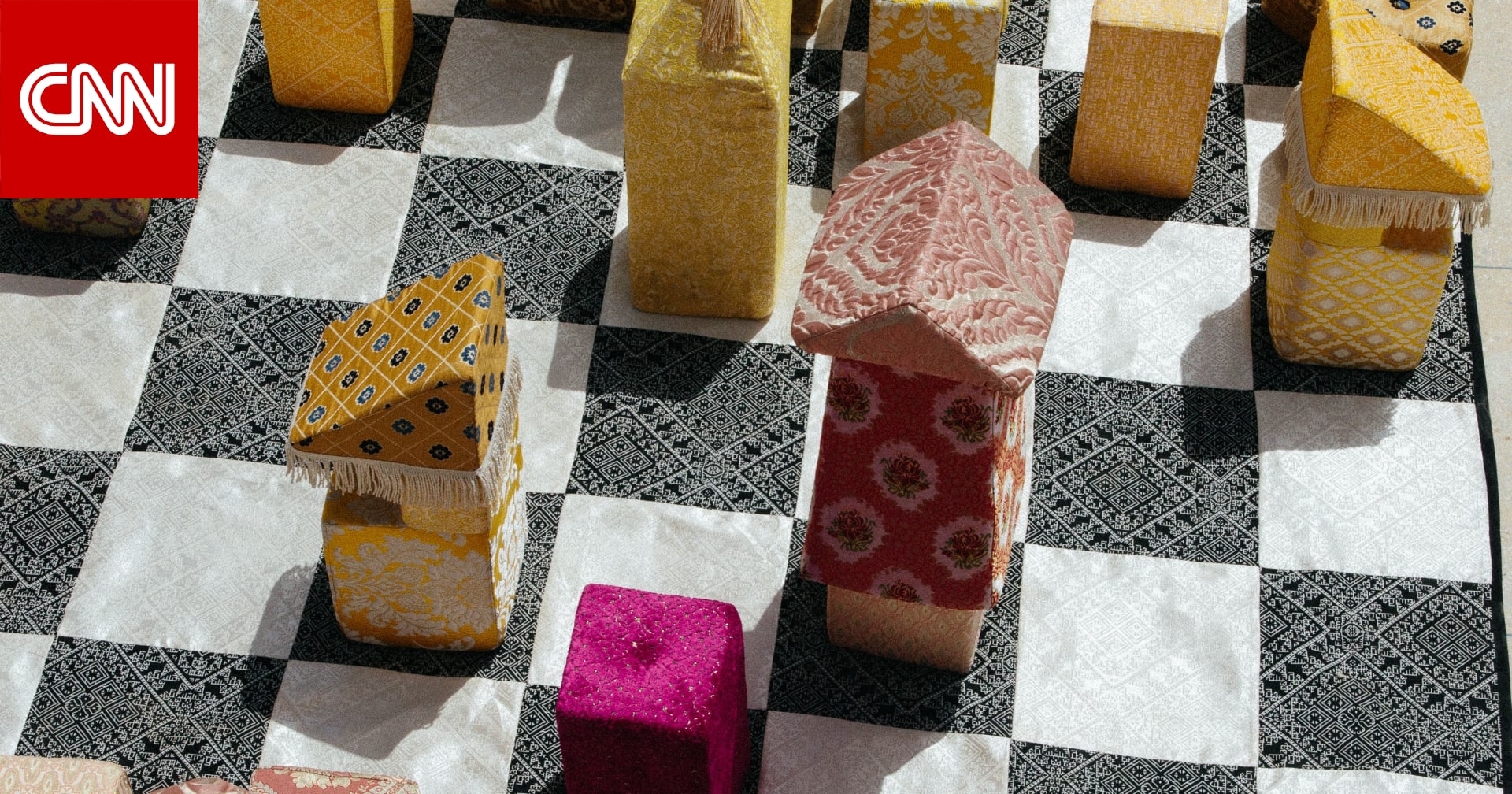
After years working with leading global fashion houses between Paris, New York, and London, Moroccan designer Sofia Cassimi chose to redirect her path toward Morocco. There, she began a different journey away from the fast pace of fashion, aiming to revive traditional crafts and reintroduce them with a contemporary spirit.
Moroccan designer Sofia Cassimi began a different journey away from the fast pace of fashion, aiming to revive traditional crafts and reintroduce them with a contemporary spirit. Credit: OSAMA AHDI
CNN — After years working with leading global fashion houses such as Chanel, Louis Vuitton, Alexander McQueen, and Burberry between Paris, New York, and London, Moroccan fashion designer Sofia Cassimi reached a point where the rhythm of this world, with its speed, pressure, and scale, no longer aligned with her values.
So she chose to change course, and began organizing artistic trips in Morocco outside the framework of fashion weeks — small gatherings aimed at reconnecting with the hand and craftsmanship. From there, the idea of her label "Zoubidah" began to take shape.
She told CNN Arabic: "What I discovered stopped me in my tracks. The guardians of these exceptional techniques were mostly elderly men who had gained their knowledge over a lifetime, while their material reality told a completely different story. The younger generation, logically, chose to stay away from practicing these crafts when skill is not economically valued and no clear future is given — so why would anyone choose it?"
The Moroccan designer says that what she is doing is not a return to the past, but a reformulation of something deeply rooted and transforming it into new contemporary paths. Credit: OSAMA AHDI
Nevertheless, she affirmed that these crafts, marginalized in some contexts, are the very foundation of her former world — from haute couture to luxury leather goods and jewelry — where "artistic professions" are central, not marginal, both culturally and commercially.
Between her experience in Morocco and her knowledge of the global luxury world, Cassimi felt there was an unfair and urgent gap that needed to be bridged — not by putting the craft behind glass, but by reintroducing it in a lively and appealing way, and giving the new generation a reason to rediscover it, through realizing that these hands carry something irreplaceable.
The Moroccan designer tries to convey a sense of joy in her diverse works. Credit: OSAMA AHDI
Cassimi explained in an interview with CNN Arabic that the word "nostalgia" is often used to describe her work, but she sees it as deeper than that, as the fabrics she works with carry multiple layers of memory, color, texture, and symbolism. She said: "What I am doing is not a return to the past, but a reformulation of something deeply rooted and transforming it into new contemporary paths."
Cassimi also spoke about the joy of Moroccan homes and family gatherings, and how this spirit is reflected in her work. She says that since childhood, she has been fascinated by the spirit of life in Morocco, within the family and on the street, where there is warmth, collective belonging, and a wiser outlook on life, in contrast to the prevailing individualism in the West.
She continued: "When we work — me, the artisans, my father, and everyone involved in the project — there is music, food, and laughter. Human relationships come first, and everything else follows. I make sure to share behind-the-scenes work on Instagram, to show that exceptional pieces can be produced even with limited budgets. This spirit is what I try to translate into every piece: not just a visual reference to Morocco, but a complete feeling of warmth, generosity, and belonging."
The materials make simple, oversized pieces, unique or very limited, with no seasons or collections. Credit: OSAMA AHDI
She added that the wearable pieces she designs stand in direct opposition to the logic of the fast fashion industry based on waste and production pressure. She always starts from the fabric; she has collected a personal collection of old and rare Moroccan fabrics, bearing patterns and colors that are no longer produced today after the closure of the factories that made them, and the disappearance of the associated craft knowledge.
From these materials, she makes simple, oversized pieces, unique or very limited, with no seasons or collections.
She describes her brand as combining fashion, art, and design. Credit: OSAMA AHDI
She continued: "The most beautiful thing is seeing who wears them: girls from Paris working in luxury, music personalities, university women in art... all wearing the same piece, but each adds their own world to it, making it transcend any classification."
Cassimi described "Zoubidah" as lying between fashion, art, and design, noting that the creative world today is so interconnected that the boundaries between these fields are no longer clear, and what unites her project is the same approach: people, principles, and working with local materials and Moroccan craft in a joyful and liberated spirit.
"London feeds the vision, and Morocco feeds the soul."
Regarding the influence of living between different cities and cultures, she noted that London gave her creative freedom and multiple references, while Morocco gave her depth — a different relationship with time, trust, and the act of making.
She pointed out that responsible design for her is not only linked to sustainable materials, but starts with the human being, by ensuring fairness for everyone involved in the production process, and adopting a slow production style that creates real value and opportunities for communities.
Through her designs, she works to save old fabrics, most notably the brocade weave in the city of Fez. Credit: OSAMA AHDI
She involved "Second Chance" schools in the Moroccan city of Fez in her largest artistic project, which will be exhibited in the Qatari capital, Doha, with the aim of empowering young people to discover that their hands can make something exceptional, and that there is a future in this field.
She concluded by highlighting the handwoven brocade in Fez, one of the rarest and most difficult Moroccan crafts, which she works on with one of its last artisans, producing fabrics for the royal family, a process that takes three months to weave just five meters. She warned that the biggest challenge lies not in quality, but in the absence of a new generation due to the economic and time-consuming difficulty of the craft, affirming that her goal remains to build a bridge between these crafts and the future, to ensure this exceptional heritage does not disappear.
Original source: CNN Arabic




Comments (0)
Be the first to comment.