Thousands protest in Germany as far-right AfD party meets

Protesters from unions, civil society and left-wing parties aim to disrupt AfD annual conference in Erfurt.
Video Duration 02 minutes 23 seconds 02:23
AfD Tops Polls as Germany's Coalition Faces Growing Pressure
By AFP, DPA and Reuters
Published On 4 Jul 20264 Jul 2026
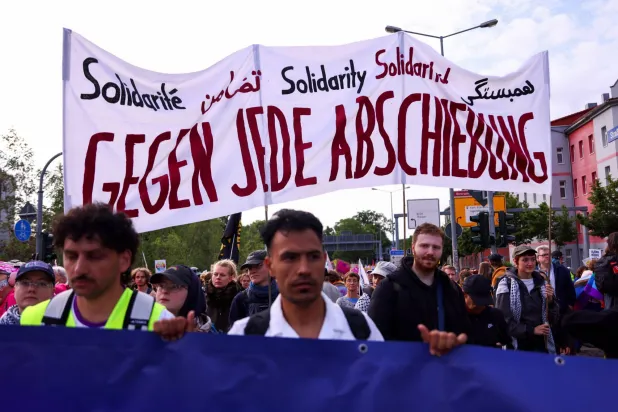
Thousands of opponents of the far-right Alternative for Germany (AfD) party have blocked roads leading to the party’s annual conference ahead of regional elections.
An estimated 20,000 people flocked to Erfurt, in Thuringia state, on Saturday, according to German police.
Recommended Stories
list of 3 items
list 1 of 3Is the AfD a threat to Germany? Mehdi Hasan & Maximilian Krah
list 2 of 3Did Germany lose its UNSC seat because of support for Israel?
list 3 of 3German coalition agrees on sweeping reform package in key breakthrough
end of list
Protesters from unions, civil society groups and left-wing parties gathered in the centre of the city, some 250km (155 miles) southwest of the capital, Berlin. The police also reported several street blockades.
“We want to make it clear that we simply won’t tolerate this, that fascism is on the rise here in Germany,” Georg Becker, a spokesperson for Widersetzen (“Resist”), an anti-AfD umbrella group, told the Reuters news agency.
Large numbers of police, including reinforcements from across Germany, were deployed ahead of the AfD’s two-day conference. Police told the dpa news agency they counted more than 200 buses of protesters arriving in Erfurt.
Media reports said protesters blocked routes into the city, with some abseiling from a motorway bridge. Several groups staged sit-in blockades around the city centre, while there reports that some protesters clashed with police in riot gear.
Still, most AfD delegates managed to reach the conference centre where party representatives said the congress began on time despite the protests.
‘Anti-democratic’ and ‘extremist’ views
AfD became the second largest party in elections last year, scoring the best result for a far-right party since World War II.
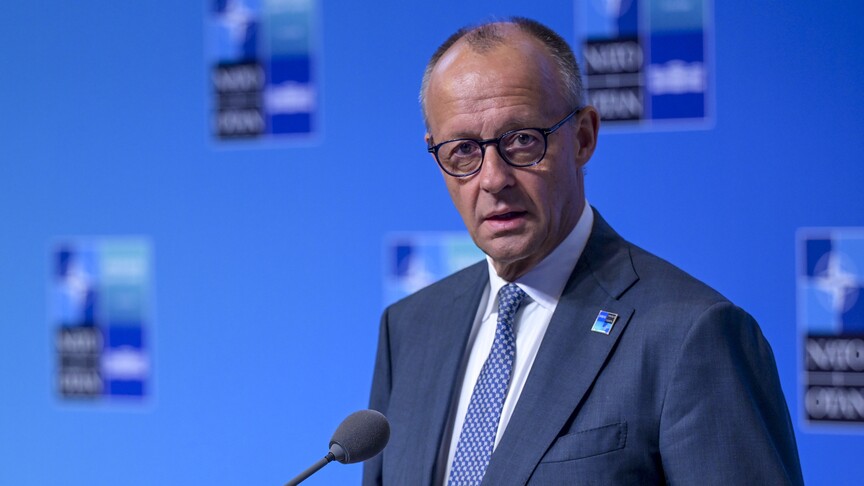
Opinion polls suggest that the party has opened a clear lead over German Chancellor Friedrich Merz’s conservatives, partially driven by years of economic stagnation. AfD seems likely to take power at a state level for the first time in the eastern state of Saxony-Anhalt, paving the way for more success at a national level.
Although AfD has grown in popularity, it remains controversial. All mainstream parties have ruled out cooperating with AfD over “anti-democratic” and “extremist” views.
AfD has also been monitored by the domestic intelligence agency for several years on suspicion of anti-constitutional activities.
Protesters in Erfurt want the party banned.
Noa Sander, another spokesperson for the Resist protest alliance told AFP, “The AfD wants mass deportations and ethnic cleansing,” in reference to the party’s “remigration” demands.
“It should be banned. We intend to do this by blockading their party conference and standing in the way of the AfD, its policies and members wherever they appear, making sure they have no place in society.” Sander said.
Original source: Al Jazeera



Comments (0)
Be the first to comment.