Three Main Files on Aoun and Trump's Table on Tuesday
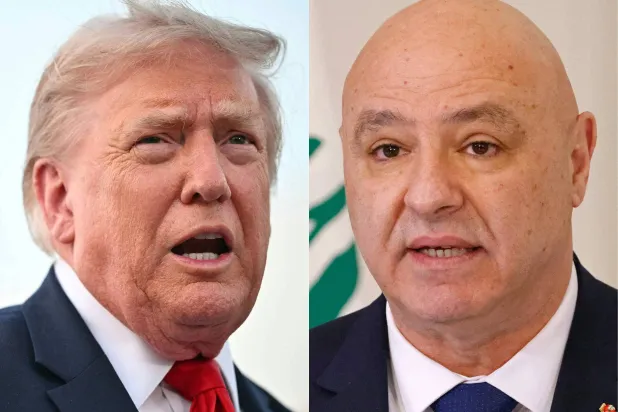
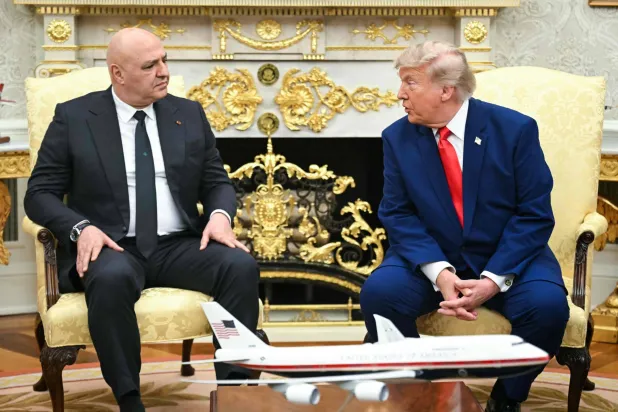
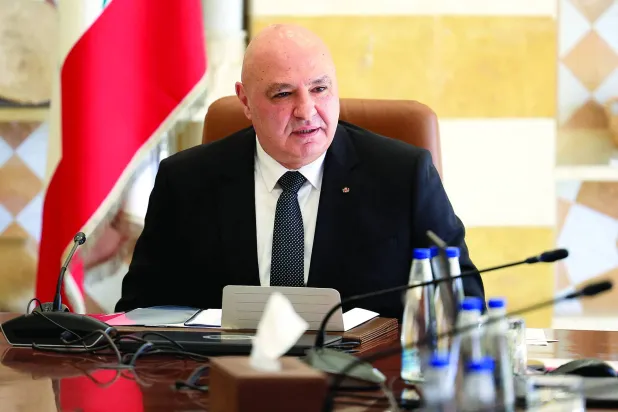
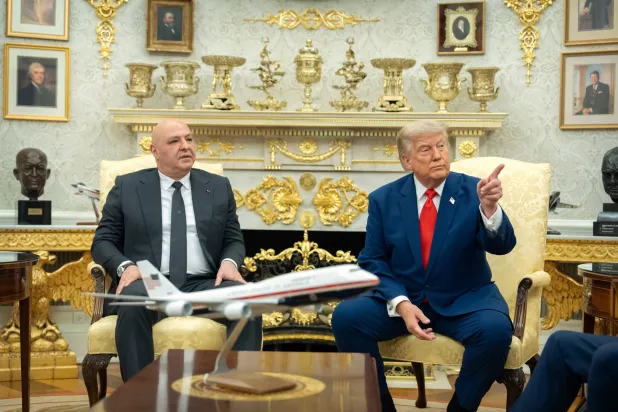
Attention is focused on Tuesday on the White House, where US President Donald Trump and his Lebanese counterpart Joseph Aoun will hold a summit carrying dimensions that go beyond the first official visit of a Lebanese president to Washington in years. It presents the US administration with a test of its ability to turn the region's transformations into more sustainable arrangements in Lebanon, while Aoun enters the meeting carrying three interconnected files: consolidating the Israeli withdrawal and halting military operations, supporting the Lebanese army and restricting weapons to the state, and opening the door to economic and investment support that enhances the capacity of Lebanese state institutions.
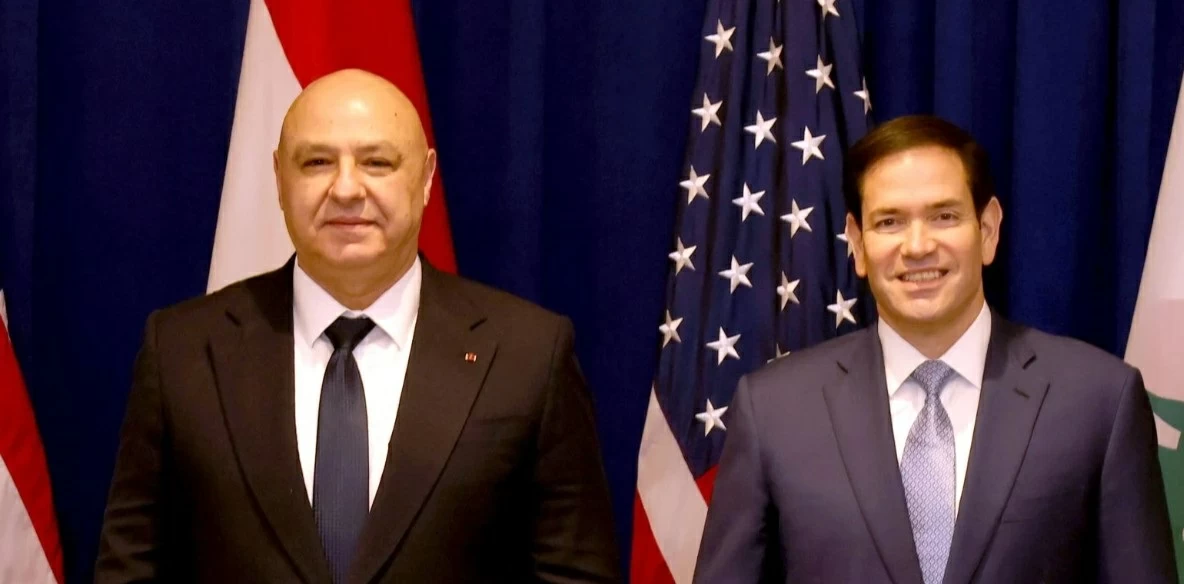
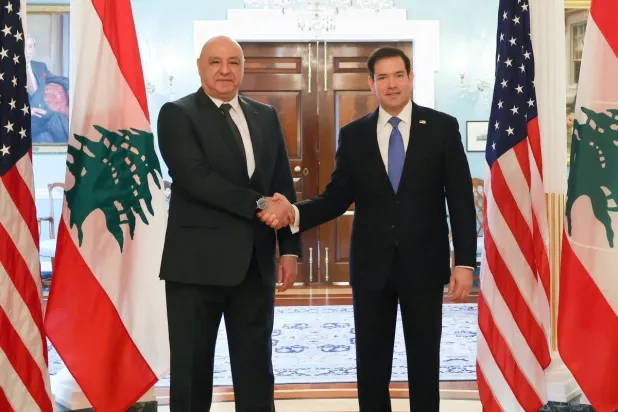
The summit comes in an atmosphere described by several Lebanese and American sources as "very positive," following his talks with US Secretary of State Marco Rubio on Sunday morning, and at a timing that coincided with the US State Department's announcement of the start of pilot area operations in the villages of Froun, Srifa, and Zawtar al-Gharbiya, in accordance with the tripartite framework and under the auspices of the military coordination group for Lebanon.
The start of implementing these areas carries significance beyond its field dimension; if successful, it could form a model for expanding the Israeli withdrawal gradually in parallel with the deployment of the Lebanese army, without leaving the withdrawal hostage to the prior Israeli condition of completely disarming "Hezbollah" before any withdrawal. Consequently, it moves towards a step-for-step equation: an Israeli withdrawal from specific areas, met by the deployment of the Lebanese army, the consolidation of state authority, and the prevention of any armed presence outside it, provided the experiment expands gradually if it proves successful.
The First File
The first file stands out before Aoun and Trump in how to protect the tripartite framework agreement and prevent its collapse under the weight of disagreements over the ordering of steps. Lebanon insists that the continued Israeli occupation of Lebanese territories gives "Hezbollah" a pretext to keep its weapons, while Israel says that a complete withdrawal before ensuring the disarmament of the party may allow it to rebuild its military positions. Beirut is counting on the US role as the party practically capable of exerting influence on Israel, and providing guarantees and support to the Lebanese government and army.
Lebanese army forces deploy at the entrance of the town of Zawtar al-Gharbiya following the withdrawal of Israeli forces from the area under a plan reached through US mediation (Reuters)
Matthew Levitt, a researcher at the Washington Institute for Near East Policy, emphasizes the importance of having an effective US-led verification and monitoring mechanism, backed by intelligence and the necessary capabilities to follow up on the implementation of commitments as the pilot areas experiment begins. He explained that the real test will be ensuring the implementation of the equation from both sides: an actual Israeli withdrawal, and a deployment of the Lebanese army that prevents "Hezbollah" from returning militarily to the evacuated areas, thus paving the way for applying the model to other areas, leading to addressing disputed border points and consolidating a permanent cessation of hostilities, and perhaps moving at a later stage to more comprehensive political and security arrangements.
The Second File
The second and most sensitive file is "Hezbollah's" weapons and the Lebanese state's ability to enforce its monopoly on force. During his meeting with Aoun, Rubio demonstrated a clear position that Lebanon's future is linked to the presence of a legitimate government capable of controlling the entire territory of the country, considering that the continued existence of a political movement that simultaneously possesses an independent military force funded by Iran constitutes the main obstacle to achieving stability.
However, the American-Lebanese discussion appears more flexible regarding the mechanism for reaching this goal. The approach that Aoun brought to Washington is based on the fact that disarmament cannot be implemented by force, due to the risks of internal clash it carries, but rather through a gradual process coinciding with ending the Israeli occupation and removing the pretexts used by the party to keep its arsenal.
The coffins of "Hezbollah" members who were killed during clashes with the Israeli army, alongside a symbolic coffin of former Iranian Supreme Leader Ali Khamenei, during a mass funeral in the village of Majdal Selm in southern Lebanon on July 18, 2026 (AFP)
Hanin Ghaddar, a researcher at the Washington Institute, points out that the challenge goes beyond merely collecting rockets and weapons, warning against reducing the problem to the military arsenal alone. According to her view, "Hezbollah" has built over decades a network of political, financial, and institutional influence within the state; meaning that disarming part of its weapons without dismantling its sources of funding and influence may allow it to rebuild its power in the future. This vision poses a question before the Aoun-Trump meeting that goes beyond when the weapons will be dismantled to how a state strong enough to prevent the return of weapons can be built. Therefore, supporting the Lebanese army occupies a central position on Aoun's agenda, as he seeks to increase US military assistance.
Strategic Opportunity
Fadi Nicholas Nassar, a senior fellow at the Middle East Institute, believes that Lebanon could represent a victory and political gain for US policy in the region if Washington decides to invest in current transformations and weaken Iranian influence, thus providing an unprecedented opportunity to support the rise of a sovereign Lebanese state and end the proxy model that Tehran has relied on for decades.
The Third File
The third file in the Aoun-Trump meeting, concerning the economy and reconstruction, acquires strategic significance. The vision presented in Washington is based on the fact that strengthening state authority cannot be achieved through security tools alone, but rather needs investments and economic opportunities that restore confidence in legitimate institutions. Aoun discussed with Rubio the possibility of attracting US and international investments into the energy, technology, communications, and transport sectors, in addition to restarting direct flights between the United States and Lebanon.
Lebanese army soldiers inspect the damage resulting from an explosion targeting a military vehicle in the town of Al-Mansouri in the south of the country on Saturday (AFP)
Robert Satloff, executive director of the Washington Institute, describes the Trump-Aoun meeting as a decisive moment for the future of Lebanese-Israeli understandings. He says that President Aoun needs concrete US commitments to help him show that the state option is capable of delivering results, while President Trump needs indicators proving Beirut's seriousness in dealing with "Hezbollah's" weapons and strengthening the authority of legitimate institutions.
Original source: Asharq Al-Awsat
Comments (0)
Be the first to comment.