Trump Revives 2020 Accusations Against China.. Beijing Retorts: 'Pure Nonsense'
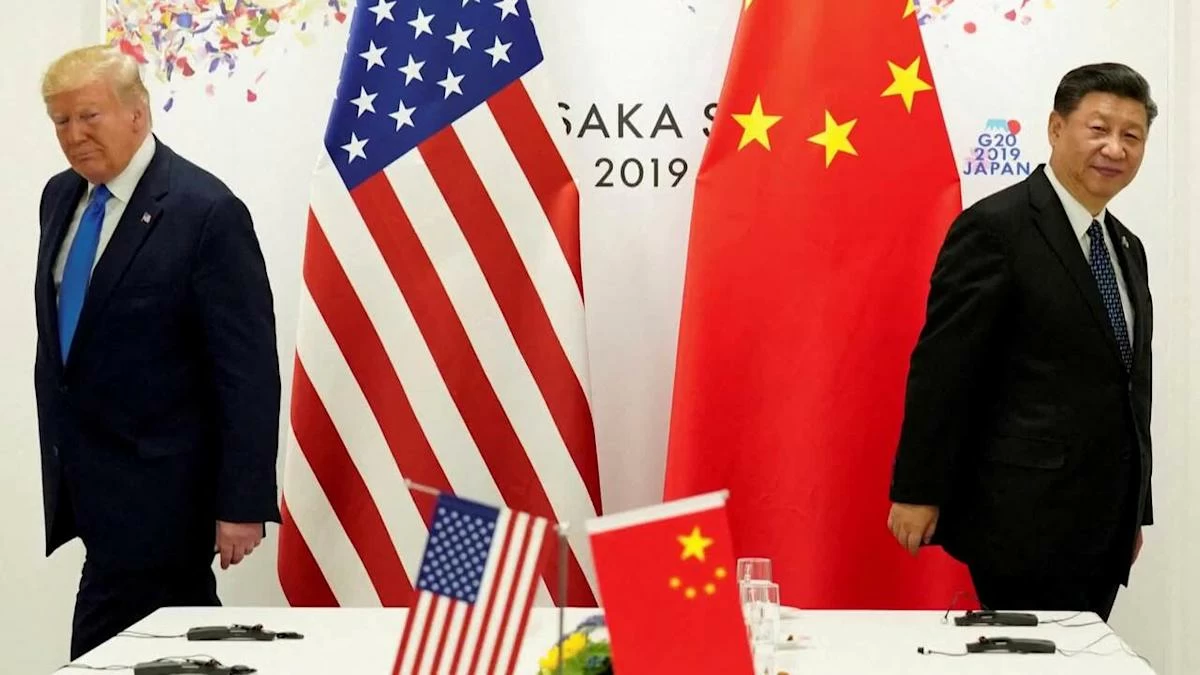
The issue of the 2020 US presidential election has returned to the forefront of tensions between the United States and China, after US President Donald Trump renewed his accusations against Beijing of interfering in the election he lost to former President Joe Biden, allegations that were met with decisive Chinese rejection. The Chinese Foreign Ministry denied Trump's accusations, calling them 'pure nonsense,' stressing that Beijing adopts a consistent policy of non-interference in the internal affairs of other countries, including electoral processes. China emphasized that its position on the internal affairs of countries is 'clear and firm...'
Follow Okaz channel on WhatsApp
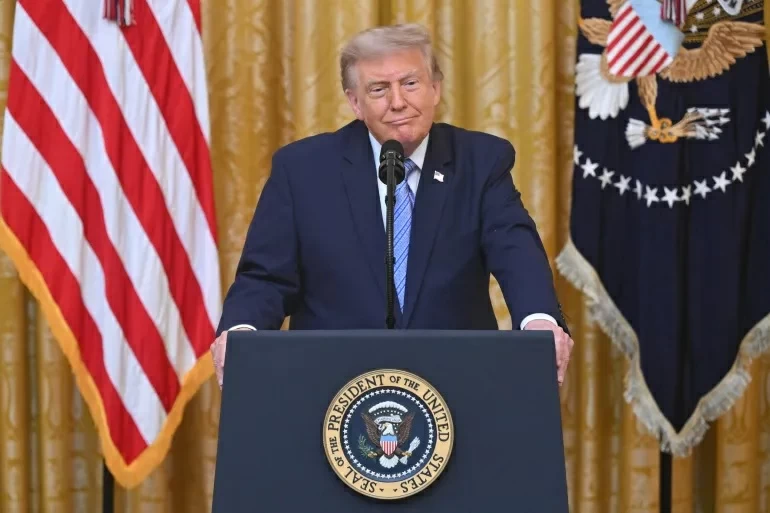
The file of the 2020 US presidential election has returned to the forefront of tensions between the United States and China, after US President Donald Trump renewed his accusations against Beijing of interfering in the election he lost to former President Joe Biden, allegations that were met with decisive Chinese rejection.
The Chinese Foreign Ministry denied the accusations made by Trump, describing them as 'pure nonsense,' stressing that Beijing adopts a consistent policy of non-interference in the internal affairs of other countries, including electoral processes.
China stressed that its position on the internal affairs of countries is 'clear and firm,' considering that dragging its name into US political debate is not based on facts, and affirming that it rejects any accusations aimed at holding it responsible for internal divisions or disputes in the United States.
Chinese Foreign Ministry spokesman Lin Jian, in a press conference, urged the United States to review its behavior, stop groundlessly tarnishing China's reputation, or using it as a pretext in election campaigns, calling for genuine efforts to enhance bilateral relations between the two countries.
Trump's remarks come at a time when US-China relations are witnessing escalating tensions against the backdrop of trade, technology, Taiwan, and the South China Sea files, in addition to the growing strategic competition between the world's two largest economies.
The issue of foreign interference in US elections is one of the most sensitive topics in the American political landscape, as it continuously sparks widespread debate between the Republican and Democratic parties, especially with approaching electoral deadlines and the return of discussions about the integrity of electoral processes.
The 2020 US presidential election witnessed fierce competition that ended with Democrat Joe Biden defeating then-Republican President Donald Trump, who refused to concede defeat for a long time and repeatedly alleged irregularities and interference that affected the voting results, despite US courts and electoral authorities rejecting these claims due to insufficient evidence to support them.
In recent years, Washington has accused a number of countries, including Russia, China, and Iran, of trying to influence US public opinion through cyber campaigns or media activities, but Beijing has consistently denied any role in US elections, stressing that its foreign policy is based on respect for state sovereignty and non-interference in internal affairs.
The mutual accusations between Washington and Beijing are part of the escalating strategic competition between the two countries, which extends to the fields of economy, trade, technology, and security, and is seen as one of the most prominent features of the international system in recent years.
Original source: Okaz


Comments (0)
Be the first to comment.