Trump's Illusory 'Peace' and Iran's Confrontation with Hegemony
It is hard for Trump to learn the lesson of Metternich, who engineered the 'Concert of Europe' in 1815 after the Napoleonic wars by relying on the balance of power in the 19th century, as he said, 'No peace with a revolutionary power.'
"); googletag.cmd.push(function() { onDvtagReady(function () { googletag.display('div-gpt-ad-3341368-3'); }); }); }
Summary
It is hard for Trump to learn the lesson of Metternich, who engineered the 'Concert of Europe' in 1815 after the Napoleonic wars by relying on the balance of power in the 19th century, as he said, 'No peace with a revolutionary power.'
There are, of course, no two different versions of the 'memorandum of understanding' between America and Iran, but the public statements of officials in both countries suggest that each is reading a different version. The contradiction in statements about mutual commitments in the memorandum is merely an expression of a deeper contradiction in each's view of relations with the other. President Donald Trump deludes himself that he has regained the 'jewel' that America lost since the fall of the Shah, and has managed to do what his predecessors could not: make peace with Iran. Indeed, he imagines he is making 'peace in the Middle East for the first time in three thousand years.'
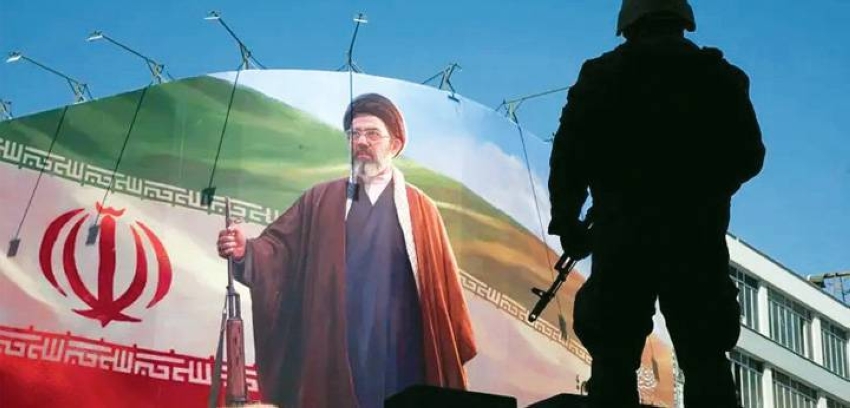
As for the absent Supreme Leader Mojtaba Khamenei and the pillars of the 'Islamic Republic,' they are burdened with a historical memory against America, and they realize that confronting America to expel it from West Asia is one of the foundations of the revolution defined by Imam Khomeini. If the Supreme Leader Ali Khamenei, whom America assassinated at the start of the war on Iran, considered 'negotiating with America is neither smart nor wise nor honorable,' his son Mojtaba permitted negotiations due to the circumstances of the war and its aftermath.
Indeed, the debate has continued since the fall of the Shah over the question 'Who lost Iran?' Was it Carter alone, or presidents before and after him and the deep state? Richard Helms, the U.S. ambassador to the Shah's court and former director of the CIA, believes that Iran is the 'linchpin' and the 'geopolitical center of the world,' and must be recovered. Condoleezza Rice sees the opposite: that Iran is a 'totalitarian state and we must not make the mistake we made with the Soviet Union, which was to accept its conditions.'
Obama and Biden's ambition was to restore relations with Tehran through the nuclear deal to get rid of the policies of Clinton and Bush Jr. by placing it in the 'axis of evil.' As for Trump, he started from 'demonizing' Iran and placing it in the 'axis of disorder' to achieve the best relations with it after a devastating war.
In the other direction, Islamic Iran moves. In the book 'Iran,' historian Ali Ansari records that 'the imperial ambitions of the British, Russians, and Americans strengthened suspicion about foreign intervention.' In the book 'Iran's Grand Strategy,' Vali Nasr says that 'Iran's strategic vision was linked to spreading Islamic ideology less than it was linked to national security in regional enmities.' When a Pakistani journalist asked Khomeini about the benefit of the revolution, he replied: 'Now decisions are made in Tehran,' not with the Soviet Union nor with America.
The Iranians did not forgive America, even before the war, for its intelligence service overthrowing the nationalist prime minister and oil nationalizer Mohammad Mossadegh in 1953 and restoring the Shah to the throne via General Zahedi's coup. The storming of the U.S. embassy in Tehran in 1979 was a surprise to Rafsanjani and Khamenei, who feared it, but Khomeini asked them to support the students occupying the embassy, as he saw in the unprecedented step 'a turning point to consolidate the dominance of the Islamic current and remove the revolution's partners from leftists and secularists and reshape the public sphere in the name of revolution, identity, and resistance' and of course confronting America, according to Homa Katouzian in the book 'Iran and the Revolution.'
Read more
This section contains related articles, placed in (Related Nodes field)
Trump, who wants to 'reintegrate the Iranian economy into the global economic cycle,' should have read the simplest sign from the symbolic gestures before him in the Switzerland negotiations: no handshake and no joint photo. And nothing suggests that Tehran wants from the negotiations anything beyond fulfilling the commitments in the memorandum, especially the five American commitments. Every development in negotiations toward the 'final agreement' leads to raising embarrassing issues for Tehran, including peace. It knows that peace is not just the end of war, and it is careful to suffice with ending the war and ensuring that America does not return to it. It declares that its doubts are many about Washington's behavior, which resorted to war twice during negotiations. Rather, it sees today that the necessity has become greater to work against American hegemony.
It is hard for Trump to learn the lesson of Metternich, who engineered the 'Concert of Europe' in 1815 after the Napoleonic wars by relying on the balance of power in the 19th century, as he said, 'No peace with a revolutionary power.'
He imagines he is capable of making peace with a revolutionary, ideological, religious power unparalleled in the last few centuries, but the maximum that can be reached is a new form of conflict management after a war that was not completed by a decision from Trump himself, who repeatedly boasts that he 'crushed Iran' in the first week and left it with no navy, no air force, and no strong air defenses.
If each party claims victory, it is an illusion to speak of a complete victory in an incomplete war. The equation that many experts tend to focus on is that America won militarily and lost strategically, while Iran lost militarily and won strategically. And nothing is fixed in a Middle East changing as fast as desert sands. The irony, amidst Trump's big talk, is that inside and outside the U.S. administration, experts see that the strategic function of the memorandum of understanding is to ease American burdens and commitments in the Middle East, not to engage more as was the case in the war.
"); googletag.cmd.push(function() { onDvtagReady(function () { googletag.display('div-gpt-ad-3341368-4'); }); }); }
More about: United States Iran Donald Trump Jimmy Carter Khomeini revolution Ali Khamenei Barack Obama Mojtaba Khamenei Austrian Chancellor Metternich Mohammad Mossadegh Read it and listen to it
Original source: Independent Arabia

Comments (0)
Be the first to comment.