War Revives 'Child Marriage' in Yemen
"My uncle agreed with my father to marry me to one of his sons for fear that the Houthis would deceive him and push him to the frontlines, as they do with many young men from our area," said "A.M.H." as she told her story to a health worker in the city of Amran (northern Yemen), which is under Houthi control and the stronghold of their armed group. The girl, only 14 years old and from the poorest governorate in Yemen, was waiting her turn at a women's clinic, pregnant in her first months, despite suffering from anemia and obvious emaciation.
"); googletag.cmd.push(function() { onDvtagReady(function () { googletag.display('div-gpt-ad-3341368-3'); }); }); }
"My uncle agreed with my father to marry me to one of his sons for fear that the Houthis would deceive him and push him to the frontlines, as they do with many young men from our area," said "A.M.H." as she told her story to a health worker in the city of Amran (northern Yemen), which is under Houthi control and the stronghold of their armed group.
The girl, only 14 years old and from the poorest governorate in Yemen, was waiting her turn at a women's clinic, pregnant in her first months, despite suffering from anemia and obvious emaciation.
Hundreds of girls in Yemen leave school due to early marriage, and they are burdened with heavy responsibilities beyond their capacity, not to mention the health damage they suffer, in addition to some being exposed to various forms of violence.
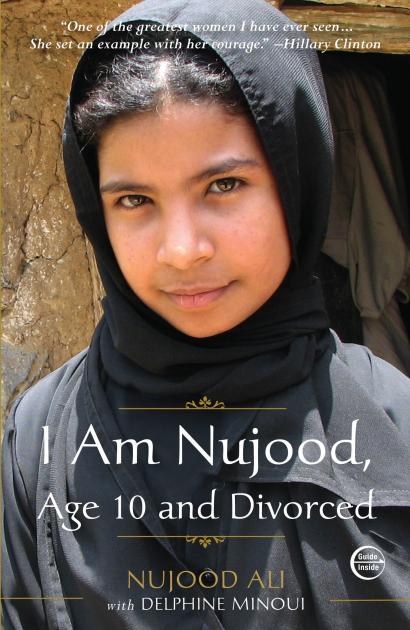
The phenomenon of child marriage has gained popular and official attention in the country in recent years, especially after Nujood Ali, a ten-year-old girl, became a global icon after resisting her marriage, which ended in divorce at her request, and received global praise from Hillary Clinton and Condoleezza Rice. However, child marriage has recently become a marginal issue, with focus shifting to major files caused by the war that has been ravaging the poor country for nearly four years, as hunger now threatens the lives of 13 million people (nearly half the population), prompting the United Nations to warn that 'the situation could turn into the worst famine in the world in a century.'
War news has dominated media coverage, with reduced attention to social issues, but that does not mean these phenomena have vanished from people's concerns. On the contrary, according to observers and social activists, the war has temporarily hidden these phenomena and caused people to avoid talking about them.
The Independent Arabia surveyed opinions about the phenomenon of child marriage in Yemen, and many reported that it is on the rise, as several war-induced factors have combined to reinforce it, such as displacement, families' need for money, in addition to a prevalent culture in Yemeni society of marrying off youngsters to 'keep them safe' and protect them in extremely complex security and economic conditions.
Custom More Than Religion
On the other hand, preacher and religious figure Ali Al-Saidi believes that 'marrying underage girls in Yemeni society falls primarily under customs and traditions, and is widespread in rural areas and villages where education levels are low, and religion, to my knowledge, has nothing to do with it.'
Al-Saidi added: 'Some who permit child marriage rely on a hadith in Sahih Bukhari and Sahih Muslim regarding the Prophet Muhammad's marriage to Aisha when she was nine years old and his death when she was sixteen, but there is no religious text specifying the age of marriage for a girl, neither in the Quran nor in the Sunnah.'
The Yemeni preacher added to The Independent Arabia: 'The war that has been raging in the country for nearly four years has increased the occurrence of this practice, driven sometimes by fear for girls of going astray, or by the need for money, in light of harsh economic conditions suffered by most Yemeni families, especially those living in remote areas where ignorance and lack of awareness of the psychological, social, and health harms of this marriage prevail.'
As for lawyer Lubna Al-Qudsi, she said that child marriage is a phenomenon present in most Arab countries, not just Yemen, and in some areas it is customs, traditions, and prevailing culture, as an old Yemeni proverb says, 'Marry off the eight-year-old girl and the responsibility is on me,' which consecrates the concept of child marriage and that they are highly responsible regardless of their young age.
Report on Child Marriage in Yemen (Al Arabiya)
Weak Government Role
The phenomenon of child marriage in Yemeni society, one of the most conservative Arab societies, has sparked widespread debate among supporters and opponents, with both religious and social motivations. The debate reached its peak when 'child marriage' was placed as a topic for discussion under the parliament dome in 2010, as some members of Parliament called for enacting a law setting the marriage age at eighteen, to counter early marriage and its health and social risks, in contrast to another opinion that considers the law, if passed, a 'violation of Islamic law' and an infringement on people's freedoms.
The amended Personal Status Law of the unified state in 1999 did not specify the marriage age, despite the Personal Status Law in southern Yemen before the unification of the two parts (May 1990) setting the marriage age at sixteen, and in the north at fifteen.
Al-Qudsi said in a special interview with The Independent Arabia that the media highlighted over the past years stories of girls married at an early age, which greatly motivated human rights defenders, especially women's rights activists, to carry out pressure campaigns and sit-ins in front of Parliament to advocate for setting a safe marriage age, which resulted in 2010 in submitting legal amendments to some provisions of the Personal Status Law by the National Committee for Women, including setting the marriage age at 18.
She continues: 'The amendment was indeed discussed and debated in Parliament at that time, but it soon stopped, perhaps due to political bargaining among some members who rejected the proposal,' she said.
The rights activist added: 'The good representation of women in the National Dialogue Conference in 2014 was a pressure force in setting the marriage age, so the new draft constitution included setting it at 18 years, but the draft constitution was suspended when the war in Yemen erupted at the end of that year, and to this day there is no legal text specifying the safe marriage age.'
Read more
This section contains related articles, placed in the (Related Nodes field)
Position of the Ministry of Endowments
As for Yemen's Minister of Endowments, Dr. Ahmed Attiya, he believes that 'the issue of child marriage has caused much controversy in Yemen, especially with the emergence of some cases that have had a negative impact on the lives of some families, and harmed the health and psychology of underage girls who were married early, either due to poverty, or greed for money, and sometimes due to customs and traditions that some areas are accustomed to, especially in rural areas.' Attiya adds, 'Perhaps the Houthi coup and the war in Yemen have increased the desire of some families to marry off underage girls early due to the economic conditions that have befallen the population.'
The Yemeni Minister of Endowments traces the roots of the problem to customs and traditions in society, and the state of poverty and need that leads the head of the family to marry off an underage girl to an older person in order to obtain money, and hoping to secure his daughter's future in a household capable of affording a better life.
Original source: Independent Arabia



Comments (0)
Be the first to comment.