What do we know about the "Cockroach People's Party" protests in India?
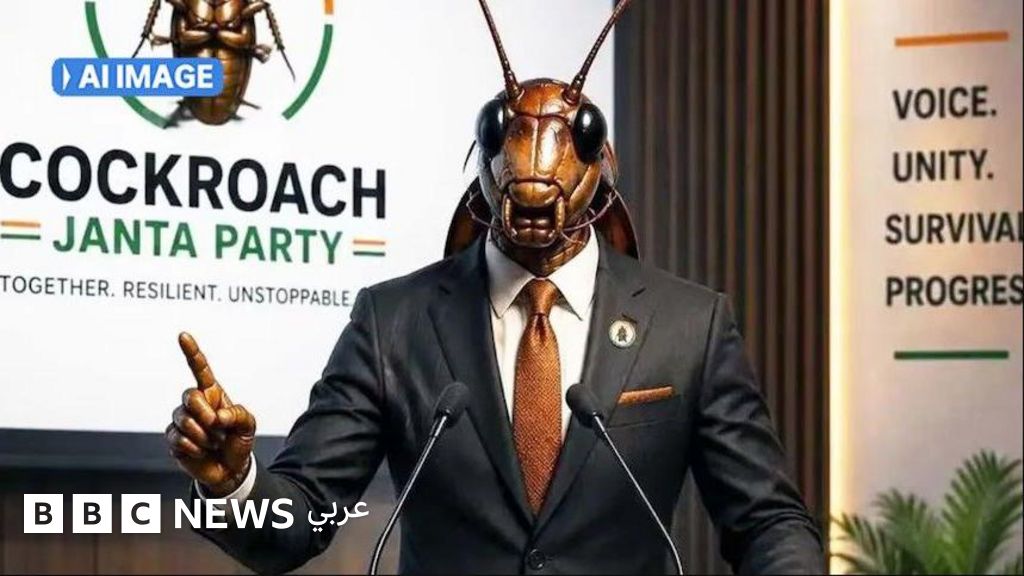
"Cockroach People" is not a party, but a youth movement that started about two months ago online before taking to the streets and becoming one of India's most prominent movements.
What do we know about the "Cockroach People's Party" protests in India?
Image caption, Promotional image generated by artificial intelligence used by the "Cockroach People's Party" movement
Article Information
Author, Michael Sheils McNameeRole, BBC
Published 9 minutes ago
Reading time: 4 minutes
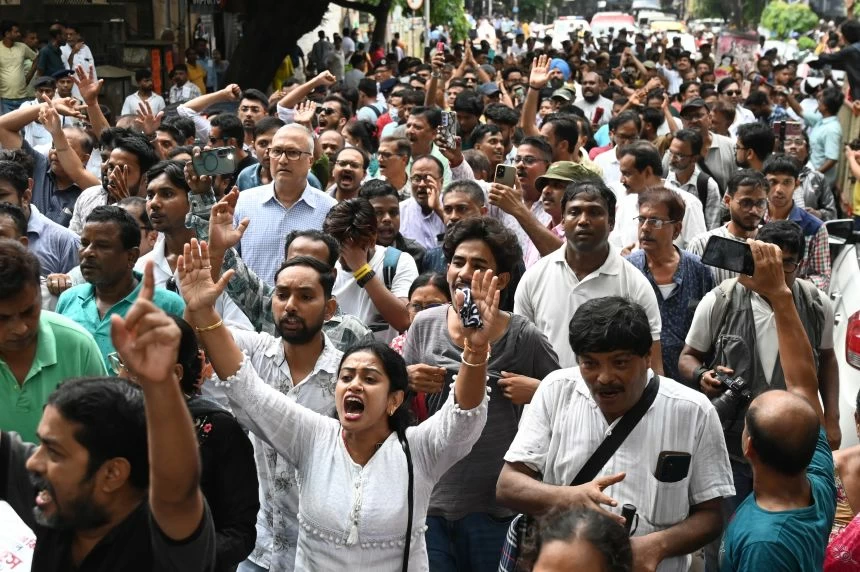
Tens of thousands of Generation Z took to the streets of the Indian capital Delhi, demanding the resignation of the country's education minister.
The protests are led by a movement calling itself the "Cockroach People's Party," which began its activities online about two months ago with a satirical tone before turning into one of India's most prominent youth movements.
Despite the satirical tone that accompanied the formation of the movement and is even reflected in its name, it quickly became a magnet for young people dissatisfied with conditions in India, where unemployment rates are high.
The "Cockroach People's Party" is not a political party; it is a movement founded and led by a political communication strategist named Abhijeet Deepke, aged 30, a former student at Boston University in the United States.
How did the 'Cockroach People's Party' attract millions in India?
Protests in India against a law granting citizenship to non-Muslims
"The Beginning"
In an interview with the BBC, Deepke said it started as a "joke, and I thought we would gather ourselves with the possibility of launching a platform at most, but as soon as we provided a form to register affiliation with the movement via Google, we received tens of thousands of membership applications."
Thus, the "Cockroach People's Party" movement found its way to becoming a serious protest movement.
On July 9, the movement announced a march to parliament on the 20th of the same month, and indeed the call was answered by thousands who came to the capital Delhi.
In other Indian cities such as Bangalore and Goa, hundreds organized candlelight vigils in solidarity with the Cockroach People's Party movement's march in the capital.
Skip most read and continue reading
Princess Leonor at the forefront of the 2026 World Cup celebrations... Who is the heir to the Spanish throne?
The other winner of the World Cup... Lamine Yamal's little brother who captivated the internet
Iranian attacks on Kuwait, Bahrain, and Jordan, and the United States targets Iranian military command centers and naval capabilities
How did Trump plunge the United States into numerous crises? - The Guardian
During the march, participants denounced the way authorities handled engineer and activist Sonam Wangchuk, who was detained after going on a hunger strike in solidarity with the Cockroach People's Party movement.
On Saturday, Wangchuk - aged 59 - was taken to hospital where he announced he would continue his hunger strike, sparking outrage among supporters of the Cockroach People's Party movement.
Image caption, Supporters of the Cockroach People's Party movement demanded the release of activist Sonam Wangchuk
"Origin of the Name"
The reason for naming the movement the Cockroach People's Party (Kokroch Janata Party) stems from remarks made by India's Chief Justice Surya Kant in May, when he compared unemployed young people who turn to journalism and join youth movements to "cockroaches and parasites."
The movement's founders seized on the word "cockroaches" from the Chief Justice's expression and added the word "Janata" from the name of the ruling party (Bharatiya Janata Party) led by Prime Minister Narendra Modi – thus the new movement's name became (Kokroch Janata Party) or Cockroach People's Party.
The Chief Justice later clarified that he meant those young people holding fake degrees, not all Indian youth.
When the movement moved from cyberspace to the ground, many participating youths wore costumes reflecting the movement's name, such as masks with cockroaches drawn on them or wearing cleaning workers' clothes.
"Movement's Demands"
The demands of the Cockroach People's Party movement were initially centered on issues related to the country's education system.
Among these was the medical college entrance exam; about 2.28 million students took the exam on May 3 after spending months - and in some cases years - preparing for it, given its notorious difficulty.
Then the competent authorities promptly canceled the exam following allegations of question paper leaks.
The cancellation decision dealt a severe blow to the hopes of many who would have to retake the same exam weeks later.
Families say about 20 students committed suicide because of this decision, which was among many reasons that ignited the Cockroach People's Party protests.
The youth movement demands that the competent authorities reconsider the education system, hold Education Minister Dharmendra Pradhan accountable, and call for his dismissal.
Commenting on the treatment of engineer and activist Wangchuk, Cockroach People's Party leader Abhijeet Deepke called on Prime Minister Narendra Modi to resign from his post.
Image caption, Abhijeet Deepke had begun a hunger strike after Sonam Wangchuk's detention, before ending it on Monday
It remains unclear whether the Cockroach People's Party movement will achieve its goals – dismissing the education minister and reconsidering the education system – but the movement has nevertheless had a significant impact on the Indian political scene.
Monday's protests are considered the largest of their kind in the capital Delhi against Modi's government in years.
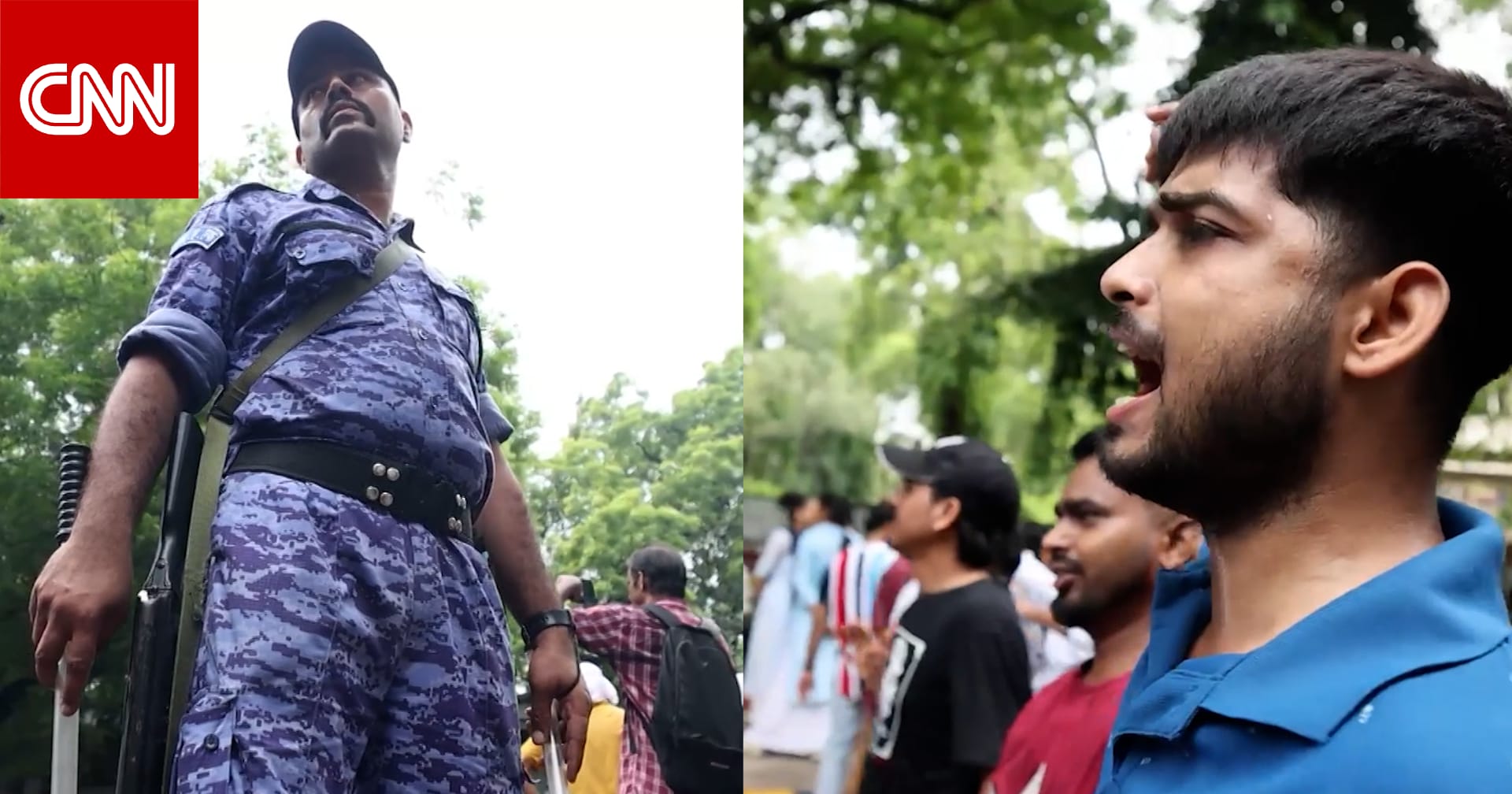
The Cockroach People's Party movement has received support from several opposition politicians; among them is Indian National Congress leader Mallikarjun Kharge – who criticized the police's use of electric shocks and batons against protesters, describing it as "an attack on democracy."
Mahua Moitra, a Trinamool Congress MP, also joined the protesters on Monday morning before attending a parliamentary session.
Also, Akhilesh Yadav, leader of the Samajwadi Party, expressed support for the students and protesters gathered in the capital Delhi, saying they should be treated with respect.
On Tuesday, Indian opposition leader Rahul Gandhi criticized Prime Minister Narendra Modi's silence over the crackdown on protesters, demanding he apologize to the students.
Discover more
Skip shorts and continue
Shorts
End of shorts
India demolishes Muslim homes after anti-remarks protests12 June 2022
Violent protests in India over new military recruitment scheme18 June 2022
Communists in India once ruled millions of people, so what happened to them?28 May 2026
Original source: BBC Arabic


Comments (0)
Be the first to comment.