What is the danger of one person having influence that rivals countries?
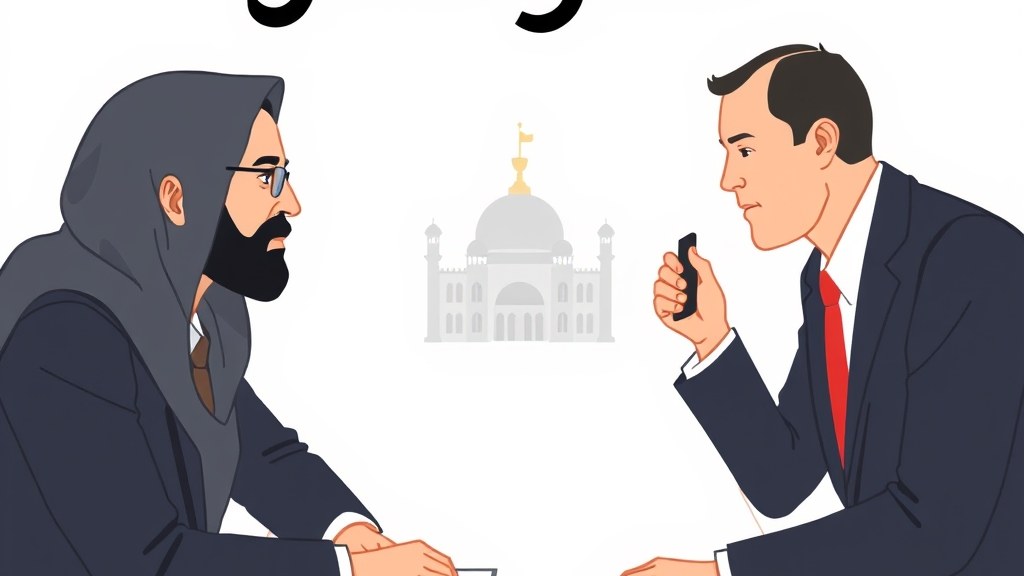
Another week, another arrogant statement from Elon Musk, predicting that his company SpaceX will become 'more valuable than the rest of the Earth' if it achieves its long-term goals,' as Tim O'Reilly, founder of O'Reilly Media, wrote in his analysis of SpaceX's dominance in space and its geopolitical impact. Musk, the world's first trillionaire, currently holds enormous influence rivaling that of countries, and his company controls internet and mobile phone services in sensitive regions covered only by the Starlink network. What does that mean for the world?
During the Russian-Ukrainian war, Reuters reported that Musk cut off internet access for Ukrainian soldiers, which some interpreted as Musk's fear of the war escalating into a nuclear conflict, so he decided to cut service in the field to withdraw troops. Musk denied this, but widespread fear emerged at the time about one person's ability to influence the fate of a major international conflict. Then the Polish foreign minister stated that Starlink is dangerous and that they must get rid of their dependence on it in case of similar incidents in the future; Musk responded with a tweet: 'Be quiet, little man,' sparking European concern and debate over their need for their own satellites in low Earth orbit (Foreign Policy).
According to experts, Musk adopts a model that moves away from 'institutional capitalism' subject to accountability and replaces it with the pattern of feudal rulers and the power of artificial intelligence. Billionaires are no longer just businessmen managing production but have become 'leaders' using their wealth to directly intervene in politics, influence government decisions, and steer technological systems according to their own vision. Musk's approach is based on absolute centralization, benefiting from state support and bypassing institutional accountability barriers, according to O'Reilly (The Economist).
Quinn Slobodian, a historian at Boston University and author of books on capitalism, and co-author of a recently published book 'Muskism: A Guide for the Perplexed,' says in an interview: 'SpaceX consists of three main sectors, the most important of which is the communications sector, Starlink, with about 10,000 satellites in low Earth orbit, representing about 70% of satellites in orbit, providing broadband internet with fast response times...' (Foreign Policy).
In the era of globalization, there was a separation between economy and politics thanks to multilateral trade treaties, a general sense of security among investors, and a degree of consensus between host and investing countries. But things have changed, according to Slobodian, because Musk has almost monopolized the satellite launch market by reducing costs, adopting a vertical integration model of production, and mastering what was previously difficult to achieve.
Does this mean that politicians are obliged to get close to Musk because of his monopoly on the satellite launch market, or is the opposite true? Slobodian believes it will alienate them. He says: 'This is what is happening in the European Union currently... It has caused enough alienation among people to accelerate the pace of distancing from him, even as his global importance increases.' Slobodian adds that the BRICS countries are the most serious opponents; South Africa has not allowed Starlink receivers to enter its territory; and India, despite being one of the largest users of the X platform, has not allowed it either. Nor should we forget that Brazil seized Starlink assets after Musk refused to monitor inciteful content on the X platform, which was calling for a coup there.
Therefore, we should think about setting controls and some form of oversight on a company like SpaceX, as experts suggest. Slobodian concludes: 'Things will not improve until we diversify the foundations of the American political economy... such as biotechnology, higher education, and the green manufacturing sector that received strong support from former President Joe Biden. If we return to these aspects, we will be able to break free from the suffocating grip of Silicon Valley.'
Other articles by the author
The global energy map is being redrawn
Why is philosophy flourishing in the digital age?
How to protect your mind in the age of artificial intelligence?
The story of stories: from campfire tales to AI innovations!
World Environment Day: agriculture between sustainability and depletion
Original source: Al-Jazirah


Comments (0)
Be the first to comment.