Wildfire Smoke Blankets US Cities Ahead of World Cup Final

Dense clouds of wildfire smoke, drifting south from Canada, triggered new air quality warnings in the United States on Friday, raising concerns about the World Cup final scheduled for Sunday near New York.
Air quality indices in Detroit and Chicago fell into the 'hazardous' range, and the tracking site IQAir reported them as the two most polluted cities in the world.
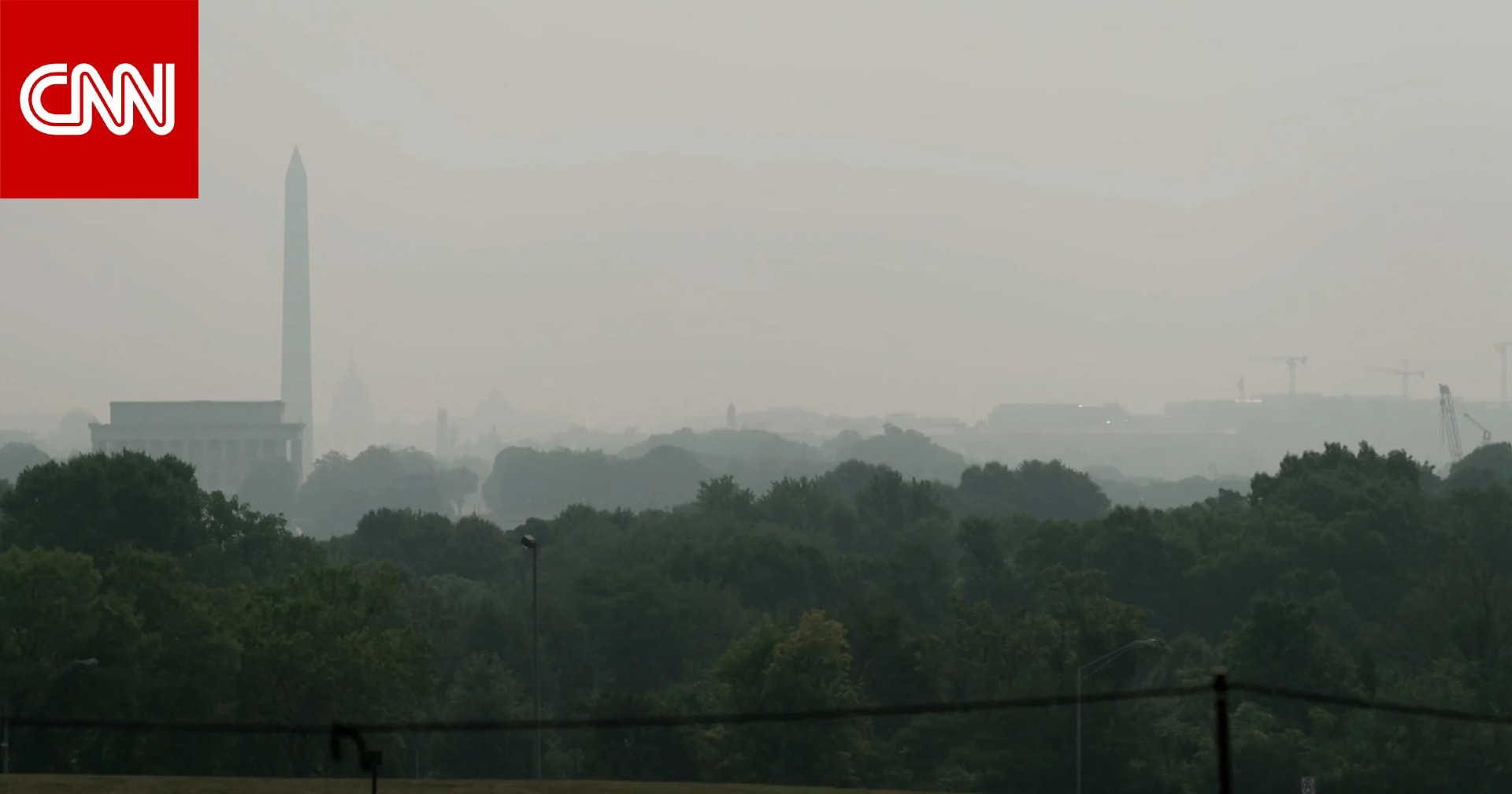
The southward wind shift also severely affected the capital Washington, where it recorded the second-highest level on the index within the 'very unhealthy' category, a stage where authorities urge residents to avoid unnecessary outdoor activities.
In New York and neighboring New Jersey, where the final will be held Sunday in an open-air stadium, weather conditions became 'unhealthy' after smoky haze on Thursday made the Manhattan skyline barely visible.
Andrew Giuliani, executive director of the White House Task Force on the World Cup, said in a press briefing that tournament organizers are 'monitoring the situation closely'.
Experts at the National Weather Service warned that the smoke could become denser overnight into Saturday morning.
Expert Peter Mullinax told AFP, 'What we will start to see is a return of northwesterly winds over the Great Lakes region, which will carry some of that smoke and push it toward the Northeast.'
But he clarified that forecasts do not indicate that air quality in the northeastern United States on Sunday will be as bad as the region experienced during the week.
He added that during the match between Spain and Argentina, 'we do not expect to see the heavy smoke density we are seeing now,' even if hazy conditions persist.
He continued, 'I don't think this has the same level of impact as playing a match at the present time.'
Mark Parrington, an expert at the Copernicus Atmosphere Monitoring Service, noted that rainfall over the weekend could also help alleviate the smoke.
He told AFP, 'We just have to see if those fires continue at the same scale.'
In cities across the Midwest and Northeast, people wore masks outdoors to filter the polluted and hazardous air, with libraries and train stations distributing them for free in New York.
The impact is more severe in the Upper Midwest, closer to the fire sites, with parts of Michigan, Minnesota, and Wisconsin recording air quality in the 'hazardous' range.
The Weather Service extended its air quality alert for Chicago through Friday, noting that 'wildfire smoke may return tomorrow evening and persist through Sunday.'
Role of climate change
Experts stressed the link between recurring wildfire smoke episodes and climate change.
Paul Mathewson, director of science programs at Clean Wisconsin, one of the states that has seen a sharp increase in smoky days in recent years, said, 'The increasing spread of smoke in the air highlights the importance of a rapid transition to clean energy, rather than building more polluting fossil fuel infrastructure that further exacerbates climate change.'
Mark Parrington emphasized in a statement to AFP that climate change is creating conditions for a longer fire season, accompanied by rising surface air temperatures and decreasing soil moisture.
He explained, 'When ignition occurs, we see large-scale and sustained burning, so these fires can continue to burn for weeks on end throughout the summer.'
The fires escalated Friday in Canada, where more than 200 fires were out of control, particularly in Ontario province, according to authorities.
Damage still remains far from 2023 levels, which saw the worst wildfire season in Canada's history, when nearly 18 million hectares burned.
However, fire intensity increased rapidly over the past week, with nearly 2.8 million hectares burned since the start of the year, according to the latest government figures, noting that this number was about 1.6 million hectares until last Friday.
The fires in Ontario have not caused any casualties, and many residents of remote areas have been evacuated.
Original source: Al-Riyadh




Comments (0)
Be the first to comment.