Axios: Trump prepares for days-long military confrontation with Iran, sees 'room for escalation'
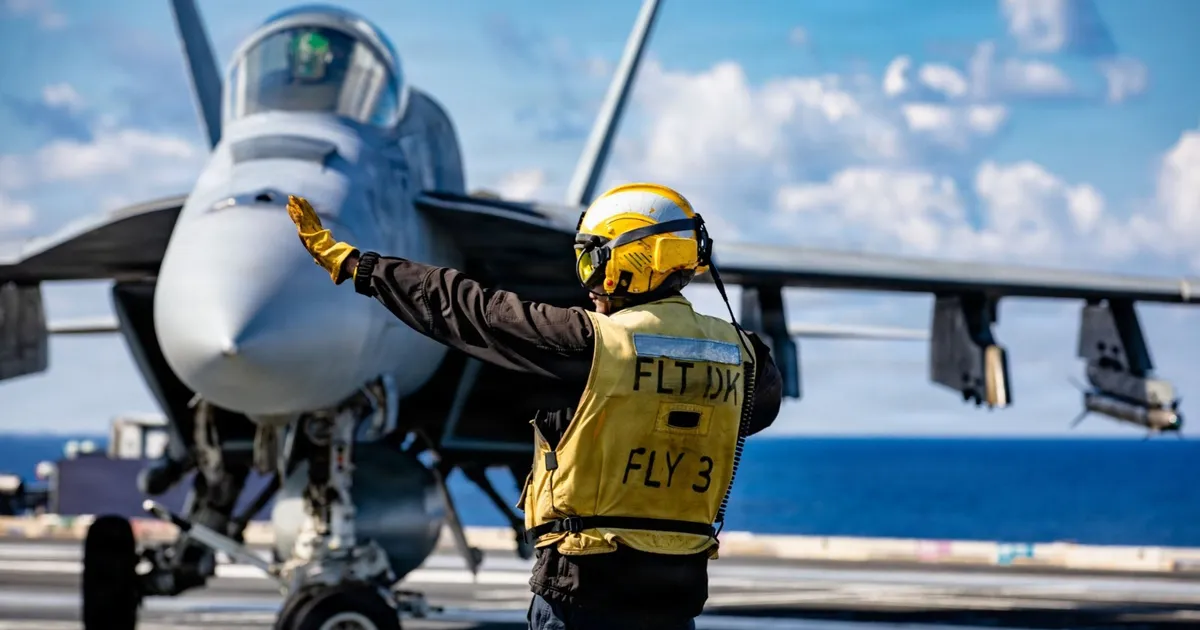
US officials told Axios on Wednesday that the White House is preparing for a military confrontation with Iran that could last for days or even weeks, amid tensions in the Strait of Hormuz, and indicated that the duration and intensity of the new military campaign 'will depend entirely on Tehran's next steps.'
A US official said that the current escalation 'could last a day or two, a week, or even a month, depending on whether Iran continues its attacks on commercial ships in the Strait of Hormuz.'
He added: 'We will strike them until they realize we are serious.' Other officials said the White House believes it has a broader margin for escalation, after hundreds of oil tankers managed to leave the strait in recent weeks.
The officials noted that this alleviated concerns within the administration that a renewed confrontation would immediately lead to a sharp rise in oil prices.
US Central Command (CENTCOM) announced that its forces completed an additional round of strikes against Iran on Wednesday, aimed at 'undermining its ability to attack commercial ships and sailors in the Strait of Hormuz,' on the second day of military escalation between Washington and Tehran, after Iran attacked civilian ships in the strait, while Tehran vowed to retaliate.
Axios noted that diplomatic efforts with Iran have currently stopped, while military pressure has returned to the forefront of President Donald Trump's strategy.
'The ceasefire is over'
Trump said Wednesday, while attending the NATO summit in Ankara, that he believes the ceasefire, which was supposed to last 60 days under the memorandum of understanding with Iran, 'is over,' following military escalation after Iranian attacks on commercial ships in Hormuz.
But Trump shortly afterward signaled his readiness to de-escalate, telling reporters on Air Force One en route to Washington that Iranian officials 'called a little while ago' and that they 'want to reach an agreement.'
It was not clear which call Trump was referring to, and Iranian officials did not immediately confirm any direct contact. Trump added: 'I don't know if they are worthy of making a deal. I don't know if they will stick to it. Frankly, they are like lunatics.'
Iran: The strait will not be opened by threats
In response, Iran's chief negotiator and parliament speaker Mohammad Bagher Ghalibaf accused the United States of 'bullying and breaking promises,' warning that the Strait of Hormuz 'will only be opened under Iranian terms.'
He wrote on X: 'If you strike us, you will receive strikes. The Strait of Hormuz will only be opened under Iranian arrangements, not under US threats.'
The issue of reopening the Strait of Hormuz and ensuring freedom of commercial navigation has become a key goal for the Trump administration, seeking stability in global energy markets. For Iran, maintaining its influence in the strait has become 'a fundamental demand in any agreement to end the war.'
This issue was a central clause in the memorandum of understanding between Washington and Tehran, but differing interpretations of the strait's provisions have now become a major reason for the collapse of the agreement.
The memorandum stipulates that Iran allows safe passage of ships through the Strait of Hormuz, but Iranian officials accused the United States after its signing of violating the agreement by directing ships to a southern passage off the Omani coast without Tehran's approval.
'Iranian frustration'
A US official said the current escalation reflects frustration among more hardline currents within the Iranian leadership, who believe the memorandum 'has not yielded real gains for Tehran.'
He added that Iran saw its influence in the Strait of Hormuz wane as hundreds of ships passed through the southern passage near the Omani coast.
He noted that despite US sanctions waivers, Iran faced difficulties selling its oil because financial institutions refrained from approving transactions, and countries hesitated to rely on temporary waivers.
He added that none of the frozen Iranian funds have been released yet because Tehran has not taken the required nuclear steps under the agreement.
He also said that the framework agreement brokered by the United States between Israel and Lebanon made the Lebanon-related part of the memorandum 'pointless.'
'Time to respond'
The US official said that part of the Iranian leadership 'was not satisfied with all that.' He added: 'They started shooting, and we decided it was time to respond forcefully. It's a process. We have patience. And if we don't feel we are going to get the deal we want, we won't go through with it.'
US Vice President JD Vance stated Wednesday that the US position is clear: the Strait of Hormuz must remain open.
He added: 'If they try to close it, there will be a response from the US military.'
He continued: 'Either they comply, or they will face exactly what happened to them last night. And that will continue until they open this passage and stop firing on ships.'
Original source: Asharq News



Comments (0)
Be the first to comment.