Asian Bonds Attract Largest Foreign Inflows in 7 Months
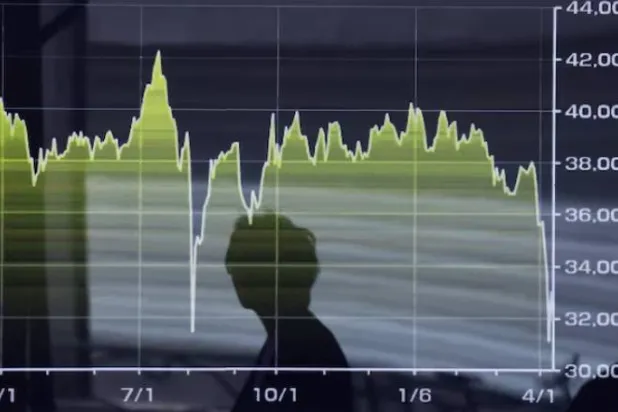
Asian bonds recorded the largest foreign investment inflows in seven months in June, supported by falling oil prices and rising demand for technology.
AI spending nears tipping point... and investors are shifting their bets
The near-vertical rise in shares of AI chip companies has faced turbulence, amid growing concerns over high valuations and the sustainability of the massive revenues these companies are generating, as some investors quietly reposition themselves in anticipation of a slowdown in the spending boom, which is nearing a trillion dollars, and which may benefit the giant cloud computing companies bearing the cost of this spending.
For most of the past two years, the prevailing trend was the opposite; investors rushed into semiconductor and infrastructure stocks on the assumption that Microsoft, Amazon, Alphabet, and Meta would continue to accelerate their spending on building data centers.
Massive spending nears a slowdown phase
But this spending now appears poised to slow; UBS expects the capital expenditure of giant cloud computing companies to rise by 76% this year to reach $673 billion, before its growth slows to 25% next year, and then to just 6% in 2028.
Some active portfolio managers have already begun reducing their exposure to chip stocks, while increasing their investments in the shares of the cloud computing giants themselves, whose performance has lagged significantly behind the rallies seen in chip stocks. They have also moved to buy shares of software companies and sectors expected to benefit from the adoption of AI technologies, such as finance and healthcare.
Alexis Bousar, global equity portfolio manager at Edmond de Rothschild Asset Management, who has already reduced his exposure to semiconductor stocks because he sees them as overpriced relative to expectations, said: 'Once the cloud computing giants stop increasing their capital expenditure, it will be a breakthrough for these companies and a negative signal for the semiconductor industry.'
Humanoid robots displayed at the Ant Group booth during the World Artificial Intelligence Conference in Shanghai, China, July 17, 2026 (Reuters)
High valuations and crowding risk
The Philadelphia Semiconductor Index, whose largest components include Nvidia, Broadcom, Micron, ASML, and TSMC, has more than doubled over the past year, even after declining about 18% from its peak recorded in June, compared to an 11% rise in the equal-weight S&P 500 index, or an 8% gain in the European STOXX 600, which has limited exposure to AI.
The Bank of America fund manager survey in July showed that 82% of participants consider semiconductor stocks the most crowded trade in the markets, while none reported taking short positions on the sector.
This raises a question about how investors would position themselves if AI spending remains strong but no longer accelerates at a pace sufficient to support the expectations embedded in AI infrastructure stock valuations.
Bousar increased his investments in Amazon, and also favors areas such as liquid cooling systems, cybersecurity, and selected software companies, adding: 'We currently have very low exposure to the semiconductor sector.'
Investor repositioning
Alberto Conca, chief investment officer at LFG+ZeST, sharply reduced his investments in memory chip makers and chip manufacturing equipment, while building positions in cloud computing giants and healthcare stocks, and supported this view by buying put options on a number of semiconductor stocks.
After the cloud computing giants funded the first phase of building AI infrastructure from their own cash flows, they have begun increasingly relying on external financing, raising questions about whether capital market pressures might ultimately limit spending growth.
Bond markets detect signs of stress
The corporate bond market has absorbed billions of dollars in issuance from major tech companies this year, and until recently, investors were snapping them up strongly.
Torsten Slok, chief economist at Apollo, points out that coverage ratios, which measure the size of demand for bonds relative to supply, fell to less than two times in July, compared to about five times in February.
In June, the Bank for International Settlements, based in Basel, Switzerland, warned that any disappointment in returns could lead to a sudden pullback in funding, turning the capital expenditure boom into a prolonged downturn.
Conca said: 'Cash flows are starting to be almost entirely drained by capital expenditure,' adding that the cloud computing giants will become more disciplined in the pace of their spending growth.
In this context, Empirical Research points to a growing gap between the slowing growth of capital expenditure on one hand, and the very high revenue expectations for chip companies and other AI infrastructure suppliers on the other, meaning one of the two sides must change.
The firm said: 'Either the capital expenditure path for the cloud computing giants is revised upward again, or the expected revenue growth for their suppliers will have to come from other sources.'
A person holds a toddler-shaped robot at the Fourier booth during the World Artificial Intelligence Conference in Shanghai (Reuters)
For her part, Madeline Ronner, senior portfolio manager at DWS, expects that comments from the cloud computing giants during the earnings season will remain supportive of continued investment. She said: 'The surprise would be if that didn't happen.' She added that institutional investors' expectations for 2027 spending are still much higher than analysts' estimates.
DWS took some profits in semiconductor stocks after their strong rally, but still maintains an above-average investment weight in the sector, and some of its funds increased exposure to industrial and electrical equipment stocks after the recent downturn.
Regulatory hurdles threaten expansion pace
Rising local opposition to data centers in the United States could also slow spending growth. Empirical Research estimates that about 70% of data center projects face varying degrees of opposition.
New York State became the first U.S. state to halt the construction of new large data centers on Tuesday, after imposing a temporary one-year moratorium, amid growing concerns that the facilities driving the AI boom are raising electricity costs, draining water resources, and increasing burdens on local communities.
Nevertheless, investor appetite for AI infrastructure remains strong; Morningstar data shows that chip-focused funds attracted record net inflows of $10 billion through May.
Original source: Asharq Al-Awsat





Comments (0)
Be the first to comment.