America's Major Banks Reap Record Profits in Q2 Driven by Deal Surge
Wall Street's top banks posted strong performance in the second quarter, fueled by a boom in M&A deals and a rebound in public offerings.
Wall Street's top banks posted strong performance in the second quarter, fueled by a boom in M&A deals, a rebound in public offerings, and increased trading activity amid global market volatility. The results of JPMorgan Chase, Wells Fargo, Bank of America, and Goldman Sachs showed the ability of the US banking sector to capitalize on geopolitical uncertainty and asset price volatility to boost revenues and profits.
JPMorgan boosts profits on deal surge
JPMorgan Chase on Tuesday reported higher second-quarter profits, driven by a boom in investment banking activity due to a surge in big deals, as well as its trading units benefiting from financial market volatility.
The largest US bank posted profits of $21.2 billion, or $7.70 per share, in the three months ended June 30, compared to $14.99 billion, or $5.24 per share, in the same period last year, according to Reuters.
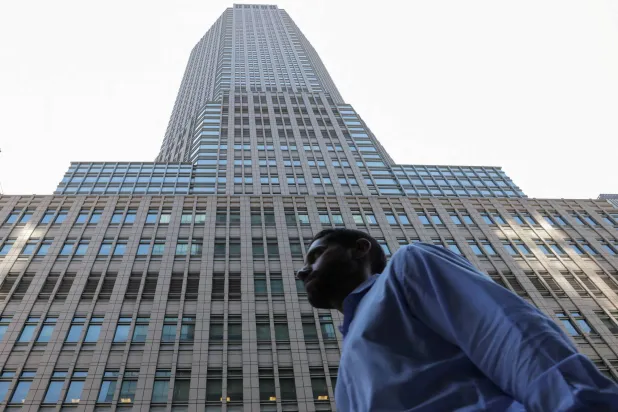
A sign with the JPMorgan Chase logo in front of the bank's headquarters in Manhattan, New York (Reuters)
According to data from Dealogic, the value of announced global M&A deals since the start of the year has exceeded $3 trillion, boosting one of the key fee-based revenue sources for major banks: advisory services on deals.
Although volatility stemming from the Iran conflict, along with concerns that artificial intelligence could radically alter the business model of traditional software companies, briefly affected investor sentiment and slowed deal-making, investor appetite quickly returned to the markets.
Jamie Dimon, CEO of JPMorgan, said in a statement: 'The US economy has shown remarkable resilience this year, with a clear increase in corporate investment and employment.'
He added that this strength is supported by a range of positive factors, including AI-related capital investments, financial incentives, and benefits of more efficient regulation. The bank's shares rose 1% in pre-market trading following the results announcement.
JPMorgan maintained its lead in global investment banking rankings, achieving the highest revenues in this sector, according to Dealogic data.
Meanwhile, the US IPO market experienced a broad recovery after years of stagnation, led by Elon Musk's SpaceX, whose initial offering value exceeded $2 trillion, marking the largest IPO in history; JPMorgan participated in managing the process.
Improved market conditions also provided private equity and venture capital firms with greater opportunities to exit their investments, either through selling companies or listing them on financial markets. JPMorgan's investment banking fees rose 30% in Q2 compared to the previous year, exceeding the bank's previous estimates.
The bank participated in several major deals during the quarter, including its role as co-advisor in the merger of NextEra Energy with Dominion Energy valued at $67 billion, as well as its role as lead underwriter for the share offering of Alphabet worth $85 billion.
JPMorgan's equity trading revenues rose 86%, while fixed income trading revenues increased 6%. The rebound in investment banking coincided with rising market volatility, giving Wall Street banks a double boost: increased deal-making and equity issuance boosted fee-based revenues, while client activity in markets boosted trading returns.
Wells Fargo benefits from trading strength and loan growth
Meanwhile, Wells Fargo reported a 17% rise in Q2 profits, driven by market volatility that kept trading desks active, along with strong loan growth boosting interest income.
The bank—the fourth largest lender in the US—said net income reached $6.41 billion, or $2.00 per share, in the three months ended June 30, compared to $5.49 billion, or $1.60 per share, in the same period last year.
A view of the Wells Fargo headquarters in San Francisco, California (AFP)
CEO Charlie Scharf said consumer spending is improving, while write-offs and delinquencies have declined, and savings and investments continue to grow across consumer segments. He added that businesses remain cautious, but balance sheets and cash flows are still strong, reflected in solid credit performance.
Shares of Wells Fargo, based in San Francisco, rose 1.4% in pre-market trading, after the stock had declined about 6% year-to-date through the previous close, lagging behind its peers.
The removal of the asset cap imposed on the bank at $1.95 trillion last year eased regulatory constraints, allowing it to accelerate growth plans led by CEO Charlie Scharf. Since then, the bank has focused on expanding its credit card and auto services businesses, as well as hiring bankers from rival banks to bolster its commercial banking segment.
US banks also continued to benefit from reinvesting liquidity from maturing low-yield assets into longer-term portfolios with higher yields. Wells Fargo's net interest income—the difference between what the bank earns on loans and pays on deposits—rose 5% to $12.32 billion in Q2 compared to last year.
Average loans also rose 12% year-over-year, while the bank had expected an increase in net interest income during the period.
Trading activity saw notable growth, with the bank increasing its investment in the financial markets segment that had been constrained during the asset cap period. Financial markets revenue, which includes trading activities, jumped 24% to $2.21 billion in the second quarter.
Scharf said: 'There are still concerns about affordability and inflation, but the labor market and wage growth remain strong. We recognize that these favorable conditions won't last forever, so we are carefully choosing the pace and areas of growth.'
Bank of America boosts profits from trading activity
Similarly, Bank of America reported higher Q2 profits, driven by strong trading activity, as global market volatility prompted clients to rebalance their portfolios. Continued tensions led to uncertainty over global crude oil supplies, causing a sharp rise in oil prices, and negatively impacting the energy sector in the S&P 500 during the second quarter.
Original source: Asharq Al-Awsat

Comments (0)
Be the first to comment.