Burnham faces dilemma of reviving UK economy amid debt pressures
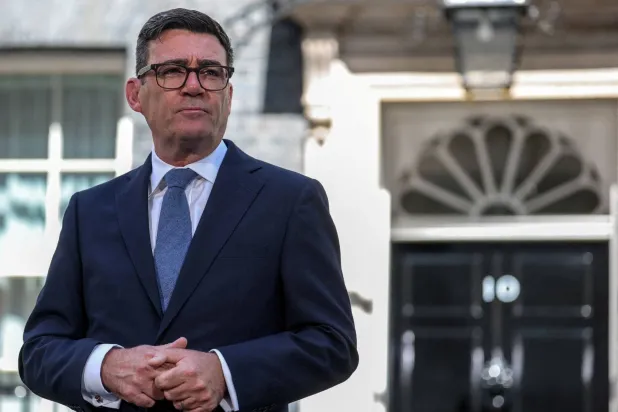
Britain's new prime minister entered office facing an economic challenge that has long baffled successive governments: how to revive a chronically sluggish economy.
Britain's new prime minister, Andy Burnham, entered office facing an economic challenge that has long baffled successive British governments: how to revive a chronically sluggish economy, while easing the cost of living for citizens, and at the same time curbing the rise in public debt.
The decisions Burnham made within his first 24 hours in office highlighted the delicate balance he is trying to strike between the demands of voters and financial markets.
He surprised observers by appointing former Defense Secretary John Healey as Chancellor of the Exchequer, a move analysts interpreted as a message to reassure investors that the government will commit to reducing public debt.
He also announced on Tuesday the abolition of the tax on household electricity consumption for at least six months starting from October, which would save the average British family about 45 pounds sterling ($60) per year, according to the Associated Press.
The government confirmed that the cost of the decision will be funded by scrapping a plan to launch a digital identity system, in an attempt to avoid market concerns over increased spending without clear sources of funding.
Victoria Scholar, head of investment at Interactive Investor, said: 'Healey faces a daunting task; the government has ambitious plans to address the cost of living crisis, but it faces difficult public finances that make implementing these plans costly.'
Chronic Challenges: Burnham faces the same problem that all British prime ministers have faced since the global financial crisis in 2008, with the UK economy's average growth not exceeding 1.5% annually since 2009, compared with around 3% in the 15 years before the crisis.
The prime minister received a positive boost after inflation fell to 2.6% in June, the lowest level in 15 months, compared with 2.8% in May, supported by lower food and fuel prices.
But experts warned that this improvement may be temporary, with the ongoing war in the Middle East continuing to pressure energy prices.
Burnham speaks during a cabinet meeting at Downing Street in London on July 21 (AFP).
Debt and spending pressures: While Burnham seeks to revive the economy, his ability to increase spending remains constrained by his pledges to reduce public debt, which has exceeded 95% of GDP.
According to the UK's fiscal watchdog, debt interest payments reached £111.2 billion ($149 billion) during the fiscal year ending in April, equivalent to 8.3% of total government spending, which reduces resources available for sectors such as health, education, and defense.
At the same time, Burnham faces a new commitment to raise defense spending to 3.5% of GDP by 2035, in response to US pressure for European allies to increase their defense contributions. The Institute for Fiscal Studies estimates that implementing this commitment will cost around £36 billion annually, equivalent to about £500 per person in the UK.
Olivia O'Sullivan, a researcher at Chatham House, said: 'These constraints are structural in nature, and would have been a challenge for any prime minister at this stage.'
Growth: key to the solution: Economists believe that achieving stronger economic growth is the only way to finance public spending without resorting to tax increases or cuts in public services, as growth automatically increases tax revenues through higher corporate profits, wages, and economic activity.
But Burnham has not yet provided many details about his economic plan, merely pledging to re-industrialize by directing investments to areas outside London that have suffered from industrial decline, increasing public housing construction to address the housing crisis, and supporting small and medium-sized enterprises that provide about 60% of private sector jobs.
In contrast, he pledged not to raise taxes on workers and to maintain the 'triple lock' system for pensions, which guarantees annual increases in pensions according to the highest of inflation, wage growth, or 2.5%, one of the most costly items of government spending.
Jim O'Neill, former chief economist at Goldman Sachs and a member of the British House of Lords, said the new prime minister needs to make bolder decisions, adding: 'He must be realistic and present different and courageous steps to address issues such as spending on social care, health services, and the pension system.'
Read also:
Original source: aawsat.com




Comments (0)
Be the first to comment.