Egypt: IMF lowers economic growth forecasts amid ongoing regional pressures
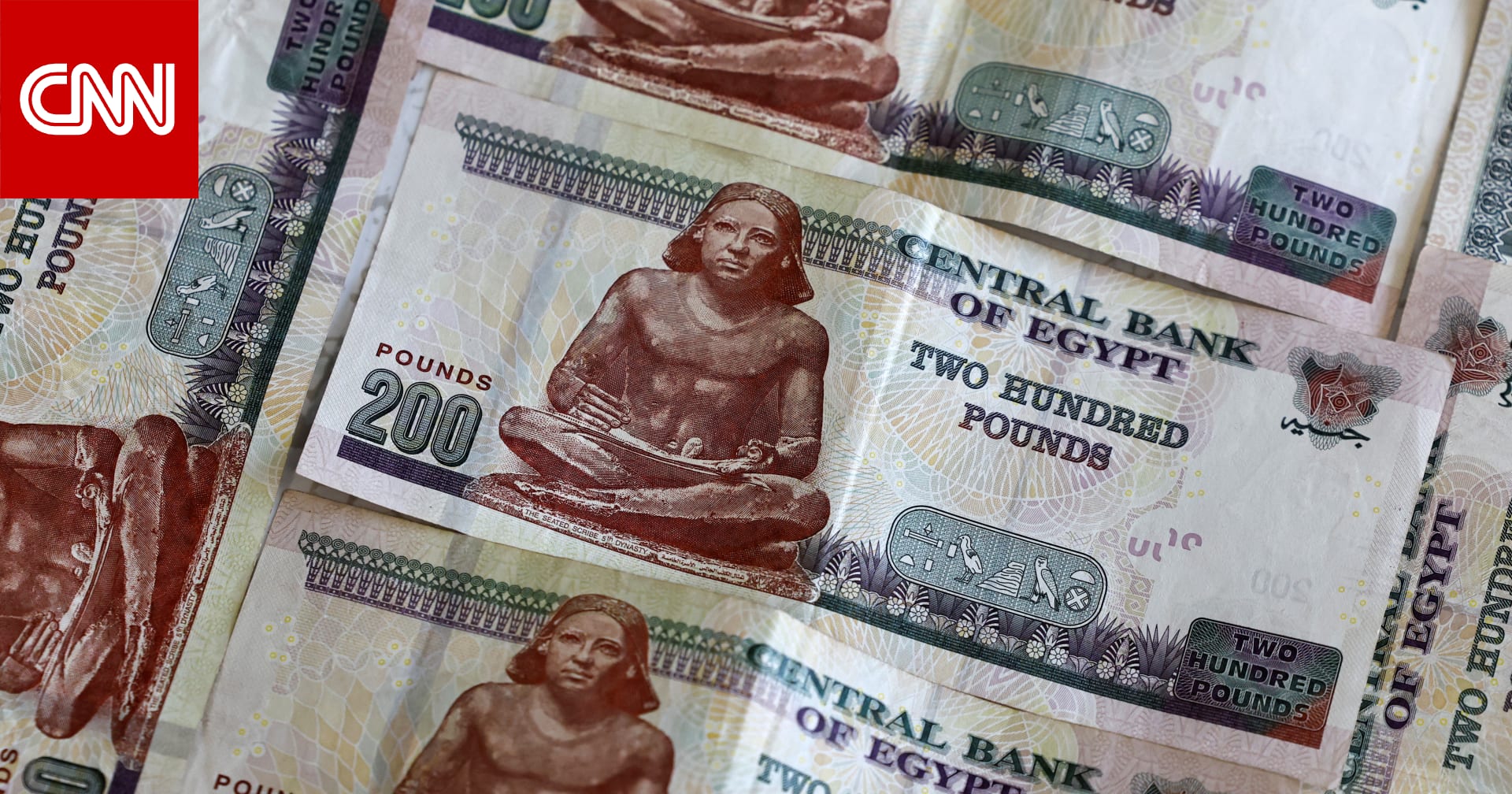
The International Monetary Fund has lowered its forecasts for Egypt's economic growth for the fiscal year 2026/2027 in its latest update of the World Economic Outlook, attributing this to expectations that the repercussions of regional tensions will become more apparent in the coming period, along with weak investment, high financing costs.
Credit: KHALED DESOUKI/AFP via Getty Images
(CNN)-- The International Monetary Fund lowered its forecasts for Egypt's economic growth for the fiscal year 2026/2027 in its latest update of the World Economic Outlook, attributing this to expectations that the repercussions of regional tensions will become more apparent in the coming period, along with weak investment, high financing costs, and continued uncertainty. In contrast, the Fund raised its estimates for economic growth during the previous fiscal year, based on an economic performance that came stronger than expected.
The International Monetary Fund explained that its forecasts indicate Egypt's economy will grow by 4.4% in fiscal year 2026/2027, compared to its previous estimate of 4.8%, while it raised its estimates for economic growth in fiscal year 2025/2026 to 4.6% from 4.2% in the April forecasts.
The Fund noted that lowering growth forecasts for fiscal year 2026/2027 reflects its expectations that the economic effects of the war will become more evident during that period, explaining that weak investment, high financing costs, and continued uncertainty represent the most prominent factors pressuring economic activity.
In contrast, the Fund explained that raising its estimates for fiscal year 2025/2026 came after Egypt's economy recorded a stronger-than-expected performance in the third quarter, which compensated for the initial impact of the war and contributed to improving growth expectations.
This revision comes at a time when the Egyptian government aims to achieve a growth rate between 5.2% and 5.4% in fiscal year 2026/2027, according to the draft economic and social development plan, after the economy recorded a growth rate of 5.3% in the first half of the current fiscal year. The government also targets raising the growth rate to 6.8% by fiscal year 2029/2030.
Economic expert Walid Gaballah said that the IMF's lowering of its forecasts does not necessarily mean that Egypt's economy will achieve the same growth rate, noting that Egypt's economy has recorded actual growth rates in recent years that exceeded on more than one occasion the estimates issued by the IMF and a number of international institutions.
Gaballah added in exclusive remarks to CNN Arabic that the Fund's forecasts are subject to continuous revisions based on data and economic variables, citing the Fund's raising of its estimates for Egypt's economic growth in fiscal year 2025/2026 after an improvement in economic indicators, which reflects the possibility of adjusting forecasts as new data emerges.
He explained that regional and international developments have become factors affecting the performance of Egypt's economy, noting that any easing of tensions in the Middle East region reflects positively on investment flows, public revenues, and investor confidence, while their escalation leads to increased pressure on economic activity.
He added that the state of uncertainty pointed out by the IMF is not limited to Egypt's economy, but rather is a characteristic of the global economy amid ongoing geopolitical tensions, explaining that the decline in foreign direct investment is linked to investors globally turning to safe assets and havens during periods of crises, which affects investment flows to emerging markets.
The government aims to increase total investments to about 3.7 trillion Egyptian pounds during fiscal year 2026/2027, of which 2.2 trillion pounds are private investments representing 59% of the total, as part of its direction to increase the private sector's contribution to economic activity.
Gaballah pointed out that maintaining high growth rates requires continuing to support the private sector by providing more incentives, simplifying procedures, expanding the promotion of investment opportunities, and accelerating the implementation of the government IPO program to help attract new investments and boost economic activity.
The Ministry of Planning had indicated in the draft plan that it is monitoring the repercussions of geopolitical tensions on the global economy and their impact on growth rates, stressing that economic targets may be revised if developments warrant it.
For his part, Dr. Hassan El-Sadi, professor of financial economics at Cairo University, said that the IMF's lowering of its forecasts for Egypt's economic growth to 4.4% in fiscal year 2026/2027 was expected, considering that achieving this rate would be good for Egypt's economy given current economic challenges.
El-Sadi added in exclusive remarks to CNN Arabic that the Fund's revision of its forecasts from 4.8% to 4.4% reflects a reassessment of the growth trajectory, noting that changes in forecasts remain subject to monitoring by international institutions and investors when evaluating economic performance.
El-Sadi explained that he agrees with what the IMF mentioned regarding the impact of high financing costs and continued uncertainty on economic activity, but he believes there are other factors affecting growth, including reliance on imports and the high proportion of imported components in industry, along with high financing costs and limited savings rates, calling for enhancing domestic production and increasing reliance on local production inputs to support growth.
Commenting on the government's targets, El-Sadi said that achieving a growth rate between 5.2% and 5.4% requires the availability of economic and investment components that support the implementation of the development plan targets.
Original source: CNN Arabic



Comments (0)
Be the first to comment.