Egyptian Defense Minister in Turkey: Growing 'Military Partnership' Amid Regional Shifts

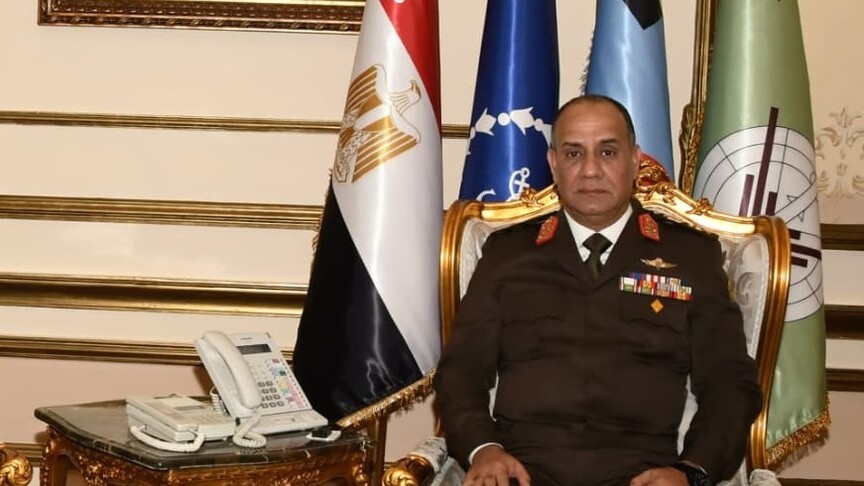
The visit of Egyptian Minister of Defense and Military Production Ashraf Salem Zaher to Turkey goes beyond the protocol framework in the path of restoring relations between Cairo and Ankara, as it is an indicator of the transition of bilateral relations to a new phase, whose title is building a security and military partnership that goes beyond managing past differences towards strategic coordination imposed by rapid regional shifts.
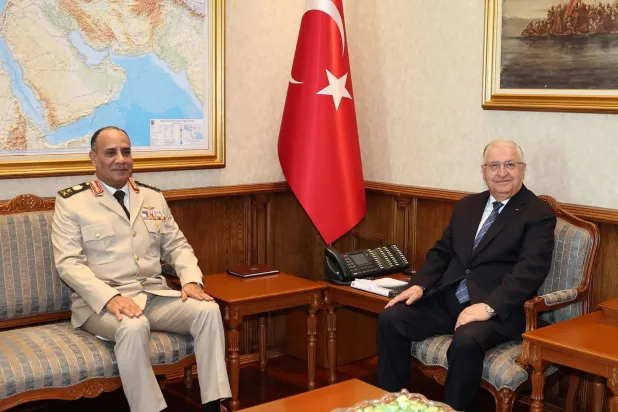
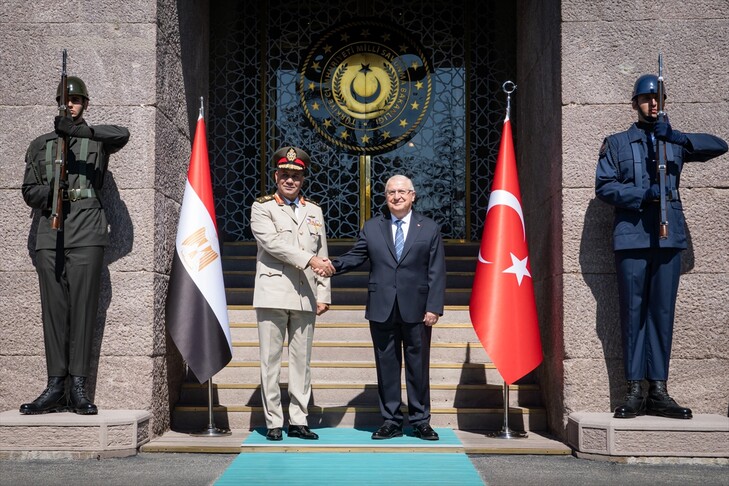
The Egyptian Defense Minister arrived in Ankara on Monday at the head of a high-level military delegation, in his first visit since assuming his post, and the first by an Egyptian defense minister since 2013.
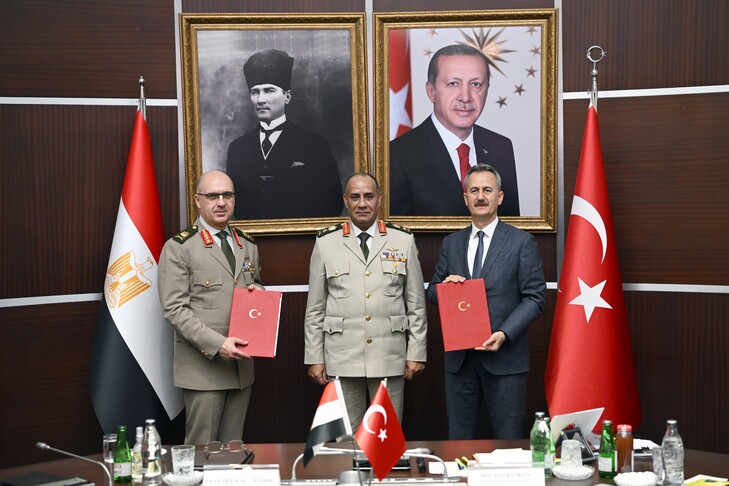
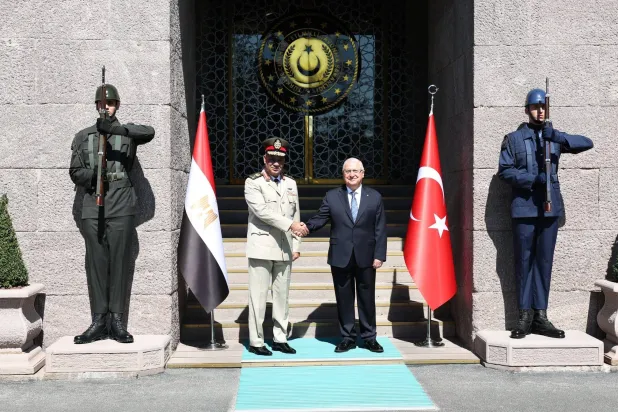
Turkish Defense Minister Yasar Guler received his Egyptian counterpart at the headquarters of the Turkish Ministry of Defense in Ankara with an official military reception ceremony, reflecting the two sides signing a 'letter of good intentions' for bilateral cooperation in the defense field, the development of relations between Egypt and Turkey in all fields, especially diplomatic and defense, and turning the page on differences between two leading countries in the region.
In this context, Turkish political analyst Shenar Baber, in his interview with Al-Sharq, described the return of relations between Turkey and Egypt to their normal course as an 'important strategic development,' as the two countries constitute two main pillars of stability in the Eastern Mediterranean and the Middle East.
Baber added: 'When rapprochement extends to the political and military fields, it means that Ankara and Cairo have moved from managing differences to building mechanisms for coordination on regional files, which reflects positively on issues of Libya, Syria, Red Sea security, and the Eastern Mediterranean, and cooperation between the two largest military powers in the region, giving each greater ability to face common challenges away from the logic of polarization.'
The Turkish political analyst considered in his interview with Al-Sharq that the region extending from the Eastern Mediterranean to the Red Sea, passing through Libya, Syria, and the Gaza Strip, is witnessing a 'reshaping of power balances, while regional countries face intertwined security challenges requiring greater coordination among the major military powers in the region, foremost among them Egypt and Turkey.'
The visit comes just days after the conclusion of the joint air exercise 'Anatolian Eagle 2026,' in which the Egyptian and Turkish air forces participated alongside Azerbaijan, with the participation of an early warning aircraft belonging to the North Atlantic Treaty Organization (NATO), reflecting the transition of military relations between Cairo and Ankara from the stage of re-engagement to the stage of building practical and institutional cooperation.
The visit was also preceded by advanced steps in military cooperation in recent weeks, most notably the convening of the fifth joint Egyptian-Turkish military committee and the signing of a roadmap for military cooperation between the two countries, indicating a long-term work program to expand areas of defense cooperation.
From Competition to Managing Interests
A few years ago, Cairo and Ankara were on opposite sides in a number of regional files, especially Libya and the Eastern Mediterranean, and the political discourse between the two countries reflected a state of intense competition. However, since the start of the political reconciliation path, then the exchange of presidential visits, the priorities of both sides began to change, as the two capitals realized that the cost of continued competition had become higher than the benefits of cooperation, especially in light of a highly complex regional environment and the decline of direct international engagement in some files of the region.
Today, the high-level military visit translates this shift, as rapprochement moves from the political level to the security and military level, which is the most sensitive and strategic level in relations between states.
In an interview with Al-Sharq, political analyst Mohannad Hafez Oglu considered that the visit of the Egyptian Defense Minister to Turkey 'has a military appearance but a political essence, after the intersection of goals between Ankara and Cairo, and each's need for the other within a (competitive cooperation) according to a broad regional vision.'
Hafez Oglu pointed out that 'military cooperation between Egypt and Turkey has three dimensions: maritime in the Eastern Mediterranean to thwart the schemes of Cyprus and Greece led by Israel there; land through expanding bilateral understandings, especially in Libya; and drone-based air cooperation within arrangements that have become necessary, especially against the escalation pursued by Ethiopia, in addition to preliminary operational coordination for any subsequent development regarding the Peace Council in Gaza.'
He added: 'Accordingly, the visit appears as a special national shield for both countries in particular and for the Middle East in general!'
Libya: The Most Important File
The Libyan file remains one of the most prominent motives for military rapprochement between Cairo and Ankara.
Despite the differences in the positions of the two countries during the years of the Libyan conflict, the current reality imposes common interests represented in several points, most notably: 'preserving the unity of Libyan territory and preventing a return to comprehensive war,' 'preventing the expansion of terrorist organizations and cross-border organized crime,' 'protecting economic interests related to reconstruction and energy,' and 'supporting stability that allows for a permanent political settlement.'
Most Prominent Points of Agreement between Egypt and Turkey on the Libyan File
Preserving the unity of Libyan territory and preventing a return to comprehensive war.
Preventing the expansion of 'terrorist organizations' and cross-border organized crime.
Protecting economic interests related to reconstruction and energy.
Supporting stability that allows for a permanent political settlement.
This does not mean a complete alignment of visions on Libya, but military and security coordination between the two countries can reduce the chances of friction and create mechanisms for managing differences, especially since both Egypt and Turkey have influential leverage in the Libyan scene.
A New Approach on Syria
The transformations on the Syrian scene in turn impose a new agenda on Egyptian-Turkish relations.
After years of political divergence, the priority for both sides in Syria has become combating 'terrorist organizations,' reducing the risks of cross-border instability, supporting Syrian state institutions to prevent their disintegration, and addressing the refugee file and humanitarian challenges.
Egyptian-Turkish Priorities on Syria
Combating 'terrorist organizations.'
Reducing the risks of cross-border instability.
Supporting Syrian state institutions to prevent their disintegration.
Addressing the refugee file and humanitarian challenges.
Moreover, Ankara's involvement in security arrangements within northern Syria is matched by a growing Egyptian interest in the future of the Syrian state and its role in the Arab regional system, which makes military dialogue between the two countries even more important in the coming phase.
Regarding the importance of the visit by the Egyptian Defense Minister to Turkey, political analyst Omar Kosh considered that 'the visit came amid tensions in the region with the return of US-Iranian escalation and increasing Israeli apprehension about the rapprochement between Egypt and Turkey.'
In an interview with Al-Sharq, Kosh added: 'The visit comes after military coordination reached an advanced stage, and supports opportunities to enhance stability in the region, especially the situation in Syria, where Ankara and Cairo support efforts to achieve security and stability there, and reject Israeli attacks.'
Eastern Mediterranean: From Conflict to Pragmatism
The Eastern Mediterranean was one of the most complex files of disagreement between Egypt and Turkey, especially given the competition over maritime influence zones and energy files.
Original source: Asharq News
Comments (0)
Be the first to comment.