From Shale Oil Shock to Energy Transitions: How Did OPEC's Influence Endure?
Summary: The decisions of the Organization of the Petroleum Exporting Countries (OPEC) have remained present in market calculations, despite the wars that have affected some of its members and the tensions that have divided their political positions.
The global oil map has changed over the past two decades, redistributing production and export centers after the rise of US shale oil and the expansion of supplies from Brazil, Canada, and Guyana, coinciding with increasing political and economic pressures to accelerate the transition to clean energy sources.
In contrast, the decisions of OPEC have remained present in market calculations, despite the wars that have affected some of its members and the tensions that have divided their political positions.
This presence does not mean that the organization is still able to set prices unilaterally, as was believed in previous stages, but it reveals a deeper transformation in the nature of its influence. Power is no longer linked solely to the volume of production, but rather to the ability of a group of major producers to add or withhold quantities from the market, manage traders' expectations, and then adjust production policy when demand changes or supplies face a sudden shock.
OPEC data provides a numerical explanation of this capability, as global oil demand reached 105.15 million barrels per day during 2025, while global crude production rose to 74.85 million barrels per day.
The organization's member countries exported 19.85 million barrels per day of crude, of which 14.8 million barrels went to Asia, linking a large part of their influence to the fastest-growing consumer and refining markets.
Its member countries still hold the majority of proven global reserves, a base that gives them weight beyond short-term production fluctuations.
However, the expansion of production from outside the organization pushed it to change its working mechanism. In December 2016, it established the "Declaration of Cooperation" with 10 producing countries from outside it, which became the operational basis for the "OPEC+" alliance.
This step came after the supply glut since 2014 showed that market management was no longer possible within the organization alone, and that the effectiveness of any cut required the participation of Russia and other independent producers.
The Biggest Test
The biggest test came during the coronavirus pandemic, when demand collapsed and inventories piled up, so the alliance agreed to cut 9.7 million barrels per day starting in May 2020.
The decision did not end the crisis immediately, but it limited the acceleration of the surplus and paved the way for restoring balance with the return of economic activity.
Since then, the alliance's policy has shifted to more flexible moves combining voluntary cuts and gradual returns of volumes, which appeared again in the decision of seven countries in July to adjust production by 188 thousand barrels per day starting next August, while keeping the possibility of stopping or reversing the return of volumes according to market conditions.
The latest monthly report from the organization reveals the limits of this equation and its opportunities at the same time, as OPEC expects global demand to grow by about 800 thousand barrels per day in 2026 and by about 1.9 million barrels in 2027, compared to an expected increase of 600 thousand barrels per day in production from countries not participating in the Declaration of Cooperation in each of the two years.
This means the alliance still faces growing demand for its oil, but it moves within a market where it no longer monopolizes additional barrels.
The tools of influence go beyond production movements themselves. A research paper issued by the US Federal Reserve Board concluded that OPEC communications and data are associated with lower price volatility and pushing traders to rebalance their positions.
This indicates that the credibility of the message and the market's expectation of the next step have become part of the influence, along with reserves and spare capacity.
Specialists in oil affairs told "Indy Arabia" that OPEC's ability to remain at the center of the market resulted from combining material resources, political alliance, and operational flexibility, but they agreed that the organization's influence has shifted from directly directing prices to managing the balance between protecting revenues and maintaining market share.
Common Goal
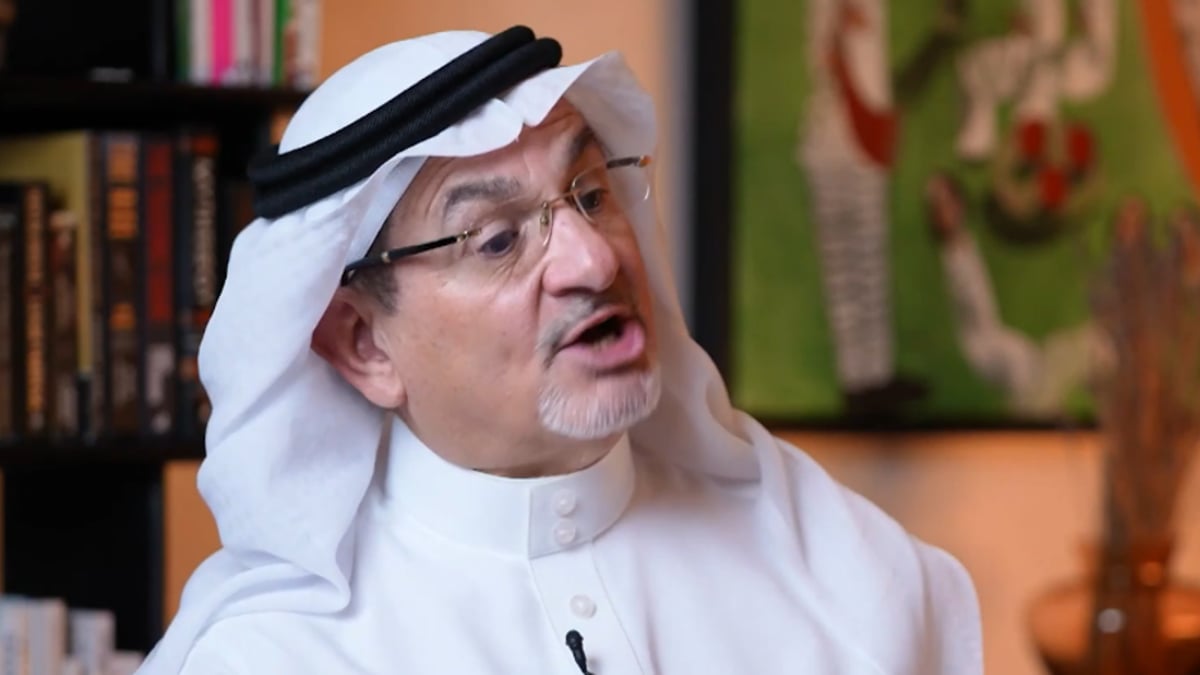
For his part, energy consultant and former head of the information department at OPEC, Fuad Abdulmajeed Al-Zayer, believes that the organization's ability to maintain its position for more than six decades is due to the fact that its member countries, despite their different political orientations, have remained united on a common economic goal of coordinating oil policies and protecting their collective interests.
Read more:
What if US shale oil production returns to growth?
"Hormuz" chokes Iran's coasts
Oil stabilizes near $86 as conflict escalates in the Gulf
From Hormuz to the Red Sea... Has the era of Gulf energy transport flexibility begun?
Al-Zayer explained that OPEC has faced wars among some of its members, global geopolitical crises, and increasing pressure to abandon fossil fuels throughout its history, but it managed to overcome these challenges thanks to its members' realization that the stability of their economies is linked to the organization's effectiveness and ability to make balanced decisions.
Al-Zayer pointed out that the establishment of the OPEC+ alliance in 2016 represented an important turning point in managing the oil market, after it became clear that OPEC alone could no longer influence global supply with the growing production of non-member countries, stressing that the coordination mechanism with independent producers, led by Russia, has proven its effectiveness through flexible production policies that restored the balance between supply and demand.
In this context, Fuad Al-Zayer cited the management of the coronavirus pandemic crisis, when the OPEC+ alliance implemented the largest production cut in its history, which helped absorb the supply surplus and prepare the market for recovery.
Elements of Strength
Al-Zayer added that the organization still possesses strategic strengths, primarily that its member countries hold about 80 percent of global oil reserves, along with spare production capacities and ongoing investments that give them the ability to intervene during crises.
But he stressed at the same time that maintaining this influence requires developing OPEC's tools and working mechanisms to keep pace with the rapid transformations in the global energy market.
Spare Capacity
The CEO of the "Corum Center for Studies," Tariq Al-Refai, said that OPEC countries' possession of a large part of spare production capacity gave them a capability not available to most producers, as they can move quickly when supplies are disrupted or the relationship between supply and demand is unbalanced.
He believes that OPEC+ expanded this capability by including major producers from outside the organization, while the growth of US and other production reduced the ability to set prices unilaterally, without eliminating the alliance's role as a mechanism to control fluctuations and enhance market stability.
Extended Demand
In turn, energy consultant at "Hawk" company, Khaled Al-Owadhi, says that the combined weight of Saudi Arabia and Russia has kept OPEC+ a player that is difficult to bypass, and that oil will not lose its importance with the growth of renewable energy, given its wide uses in petrochemicals, fertilizers, plastics, polymers, building materials, and the automotive and aircraft industries.
Al-Owadhi added that the energy transition will change the demand map, but it will not end the need for supply management or the role of the alliance in the market.
Additional Dimension
Original source: Independent Arabia





Comments (0)
Be the first to comment.