Egypt's Future Authority: State Withdrawal from Economy or Reshaping of Its Role?
The Egyptian parliament approved a draft law transferring the affiliation of the 'Egypt's Future Authority for Sustainable Development' from the Egyptian armed forces to the President of the Republic. It is a government economic entity that oversees a number of strategic state projects, especially in agriculture and food security, and also manages some assets and projects and enters into partnerships with the private sector. The draft law, which still awaits presidential ratification to take effect, stipulates transferring the authority's affiliation from the armed forces
Egypt's Future Authority: State Withdrawal from Economy or Reshaping of Its Role?
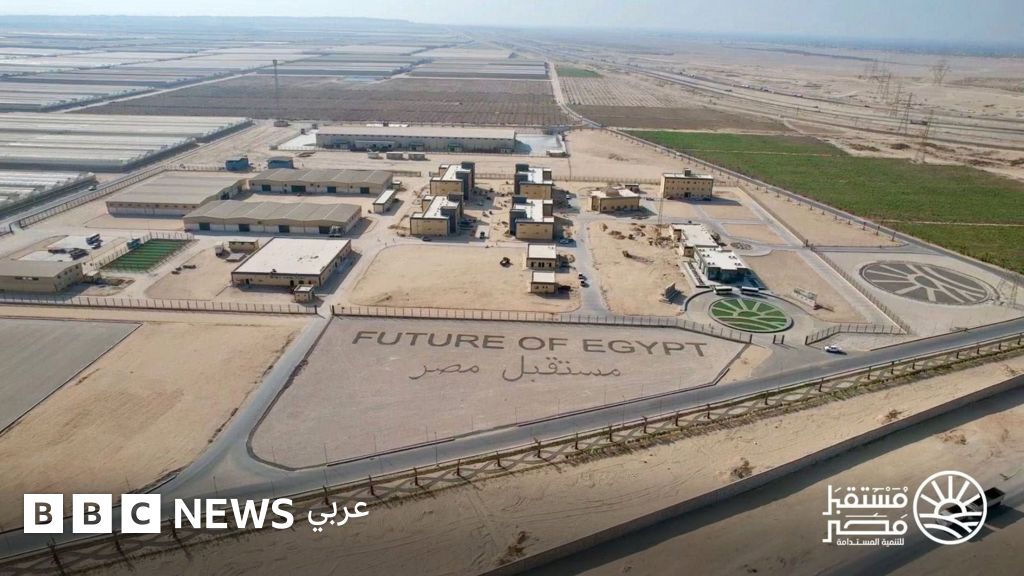
Image caption, An image of one of the projects of Egypt's Future Authority
Article Information
Author, Alaa Rajai Role, BBC News Arabic - Cairo
Published 5 minutes ago
Reading time: 6 minutes
Only about ten days after the government submitted the draft law to the House of Representatives, the Egyptian parliament on Tuesday approved a draft law to reorganize the work of the 'Egypt's Future Authority for Sustainable Development', a government economic entity that oversees a number of strategic state projects, especially in the fields of agriculture and food security, and also manages some assets and projects and enters into partnerships with the private sector.
The draft law, which still awaits presidential ratification to take effect, stipulates transferring the authority's affiliation from the armed forces to the President of the Republic, granting it the status of an economic body of a special nature with financial, administrative, and technical independence.
The authority was officially established by a presidential decree in 2022, while its practical activity dates back to 2017, when it began implementing agricultural reclamation projects using modern irrigation methods and precision farming technology, according to previous government data.
The government says the authority was not operating outside a legal framework, as it was established by a republican decree, but the expansion of its scope of work in recent years necessitated enacting a law to regulate its powers, granting it greater flexibility in implementing development projects and attracting investments, while subjecting it to oversight mechanisms.
What is Egypt's Future Authority?
Image caption, The sectors in which the 'Egypt's Future Authority' for Sustainable Development operates
Egypt's Future Authority for Sustainable Development works on implementing large-scale projects in agriculture and food security, aiming to increase local production and reduce reliance on imports, especially strategic commodities.
Among the most prominent projects it oversees is a project to reclaim and cultivate about 4.5 million feddans, in addition to projects related to storage, agricultural and animal production, and energy.
The new law also stipulates the establishment of two funds affiliated with the authority; one investment fund named 'Ahramat Al-Nil', and the other service fund named 'Da'em'.
The 'Ahramat Al-Nil' fund aims to provide an investment tool to help the authority manage assets, finance projects, and enter into investment partnerships, while the 'Da'em' fund is allocated to finance programs of a service and developmental nature.
Skip most read and continue reading
Washington ends its strikes on Iran on its seventh night, and the Revolutionary Guard announces 'bombing bridges in Bahrain and Kuwait'
'The Odyssey' in theaters, what do we know about the upcoming Christopher Nolan film?
Who deserves the title of the greatest player ever: Messi, Maradona, or Pele?
Andy Burnham: Why is the new British Prime Minister a puzzle to everyone?
Bahaa El-Ghanam, head of the authority, told parliament that transferring the authority's affiliation to the presidency and establishing the two funds aim to turn it into a 'business incubator' that opens the door to private investments.
Between legalizing an existing entity and expanding powers
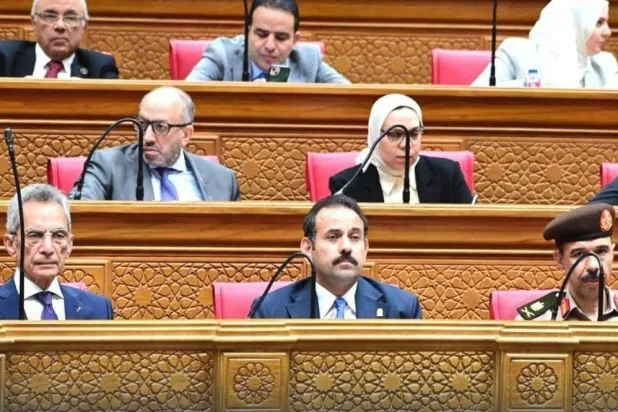
Image caption, Dr. Bahaa El-Ghanam, Executive Director of Egypt's Future Authority, in the Egyptian House of Representatives
Skip podcast and continue reading
Worth noting
In-depth explanation of the most important events and topics, to help you understand the key changes around you and their impact on your life
Episodes
Podcast end
Critics believe the law grants the authority broad powers that may lead to overlapping roles with other government institutions, while its supporters say it provides a legal framework for an already existing entity and helps it implement its projects more efficiently.
Dr. Mustafa Kamal El-Sayed, professor of political science at Cairo University, says the law was passed without sufficient review of the authority's role, considering that the powers granted to it could lead to what he described as a 'state within a state'.
El-Sayed links the speed of the law's approval to the Egyptian government's commitments to expand the role of the private sector in the economy, as part of the economic reform program supported by the International Monetary Fund, which includes reducing the state's role in economic activity.
In contrast, parliamentarian Mustafa Bakri believes the law came to regulate the work of an entity that, in his description, achieved successes in agricultural development, noting that parliament introduced extensive amendments to the draft law.
Bakri told BBC News Arabic that deputies made 73 amendments to the law's 81 articles, aiming to enhance oversight and reduce some exceptions that raised reservations.
The amendments included subjecting the authority more clearly to the oversight of the Central Auditing Organization, reducing some exemptions, and obliging it to pay its tax and insurance obligations. Parliament also deleted an article that obliged the public treasury to bear certain taxes and fees due from it, restored full oversight to the Central Auditing Organization, and limited the authority's powers related to land to those under its jurisdiction.
However, the final version of the law, seen by the BBC, retained broad powers that give the authority flexibility in managing projects and investments, including borrowing, obtaining credit facilities, issuing licenses within sustainable development areas, and granting necessary approvals for projects.
Broad powers raise concerns about oversight
Despite the amendments introduced by parliament to the draft law, critics say the final version does not adequately address concerns about the breadth of the Egypt's Future Authority's powers.
Researcher Nada Arafat, from the Egyptian Initiative for Personal Rights, prepared an analytical paper on the law, and told BBC News Arabic that 'the first version of the law was catastrophic, and even after the amendments, there is nothing in the law that puts the authority under the rule of public law, but rather legitimizes exception'.
Arafat believes the law combines multiple roles in one hand; it grants the authority powers of planning, regulation, asset management, investment, licensing, and oversight of some activities, which could lead, in her view, to a conflict of interest between its role as an investor and its role as a regulatory and oversight body.
Right of public performance: Why do producers oppose it and artists demand it in Egypt?
Resignation 'to relieve the government of embarrassment' raises the question: How are ministers chosen in Egypt?
She adds that among the concerns related to the law is the method of managing public assets, as she believes there is a need for more transparency regarding the lands and projects managed by the authority, including publishing financial data, contracts, and feasibility studies.
In contrast, supporters of the law believe that the controversy over the authority is largely linked to the absence of a clear legislative framework in past years, and that the new law aims to regulate the work of an entity whose role has already expanded.
Dr. Mohamed Fouad, head of the parliamentary bloc of the Justice Party, said the party approved the law despite its reservations, after participating in introducing amendments to it.
Fouad added to BBC News Arabic that one of the main gains of the law is revealing the legal and financial status of an economic entity that operated for years without full clarity regarding its budget and assets, in addition to separating it from the armed forces.
Original source: BBC Arabic




Comments (0)
Be the first to comment.