IEA: Europe's Slow Electrification a 'Grave Mistake' Threatening Competitiveness

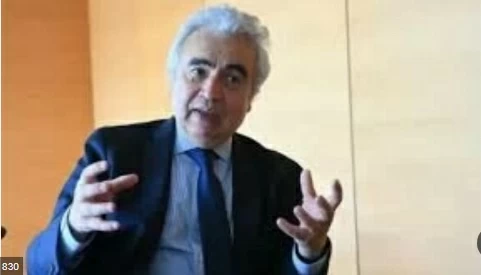
The Executive Director of the International Energy Agency, Fatih Birol, warned that Europe had committed a 'grave mistake' by not accelerating the shift away from imported fossil fuels since the energy crisis that erupted in 2022, saying that this has weakened the competitiveness and economic sovereignty of the European Union.
In an interview with the Financial Times, Birol said that the electrification rate in the European Union—the share of electricity in total energy consumption—is only about 23%, a level close to that of oil-producing countries like the United States, despite Europe's heavy reliance on oil and gas imports, according to what Al Arabiya Business has seen.
He added that the continent was called upon to move faster after the shock of Russian gas supplies, noting that countries such as China, Japan and South Korea have already achieved an electrification rate exceeding 30% of their energy consumption.
Birol and European Energy Commissioner Dan Jørgensen stressed that Europe has faced two major crises in the energy sector in less than five years, which necessitates accelerating the reliance on electricity in heating, transport and industry. While the European Union aims to raise the electrification rate to 32% by 2030, Jørgensen is preparing to propose new long-term targets extending until 2040.
The European Commissioner noted that the Union succeeded during the 2022 crisis in expanding the use of renewable energy, improving energy efficiency, and reducing gas consumption by about 20% after Russia cut its pipeline supplies, but key sectors still rely heavily on fossil fuels.
Jørgensen acknowledged that continued reliance on imports has made Europe vulnerable to global fluctuations in oil and gas markets, including disruptions linked to tensions in the Middle East.
The European Commission is preparing next week to unveil a package of measures aimed at reducing electricity bills and encouraging the use of heat pumps, electric cars and other clean technologies, by lowering taxes on electricity compared to fossil fuels.
A draft of the plan showed that Sweden and Finland are the only EU countries where electricity prices for industry are not more than twice the price of gas. The Commission seeks to narrow this gap so that electricity prices do not exceed 2.5 times gas prices for households and only twice for the industrial sector by 2030.
The new measures aim to enhance the economic viability of the green transition, both for households wishing to install heat pumps and buy electric cars, and for companies seeking to reduce their carbon emissions.
But these efforts may face financial challenges in some countries that heavily rely on taxes and fees levied on electricity bills, such as Greece, Italy, Hungary and Ireland.
Birol pointed out that the limited capacity of electricity grids represents an additional obstacle to expanding the reliance on clean energy, explaining that Europe added a record 85 gigawatts of renewable energy projects last year, but about 600 gigawatts of completed projects are still waiting to be connected to the electricity grids.
He explained that the congestion in electricity grids is largely due to the slow development of national and regional infrastructure, at a time when renewable energy projects are increasing, spread across remote areas compared to traditional fossil fuel plants near industrial and residential consumption centers.
Jørgensen stressed that member states can accelerate the transition immediately by expanding existing grids and improving their operational efficiency, supporting the Union's goals of enhancing energy security and reducing reliance on imported fuels.
Advertisement
Advertisement
Original source: Al Arabiya



Comments (0)
Be the first to comment.