Japan's Deteriorating Policy Sends Yen to 40-Year Low

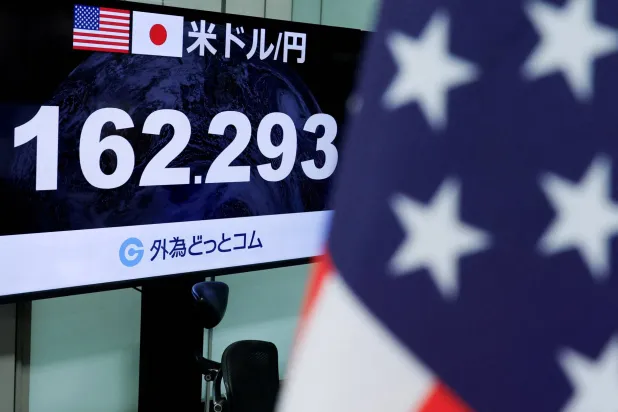
With the Japanese yen falling to its lowest level in 40 years, Tokyo's policy credibility is also waning in the eyes of international investors. The dollar-yen exchange rate, the world's second most traded currency pair, surpassed the 163.00 level for the first time since 1986.
Why is the Japanese currency so weak? Partly due to the strength of the dollar. Most major currencies have depreciated against the US dollar over the past few months, as the second wave of the global energy shock reignited inflation fears, pushing US Treasury yields higher. While most government bonds in developed markets have come under selling pressure, Japanese government bonds are particularly vulnerable, as Japan imports about 90% of its energy needs, 95% of which comes from the Middle East.
But the yen's problems run deeper, and Tokyo's options to address them are limited. The yen failed to recover even when crude oil prices fell 45% during May and June. Proposals from Tokyo that appear 'yen-positive,' such as the recent announcement encouraging Japanese pension funds to invest in domestic financial assets, have also failed to boost the currency.
Currency market intervention remains an option always on the table, and the Ministry of Finance has conducted several rounds of yen buying since 2022, the latest being a $73 billion outlay three months ago. In total, the ministry has spent about $215 billion in attempts to halt the yen's decline. These measures have bought some time, but have not achieved a sustainable rebound. All this suggests that the world is deeply pessimistic about Japan's current policy mix: fiscal policy is too loose, monetary policy is not tight enough, and as always with Japan, the interplay between them raises market concerns about the Bank of Japan's independence.
Japan appears stuck in a policy vicious circle, with limited options to break out of it.
Thinking of buying Japanese bonds? You go first!
On the fiscal front, Prime Minister Sana Takaichi's plans for massive spending to stimulate the economy have not been welcomed by markets, understandably given that the country's public debt-to-GDP ratio still exceeds 200%, the highest in the world by far. Japan has long held this dubious record, but with public finances deteriorating to this extent, the lack of clarity in Takaichi's plan to finance the government's share of expected public and private investments of 370 trillion yen ($2.28 trillion) through fiscal year 2040 is deeply concerning. This discontent has helped push the 10-year Japanese government bond yield to 2.90%, its highest level in 30 years.
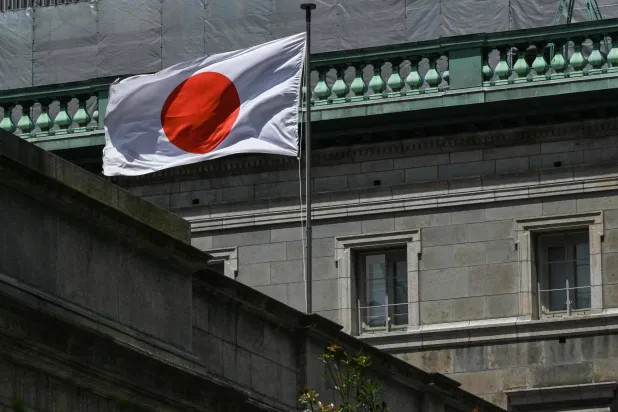
The Bank of Japan raised its key interest rate to its highest level in 31 years, at 1%, but this rate remains minuscule compared to its G20 peers and is still significantly negative in real terms. Many investors see the Bank of Japan as behind the curve, so it is no surprise that short-term US-Japan bond yield spreads have moved significantly in favor of the dollar.
Many investors say the Bank of Japan is behind the curve, so it is no surprise that short-term US-Japan bond yield spreads have risen significantly in favor of the dollar. Takeshi Yamaguchi, chief Japan economist at Morgan Stanley, met with US institutional investors during a visit to the United States earlier this month.
He wrote on Tuesday that many of them expressed concern that Takaichi's substantial fiscal expansion would lead to inflation. Notably, although few argued that Japan's fiscal situation is not that bad, their answer was 'no' when asked whether they would buy long-term Japanese government bonds at current levels. The risk premium these bonds offer is still too thin compared to the fiscal uncertainty.
Robin Brooks, a senior fellow at the Brookings Institution in Washington, goes further, saying Japanese bond yields would likely be in the double digits if the Bank of Japan had not capped yields through its massive purchases of Japanese government bonds. The Bank of Japan is slowing, or 'tapering,' its bond purchases, but still buys 2.6 trillion yen ($16 billion) of Japanese government bonds per month.
Can Japan reduce its debt burden? Japan holds trillions of dollars in domestic and international assets, which Brooks says it could sell to lower its overall debt. These include foreign exchange reserves, assets of the Government Pension Investment Fund (GPIF), the world's largest pension fund, and stakes in domestic equities. But there seems to be political reluctance in Tokyo to do so, and officials may look at the massive foreign exchange intervention since 2022 — which has involved selling over $200 billion of dollar-denominated deposits or assets to support the yen — and decide not to.
Certainly, the prospect of the GPIF and other large pension funds buying more domestic assets has not impressed investors.
Brooks says: 'The effectiveness of intervention is notably diminishing. This is a clear signal — the market is pointing to the need for change, and I don't think the government has grasped that.'
To be fair, Japan cannot be solely blamed for some recent developments that have negatively affected the yen.
The yen has risen again above $90 per barrel, up 30% over the past three weeks due to escalating military operations between the United States and Iran.
The yield spread between two-year US and Japanese Treasury notes widened to 285 basis points, its widest since last August, partly driven by expectations that the US Federal Reserve will raise interest rates twice by the first quarter of next year. But the yen's fate ultimately lies with Tokyo. For now, investors are not cutting it any slack.
Economic columnist for Reuters
Original source: Aleqtisadiah




Comments (0)
Be the first to comment.