Lebanese Army Deployment in the South: First Test of the Framework Agreement

مع توجّه وحدات عسكرية نحو مناطق جنوبية، تواجه خطة انتشار الجيش اللبناني امتحانات ميدانية دقيقة مرتبطة بالانسحابات الإسرائيلية وجهود تثبيت الاستقرار.
With the Lebanese army deploying in the first "experimental zones" in the south, the implementation mechanism of the framework agreement faces its first test. While the state seeks to consolidate its security presence in coordination with UNIFIL and the Military Coordination Group, the success of the experiment remains contingent on Israel's commitment to a full or gradual withdrawal, the army's ability to solidify its deployment, and Hezbollah's stance on the upcoming stages.
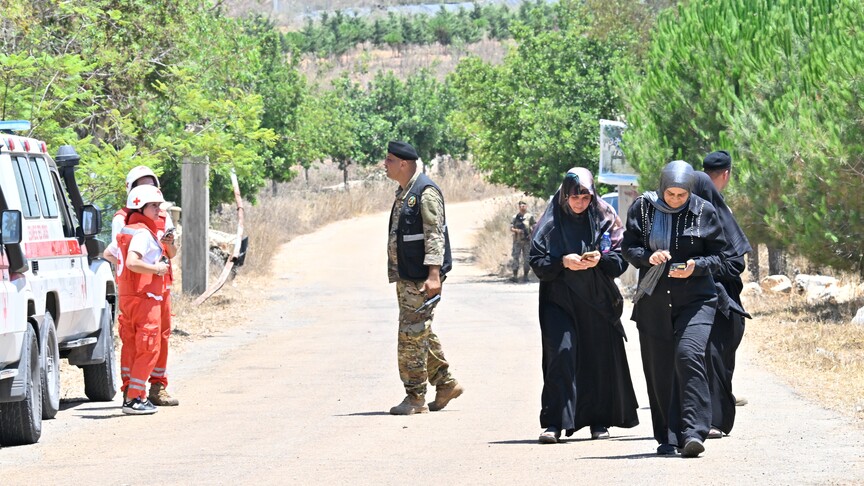
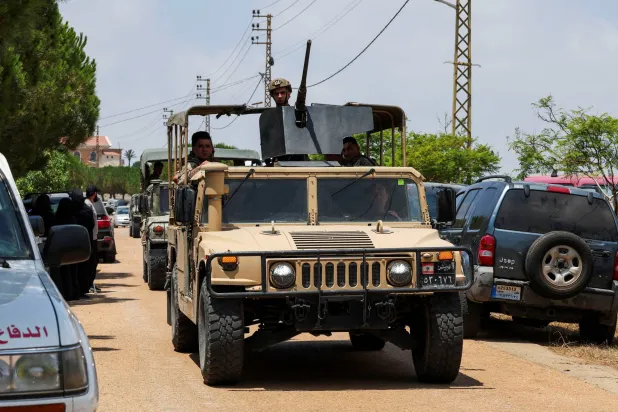
Earlier on Tuesday, units of the Lebanese army began deploying in the town of Zawtar al-Gharbi in the Nabatieh district, in cooperation with the Lebanon-specific Military Coordination Group, as part of completing its deployment in southern areas. The army command called on citizens not to go to the town until the security situation stabilizes.
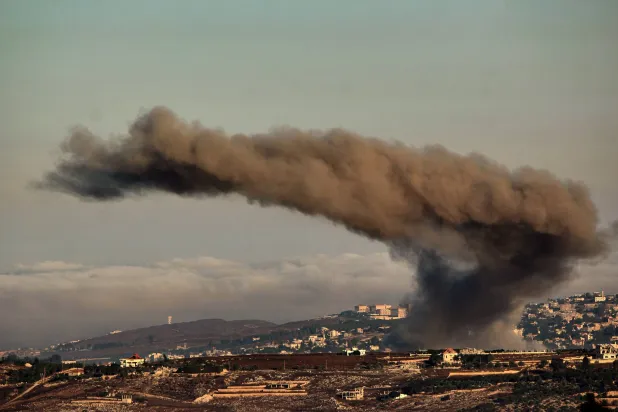
The Lebanese army command later announced that Israeli forces opened fire near the military units while carrying out the mission inside Zawtar al-Gharbi, endangering the soldiers and hindering the deployment. It stressed that the army's deployment was limited to Zawtar al-Gharbi, and called on Israel to address any issues through official coordination channels with the MCG4L group, rather than resorting to assaults.
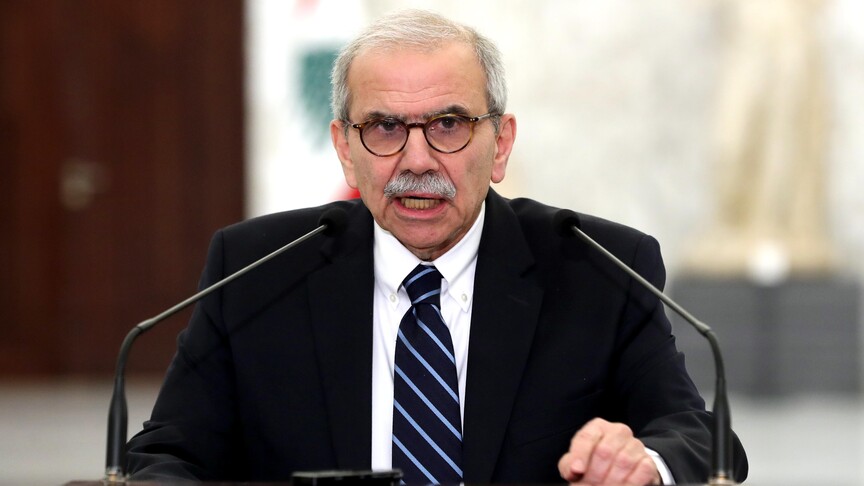
Retired Brigadier General in the Lebanese army, Akram Sariwi, explained to Al-Sharq the field deployment map of the Lebanese army units that entered Zawtar al-Gharbi—a town that Israeli forces did not directly occupy but were stationed on its outskirts. He noted that army units deployed and engineering teams began sweeping operations to search for unexploded ordnance and secure the area, while the army command asked residents to wait until sweeps and safety verification are complete.
In the towns of Frun, al-Ghandouriyeh, Qlaouiyeh, and Burj Qlaouiyeh, the Lebanese army announced conducting field patrols and setting up checkpoints and observation posts. However, deployment there has not yet reached the stage of full takeover as in Zawtar al-Gharbi, as it is tied to the stages of Israeli withdrawal according to the plan.
In Zawtar al-Sharqi, the town adjacent to Zawtar al-Gharbi, the Lebanese army has not yet deployed due to the continued presence of Israeli forces there.
Sariwi pointed out that "the Lebanese army was already present in the area south of the Litani before the fighting resumed in early March, and currently has more than 8,000 soldiers ready to deploy and extend state authority."
He continued: "The main challenge lies in the need for more equipment, vehicles, and engineering teams, as the area is classified as dangerous due to large quantities of mines and unexploded ordnance." He predicted that the deployment would be carried out in stages, starting with main roads then moving into villages to facilitate the return of residents, in parallel with launching reconstruction and infrastructure restoration.
Who will carry out the verification?
The retired brigadier general in the Lebanese army explained that there is still disagreement over which entity will carry out the verification and how coordination committees will be formed, adding that this issue can be addressed after the arrival of the American general who will lead the process.
He said: "The main problem is that Israel rejects any role for the international emergency forces (UNIFIL), and also objects to France's participation. This complicates the situation, especially since the current number of American personnel is insufficient to oversee a wide-ranging operation that requires a field presence accompanying the Israeli withdrawal and the Lebanese army deployment, to prevent a repeat of the friction that occurred in Zawtar al-Gharbi."
Regarding the future of international forces, Sariwi believes they are threatened with departure at the end of this year after non-renewal, amid American and Israeli rejection of their continued presence in their current form. He explained that Lebanon, in coordination with a number of friendly countries, insists on keeping international forces to help the army extend state authority in the south, noting that the solution may lie in bilateral agreements with countries willing to keep their forces, or through a French move within the Security Council to request an extension of UNIFIL's mandate.
Sariwi considered that "the main problem lies in the vagueness of the agreement. It did not set clear deadlines for the Israeli withdrawal, nor did it specify the number of experimental zones into which the occupied area will be divided. Additionally, the verification mechanism and the authority responsible for declaring its completion and the success of the Lebanese army in its mission are unclear. This matter affects Lebanese sovereignty, as it is unacceptable to subject the work of the Lebanese army on Lebanese soil to the supervision of an external authority."
"Furthermore, the vagueness of the agreement opens the door to Israeli procrastination and could make the withdrawal process a long one stretching over years. The agreement also effectively bypasses UN Security Council Resolution 1701 and the previous 2024 agreement that stipulated a 60-day deadline for the Israeli withdrawal."
He added: "Regarding the Lebanese army and Hezbollah, there is a clear decision that the army will assume responsibility for deployment in the area south of the Litani, especially since the areas from which Israeli forces are supposed to withdraw do not witness any Hezbollah presence. The army shows full readiness to prevent the return of any armed groups. However, the key question remains related to how the United States and Israel will deal with the next stage, especially if a full Israeli withdrawal is linked to the issue of disarming Hezbollah across Lebanese territory."
Israel and the "Yellow Zone"
The Secretary-General of the Lebanese Center for Strategic Studies, Abdullah Risha, viewed that the implementation of the first phase of the "experimental zones" in southern Lebanon constitutes a critical test for the course of security arrangements between Lebanon and Israel. However, he stressed that the declared Israeli position still rules out any withdrawal from the "Yellow Zone" (also known as the Yellow Line, a buffer border strip extending inside Lebanese territory to a depth of between 4 and 10 kilometers, imposed by the Israeli army as a fait accompli during military operations), making it the main obstacle to any progress in negotiations.
Risha confirmed to Al-Sharq that the success of this path will give an additional boost to the upcoming Rome talks, while its failure will slow down the negotiation process. He noted that the Lebanese file remains closely linked to regional developments, particularly the relationship between the United States and Iran.
He considered that Israel's commitment to withdrawing from points in the "first experimental zone" does not necessarily mean Tel Aviv's readiness to repeat the same mechanism in later stages. He pointed out that statements by Israeli Prime Minister Benjamin Netanyahu after signing the framework agreement with Lebanon confirm that Israel does not intend to withdraw from the "Yellow Zone" or the buffer zone, but rather considers it necessary to protect northern settlements.
Risha added that the current Israeli government views this area as a strategic and military achievement, and perhaps also ideological, making the chances of negotiating over it limited under the current ruling coalition composition in Tel Aviv.
He explained that the room for maneuver is limited to the "experimental zones" located outside the Yellow Line, whether in parts of northern Litani or some areas south of it, according to Israeli security and military assessments.
Original source: Asharq News


Comments (0)
Be the first to comment.