Oil Prices Set to Rise as Hormuz Tensions Escalate

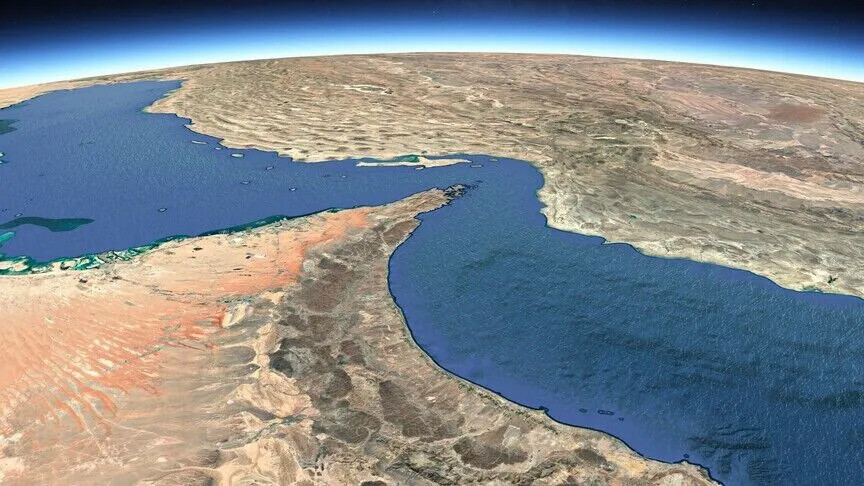
Escalating geopolitical tensions and renewed mutual US-Iranian attacks are once again supporting oil prices, which are expected to rise to higher levels at the opening of trading this Monday, exceeding $76 and $71 per barrel recorded by the benchmark Brent and US crude respectively at the close of last week’s trading, amid the worsening navigation crisis in the Strait of Hormuz and disruptions to oil tankers that have stoked fears about Gulf supplies to global markets already suffering from a shortage of energy flows including oil, gas, and fuel.
In the latest escalation, Iran has threatened to close the Strait of Hormuz while launching attacks on several Gulf states. Meanwhile, US Central Command announced in a statement that US forces have completed the third round of airstrikes this week against Iran. Central Command said that forces struck about 140 Iranian military targets on Saturday, adding that these targets included Iranian missile and drone sites, naval capabilities, ammunition depots, communication networks, and coastal surveillance positions.
The military added in its statement that US forces struck more than 300 targets over three nights of strikes this week. Central Command said Saturday's strikes were in response to an attack on a commercial vessel in the Strait of Hormuz. It added: 'Commercial vessels continue to transit this vital international waterway.'
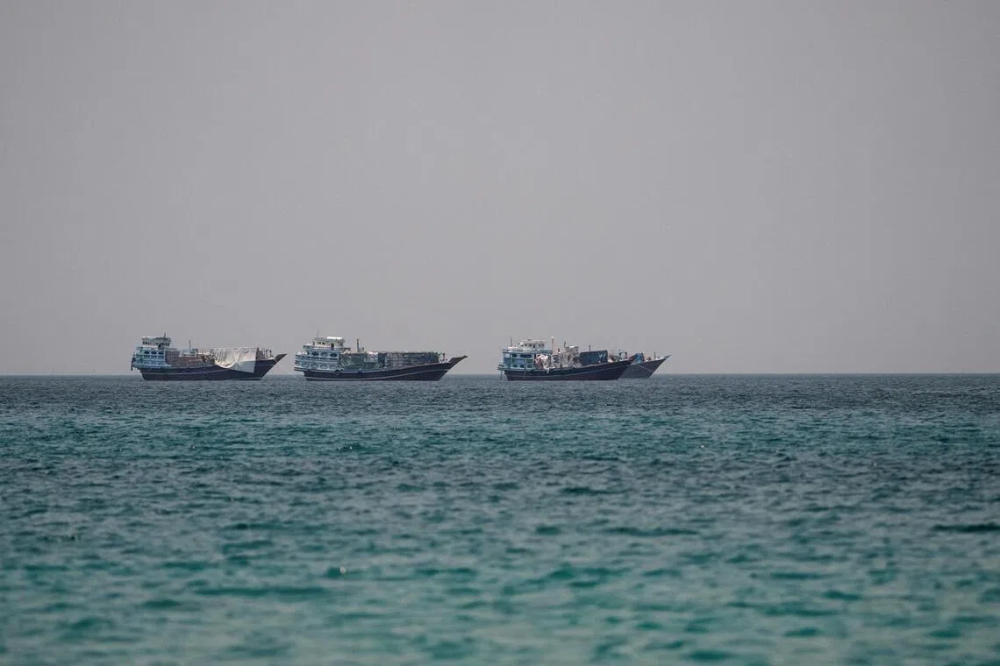
The US strikes came hours after Iran announced it had closed the strait following a warning shot that hit a ship sailing in an unauthorized route. Iran warned that any reaction to the incident would be met with a 'severe response.'
US Central Command identified the vessel as the 'MV GFS Galaxy,' a container ship flying the flag of Cyprus, noting that it suffered severe damage to the engine room and that one of its civilian crew members is missing.
For its part, the International Energy Agency warned on Friday that escalating hostilities between the United States and Iran could upend its expectations of a significant surplus in the oil market next year, amid a rise in global supply in June with the reopening of the Strait of Hormuz, although it remains below pre-war levels.
Global oil markets saw some relief last month, as the peace agreement between the United States and Iran facilitated the opening of the strait, whose effective closure had halted crude oil flows of up to 14 million barrels per day during the peak of the biggest oil supply crisis in history.
The IEA reported that global oil supply rose by 4.1 million barrels per day in June, but it is still 9.4 million barrels per day below pre-war levels. The agency expects supply to increase by 7.5 million barrels per day next year after contracting by 3.7 million barrels per day this year, but that depends on improved transit through the Strait of Hormuz.
The agency added: 'However, the escalation of hostilities on July 7 and 8 casts a shadow over the outlook and could overturn expectations that the market will shift to a surplus next year,' stressing that a permanent peace agreement is 'essential' for the stability of oil markets.
The IEA's forecasts for 2027 indicate that supply will exceed demand by 4.62 million barrels per day next year, compared to a deficit of 860,000 barrels per day this year, provided producers can restart fields and refineries resume product shipments normally.
The agency, based in Paris and advising industrial countries, expects global oil demand to decline by 1 million barrels per day this year, before rebounding to rise by 2 million barrels per day in 2027.
In the near term, the agency expects the peak summer fuel demand season, along with lower prices, to boost consumption by about 8 million barrels per day compared to its trough in May, at the height of the crisis. The agency added: 'Significantly lower oil prices are also stimulating oil consumption growth, along with improved economic prospects.'
The IEA reported that refinery activity and product shipments were slower to respond to the reopening of the Strait of Hormuz compared to crude oil exports, which, combined with the peak summer demand season, tightened the refined fuel market and raised refining margins. The agency added that 'the contrast between apparent ample crude supply and tight product markets pushed refining margins and refinery profits to their highest levels in four years by early July.'
It added that concerns about jet fuel shortages have been replaced by concerns about tightening gasoline and diesel supplies. Diesel markets in the Atlantic basin have rapidly tightened in recent weeks due to lower production in the Middle East, exacerbated by a collapse in Russian exports, as Ukraine escalates its attacks on Russian oil refining infrastructure.
Meanwhile, the flow of large volumes of crude oil to their destinations after the reopening of the Strait of Hormuz led to a rise in global inventories for the first time in four months in June, according to the IEA, by 21 million barrels. This follows a cumulative inventory draw of 360 million barrels from March to May.
Separately, the CEO of Italian oil company Eni, Claudio Descalzi, warned that the oil market will exit its range of roughly $80 to $100 by the first quarter of 2027 at the latest, leading to higher inflation and lower energy demand if the conflict in the Middle East continues.
He noted that relying on drawing from strategic stockpiles is not a permanent solution, pointing out that stock draws have helped keep crude prices largely within this range so far. He called for diversifying supply sources and routes to enhance energy security, especially as demand for electricity grows due to the expansion of artificial intelligence technologies and data centers.
Descalzi indicated that global oil inventories are declining by an average of 3.8 million barrels per day, and the rate of decline accelerated to 4.6 million barrels per day in May due to disruptions related to the Iran war that broke out in late February.
Original source: Al-Riyadh


Comments (0)
Be the first to comment.