Record High Prices of Goods Increase Sudanese Living Suffering
Summary According to traders working in consumer goods, prices are steadily rising due to the continued deterioration of the pound against foreign currencies and traders' reluctance to offer their goods for fear of incurring heavy losses, which has contributed to a decline in buying and selling activity, while economic experts affirm the necessity of restoring local manufacturing to enhance the economy's ability to face external pressures, in addition to combating corruption and curbing speculation on foreign currency.
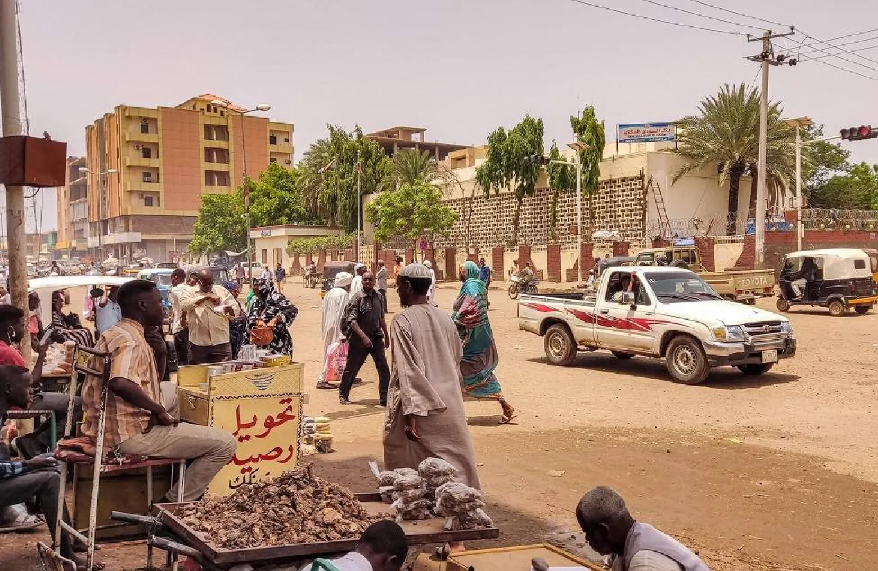
The markets of the capital Khartoum are witnessing a continuous rise in consumer goods prices, which have reached unprecedented levels of 50 percent, driven by fluctuations in the exchange rate of the pound against the dollar in parallel markets, in addition to higher import and transportation costs, which has increased the suffering of citizens who face increasing living pressures due to the ongoing war between the army and the Rapid Support Forces since April (Nisan) 2023.
According to traders working in consumer goods, prices are steadily rising due to the continued deterioration of the pound against foreign currencies and traders' reluctance to offer their goods; for fear of incurring heavy losses, which has contributed to a decline in buying and selling activity, while economic experts affirm the necessity of restoring local manufacturing to enhance the economy's ability to face external pressures, in addition to combating corruption and curbing speculation on foreign currency.
Package of measures
The Central Bank of Sudan had previously announced injecting 400 million dirhams (about 666,111 US dollars) into banks to meet import requests, and according to the bank's governor, Amina Mirghani, the bank's interventions and policy implementation led to a noticeable decrease in the exchange rate, affirming the continuation of injection operations until conditions return to normal, as well as injecting foreign currency to meet importers' needs. Mirghani indicated that this step comes within the framework of the central bank's efforts to achieve exchange rate stability.
The Sudanese government had issued a decision last April banning 46 commodities to reduce demand for foreign currencies, at a time when the economy suffers from structural imbalances due to the current conflict, represented by a decline in imports and an increase in expenditures, in addition to a severe shortage of foreign currency resources.
Market fluctuations
In this context, citizen Sumaya Mohamed, a housewife residing in the Al-Fitihab suburb of Omdurman, said, 'Every new morning, we keep watching market fluctuations regarding price increases, which have become a part of daily life and a concern that troubles the majority of Sudanese households after the return of residents to their areas.' Mohamed added, 'The rise in food prices has reduced families' purchasing power and changed the lifestyle by weakening the ability to meet basic needs, while it is impossible to do without essential goods such as oil, onions, flour, lentils, and rice, as most citizens have come to rely on these as main food after refraining from buying meat, which has reached about 48,000 pounds ($20) per kilogram, and similarly for bread, where three pieces are sold for 1,000 pounds (equivalent to $1.20), in addition to a crazy rise in the price of cooking gas, as the price of a 12.5-kilogram cylinder reached 100,000 pounds ($40).'
She continued, 'We are confused about how to keep up with these prices that have become beyond the capacity of the simple citizen who suffers from economic fragility in the absence of stable income sources, spending his savings during displacement, with a lack of official mechanisms to protect us from the rising wave of high prices.' The housewife pointed out that 'it is surprising that citizens are flocking to street vendors who sell according to the needs of families, raising the slogan: "Estimate your circumstances," meaning buying in small quantities or buying according to daily requirements, whereas in the pre-war period we used to buy a whole month's needs.'
Read more
The Commodity War: Signs of a New Tear Besieging Sudan
Sudanese Return to Khartoum: Shocked by a Capital with Weak Services
Central Bank of Sudan Defeats Parallel Dollar Market... Will It Withstand?
Stockpiling goods
For his part, Muawiya Ibrahim, a trader in Omdurman market, pointed out that 'the sharp deterioration in the value of the pound, along with the reluctance of some traders to offer stored goods for fear of incurring losses, contributed to the rise in consumer goods prices and the decline in buying and selling activity.' Ibrahim explained that 'most traders in greater Omdurman have stopped importing goods from abroad after the exchange rate against the dollar reached 5,000 pounds in the parallel market, with increasing demand for foreign currency and its scarcity in banks.' He noted that 'the increase in food prices reached 50 percent, including basic materials such as flour, sugar, tea, rice, lentils, and oils, and we were optimistic that there was a slight recovery beginning with the pound's decline against the dollar last month, but it soon rose again until it reached the barrier of 6,000 pounds compared to about 4,800 pounds before the wave of increase.' He continued, 'Most traders turned to buying foreign currency for fear of losing the value of their savings in local currency, which increases the intensity of speculation in parallel markets.'
He added, 'It is unfortunate that the Sudanese Customs Authority raised the customs dollar price from 3,517 pounds to 3,743 pounds, an increase of 6.4 percent, which is expected to negatively affect prices of imported goods in the coming period.' The trader in Omdurman market predicted 'the continued decline in the pound's value under the current economic conditions the country is going through, and the failure of solutions aimed at curbing its deterioration.'
Increasing pressures
In this context, economic researcher Abdelwahab Juma said, 'Sudan is going through extremely complex conditions due to the continuation of the conflict, which has led to negative repercussions on citizens who face increasing living pressures in the nature of life, despite efforts made to find solutions to address economic imbalances to improve the standard of living and curb the exchange rate, but they have not achieved the desired results.' Juma added, 'It is clear that there is a large gap between the movement of the currency and the level of prices, as the slight improvement did not affect price stability in local markets.' He continued, 'The success of the central bank's policy lies in the sustainability of injecting foreign currency, as any temporary injection will lead to a return of rising prices and their loss of control, because stability of the currency market requires addressing the structural causes of foreign currency shortage, rationalizing imports, and building adequate reserves of currencies.' The economic researcher concluded his speech by saying, 'In my estimation, addressing the economic crisis, which has become entrenched, requires restoring local production to enhance the economy's ability to face external pressures.'
Comprehensive reforms
Original source: Independent Arabia





Comments (0)
Be the first to comment.