Saudi Arabia ascends to 13th globally in foreign direct investment map
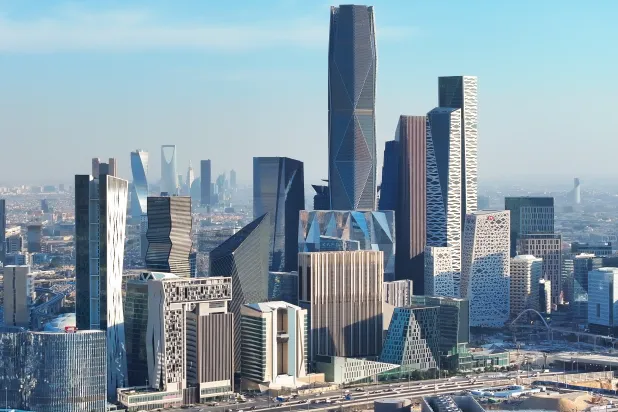
Saudi Arabia has advanced in its position on the global investment map, rising to 13th globally in attracting foreign direct investment last year, after being ranked 17th in 2024, according to the World Investment Report 2026 issued by the United Nations Conference on Trade and Development (UNCTAD), driven by a 53 percent increase in net inflows to $32.6 billion.
This continuous progress reflects the success of economic reforms and 'Vision 2030' in transforming the Kingdom into a more competitive destination for global capital, at a time when the international economy is experiencing a slowdown and increasing competition to attract investments.
The Kingdom of Saudi Arabia continues to strengthen its position as a global investment power, supported by a 53 percent growth in net FDI inflows, reaching $32.6 billion in 2025, ranking 13th globally, according to the World Investment Report 2026 issued by UNCTAD... pic.twitter.com/r50MFFrrhp
— Ministry of Investment (@MISA) July 18, 2026
This investment leap for the Kingdom comes at a time when the global economy faces uncertainty and tightening monetary policies, which has led to a slowdown in foreign investment flows in many emerging and advanced markets. Within the framework of its 'National Investment Strategy', Saudi Arabia aims to achieve FDI inflows exceeding $100 billion annually by 2030, supported by a package of reforms that include launching the new investment law, expanding special economic zones, and facilitating regulatory procedures for foreign ownership.
The World Investment Report highlights the growing investment opportunities offered by the Kingdom in the technology and artificial intelligence sectors, given its advanced digital infrastructure and attractive environment for future sectors, in addition to the country's continued building of an integrated industrial and mining system, opening promising investment opportunities across future value chains.
Investor Confidence
In this context, former Shura Council member and economic specialist Dr. Fahd bin Jum'a stated that what has been achieved in attracting foreign investments in recent years is not the result of financial incentives alone, but rather a profound transformation in the philosophy of managing the Saudi economy, stressing that foreign investors first seek an efficient regulatory and legislative environment with fast and effective procedures commensurate with the market size, which the Kingdom has worked to develop rapidly.
Bin Jum'a confirmed to Asharq Al-Awsat that the leap in investment flows reflects growing confidence in the Saudi investment environment as much as it reflects the strength of the economy itself.
Furthermore, regulatory reforms such as updating the investment law, facilitating business practices, enhancing investor protection, expanding partnership with the private sector, and linking investments to promising sectors like industry, mining, technology, tourism, and logistics services have contributed to transforming the Kingdom from a market attracting capital for limited opportunities into a long-term investment platform, according to the former Shura Council member.
He added that the challenge in the upcoming stage is no longer limited to attracting new investments, but rather to retaining current investors and expanding their businesses, thus cementing Saudi Arabia's position among the world's major investment destinations.
Reception staff at the Saudi Business Center specialized in facilitating business in the Kingdom (Asharq Al-Awsat)
Diversifying Income Sources
For his part, advisor and commercial law professor Dr. Osama bin Ghanim Al-Obaidi explained to Asharq Al-Awsat that this progress in investment rankings achieved by the Kingdom indicates the success of the Kingdom's investment policy under 'Vision 2030', which aims to diversify income sources and reduce dependence on oil.
The Kingdom aims to attract foreign capital and has enacted numerous legislations that contribute to increasing foreign investment flows into the Kingdom and encourage foreign capital to enter, by enacting laws allowing foreign investors to own up to 100 percent in many sectors, according to the advisor and commercial law professor.
Al-Obaidi added that the new investment law has significantly contributed to attracting foreign investments in terms of neutrality of treatment between investors, whether citizens or foreigners, and in terms of ensuring property rights and settling disputes before courts and arbitration bodies.
He continued that through the new system, the Kingdom offers many incentives to foreign investors via distinctive programs, such as the 'Regional Headquarters' program, which grants global companies moving their headquarters to Riyadh incentives including income and withholding tax exemptions of up to 30 years, in addition to the 'Premium Residency' program, which provides, under specific conditions, residency, mobility, and real estate ownership privileges in the country.
Technology, Industry, and Mining
The Kingdom continues to develop an advanced digital infrastructure that supports the growth of investments in technology and artificial intelligence, and enhances market readiness for high-growth sectors, as policy clarity, development of the regulatory environment, and integration of enablers contribute to attracting capital to technology sectors.
The Kingdom is cementing its position as an investment platform that supports innovation, enables companies to expand, and connects them to markets and future opportunities. Riyadh also continues to build an integrated industrial system linking mineral resources to advanced manufacturing, enhancing added value and supporting economic diversification, while incentives, infrastructure, and the evolving investment environment boost the Kingdom's attractiveness to investors in industry and mining.
Investment opportunities extend from resource extraction and processing to manufacturing, components, and final production. Industry and mining support the Kingdom's position in strategic sectors and open horizons for long-term growth based on production and innovation.
Original source: Asharq Al-Awsat


Comments (0)
Be the first to comment.