Tax Revolution: Is the Era of Financial Justice Beginning?
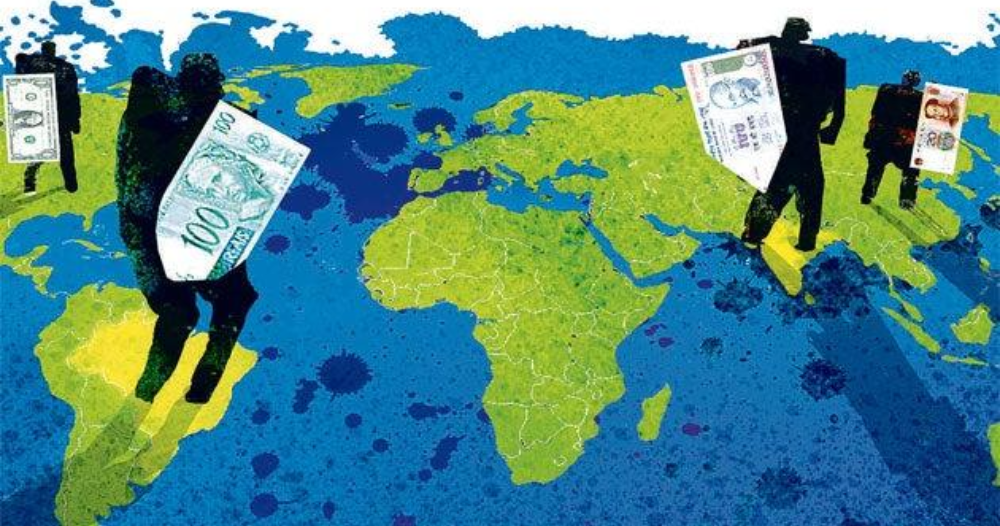
The word 'taxes' has long been associated in many minds with financial burdens and deductions that reduce income for individuals and companies, but behind this traditional image lies a deeper truth: taxes are one of the most important tools societies have to build a better future. Taxes fund hospitals, schools, and infrastructure, determine governments' ability to face crises, and play a crucial role in narrowing the gap between rich and poor. Decades of erosion Yet this power that could make the world fairer has been eroded for decades due to a system that...
Tax Revolution: Is the Era of Financial Justice Beginning?
The word 'taxes' has long been associated in many minds with financial burdens and deductions that reduce income for individuals and companies, but behind this traditional image lies a deeper truth: taxes are one of the most important tools societies have to build a better future.
Taxes fund hospitals, schools, and infrastructure, determine governments' ability to face crises, and play a crucial role in narrowing the gap between rich and poor.
Decades of Erosion
Yet this power that could make the world fairer has been eroded for decades due to a global tax system that allowed multinational corporations and the wealthy to shift profits and wealth to lower-tax jurisdictions, depriving many countries of resources they desperately need to improve their citizens' lives.
Alex Cobham, author of the book "What We Know and What We Should Do About Tax Justice?" believes the world stands at a historic opportunity to rebuild the international tax system through fairer rules, progressive taxes, and new global cooperation that can restore taxes' role as a tool for development and justice.
A Super Social Force
Cobham describes taxes as a "super social force" that gives societies the ability to live better, as they not only provide money but also create a new relationship between governments and citizens. A state that relies on taxes as its main source of income becomes more connected to its people's needs because it is required to justify how it spends the money it collects.
The importance of taxes rests on five key roles. First, generating revenue that allows states to build effective institutions and fund public services such as education, healthcare, and transportation. The second role is redistribution, as progressive taxes enable greater balance and reduce economic gaps that threaten social stability.
The third role is repricing social harms, such as taxing products that cause health damage or carbon emissions, to encourage individuals and companies to make more responsible decisions toward society and the environment.
But the most important and least appreciated role is taxes' function in enhancing political representation. Historical experience shows that governments relying on taxes from their citizens are usually more accountable and more attentive to people's demands compared to governments that depend on other sources such as natural resource revenues or foreign aid.
In other words, the relationship between citizen and government is not only about paying taxes but about the principle of participation: the citizen pays and in return demands services, transparency, and accountability.
More Taxes, More Efficient Spending
Studies indicate that increasing governments' reliance on tax revenue not only provides additional funds but also makes the way these funds are spent more efficient. Authorities that depend on taxes are more careful to achieve tangible results because they know that citizens can hold them accountable.
This is clearly evident in the health sector. Even when healthcare budgets are equal between two countries, the country that relies more on direct taxes often achieves better results because its financial and political system is more connected to society.
Direct taxes include income, wealth, profit, and capital gains taxes, and they are the tools most capable of achieving social justice. In contrast, excessive reliance on indirect taxes such as value-added tax may increase the burden on lower-income groups because they spend a larger share of their income on consumption compared to the wealthy.
Therefore, building a fair tax system is not just about collecting more money, but about who pays, how much they pay, and how those resources are used to serve society.
A Huge Bill from Tax Evasion
Despite the importance of taxes, the current global system has allowed widespread cross-border tax manipulation. These practices include companies shifting profits to low-tax countries or wealthy individuals hiding assets in tax havens, leading to massive losses for economies worldwide.
Cobham estimates that the world loses about half a trillion dollars annually due to these practices—money that could have been used to fund hospitals, schools, combat climate change, and improve public services.
In contrast, imposing national taxes on large fortunes could provide more than two trillion dollars annually, according to estimates based on tax models applied in some countries, revealing the scale of resources lost due to weak current rules.
The problem is not new; the roots of the current international tax system go back to decisions made about a century ago, when colonial powers established rules that favored wealthy countries and large corporate headquarters. Despite changes in the global economy, large parts of these rules remain without fundamental reform.
Large Corporations Reshape the Profit Map
One of the most prominent manifestations of this imbalance is the ability of multinational corporations to separate recorded profits from actual economic activity. In the early 1990s, large US companies declared only about 5% of their global profits in countries other than where they actually operated. But by the second decade of the 21st century, that share exceeded 20% and continued to rise.
Losses are no longer limited to developing countries, as major economies themselves have begun to be affected by these practices. However, the impact remains harsher on Global South countries, because the lost funds represent a larger share of their public budgets and their ability to fund basic services.
Moreover, international efforts to combat hiding wealth abroad have not achieved the desired justice, as wealthy countries have benefited more, while many Global South countries remain outside the circle of real benefit.
Toward a New Global Tax Agreement
Faced with these challenges, the need for a new international framework with more comprehensive and fairer rules has emerged. Cobham sees the United Nations Framework Convention on International Tax Cooperation as a rare opportunity to reshape the global system.
This framework aims to enhance transparency, information exchange between countries, and redistribute taxing rights so that countries receive a fair share of profits from economic activity within their borders, instead of concentrating tax power in countries hosting corporate headquarters.
Cobham asserts that restoring this power to governments will allow each country to set its own tax levels on income, profits, and wealth according to its needs, with international cooperation to prevent evasion and manipulation.
Tax justice does not only mean collecting additional funds, but building a more balanced global system where countries can fund development, reduce social disparities, and improve public services.
The Path to a Fairer World
Original source: Argaam




Comments (0)
Be the first to comment.