Trump Threatens to Cut Trade with Spain: What Are the Potential Economic Repercussions?
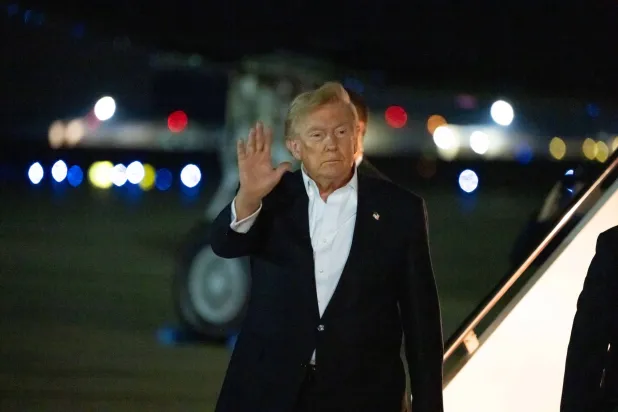
U.S. President Donald Trump on Wednesday issued an order to impose a trade embargo on Spain, instructing Treasury Secretary Scott Bessent to "cut off all trade... including visits" with the country, amid escalating tensions over defense spending.
A U.S. official told Reuters that the Treasury Department, the Commerce Department, and the Office of the U.S. Trade Representative will work to provide a "list of Spanish products that could be subject to a ban in the coming days." These remarks indicate that the potential trade embargo may be partial rather than comprehensive.
Below is a look at the options available to Trump to halt trade with Spain, and the potential repercussions of such a move.
- What powers does the U.S. president have to impose a trade embargo?
Trade lawyers say the International Emergency Economic Powers Act (IEEPA) remains available for Trump to impose a trade embargo or economic sanctions on a country, despite the U.S. Supreme Court's decision in February against Trump's use of the same law to impose tariffs.
To invoke IEEPA, Trump must declare a national emergency regarding an "unusual and extraordinary threat" to U.S. national security, foreign policy, or the economy.
This law has been widely used to impose trade restrictions on Iran, Russia, and North Korea, and to block dollar-denominated transactions with thousands of companies, individuals, and entities deemed terrorism or national security threats.
Peter Shane, a law professor at New York University, said it is "hard to see" how a member of the 32-nation NATO that falls three percentage points of GDP short of the peacetime defense spending target could be considered an emergency for the United States. However, the Supreme Court did not rule on the nature of the emergency declared by Trump to justify tariffs, meaning his ability to declare a national emergency "has not been affected," according to Mayor Patel, a former Republican trade advisor on the Senate Finance Committee.
Patel, now a trade partner at Hogan Lovells law firm in Washington, added: "IEEPA allows Trump to impose a trade embargo," even if it is later challenged in court.
A general view of a shipping terminal at the Port of Barcelona (Reuters)
- How much would a trade embargo affect trade?
Total bilateral goods trade between the United States and Spain reached $47.9 billion in 2025, according to U.S. Census Bureau data.
Adding services, including travel, brings total trade to $74.5 billion, according to data from the Bureau of Economic Analysis of the U.S. Commerce Department, making Spain the 23rd-largest U.S. trading partner by total volume.
The United States sells more goods to Spain than it buys; exports to Spain totaled $26.6 billion in 2025, versus imports of $21.35 billion, resulting in a U.S. trade surplus of $5.25 billion.
Top U.S. import categories from Spain, according to Census Bureau data, include pharmaceutical products, electrical transformers and power converters, personal care products, petroleum products, coated ceramics, and olive oil.
Top U.S. exports to Spain include pharmaceutical products, crude oil, civilian aircraft, and corn.
A trade embargo could also disrupt bilateral investments. Spanish companies have invested €97.2 billion ($111 billion) in the United States, making it their largest investment destination globally, according to Eurostat data cited by the American Chamber of Commerce in Spain.
The United States is the largest foreign investor in Spain, with productive investments exceeding €116 billion ($132.4 billion), providing jobs for around 200,000 people across the country.
- What would happen to travel to and from Spain?
It remains unclear how Trump could restrict travel by Spaniards to the United States, as the Spanish national football team plays a World Cup match on Friday. However, his administration last year imposed a ban on citizens of more than 30 countries from entering the United States, including tourists, students, and business travelers, citing security concerns.
Trump also did not clarify whether any potential travel ban would include U.S. visitors heading to Spain, where their spending counts as service imports for the United States.
According to Spain's National Statistics Institute, about 4.45 million Americans visited Spain for more than one day in 2025, an increase of 4.3% compared to 2024.
Americans accounted for about 4.6% of Spain's total 96.8 million visitors in 2026, making them the sixth-largest source of tourists after the United Kingdom, France, Germany, Italy, and the Netherlands. However, according to Bank of Spain data, American travelers were the fourth-largest source of tourism revenue in the country, spending €6.15 billion in 2024. The bank said Americans tend to stay longer and spend more per trip compared to other tourists.
- What options exist besides a comprehensive embargo?
Patel said Trump could, under IEEPA, impose a selective embargo, as he and his predecessor Joe Biden did against Russia, allowing entry of certain goods deemed essential.
In Russia's case, these goods include enriched uranium, fertilizers, and palladium.
Trump has previously exempted aircraft parts from the tariffs he imposed, so components for aircraft engine turbines produced by Spanish company ITP Aero for General Electric and RTX's Pratt & Whitney could be among potential exemptions.
Trump also has other tools to impose tariffs or retaliatory trade measures, including Section 301 of the Trade Act of 1974, a tool for unfair trade practices that his administration is currently using to propose tariffs related to forced labor on goods from 60 trading partners, including the European Union.
Additionally, Trump has a Cold War-era trade law, Section 232 of the Trade Expansion Act of 1962, which he used to protect the automotive, steel, aluminum, and other sectors he considers important for national security.
One complication in any potential trade action against Spain is that the European Union is responsible for the trade policy of member states and imposes uniform treatment for all bloc countries. However, the United States has previously threatened individual European countries with tariffs over digital services taxes.
The U.S. Commerce Department could also target specific Spanish imports through anti-dumping and countervailing duty investigations.
Original source: Asharq Al-Awsat


Comments (0)
Be the first to comment.