Why did oil prices fall despite rising 12% this week?
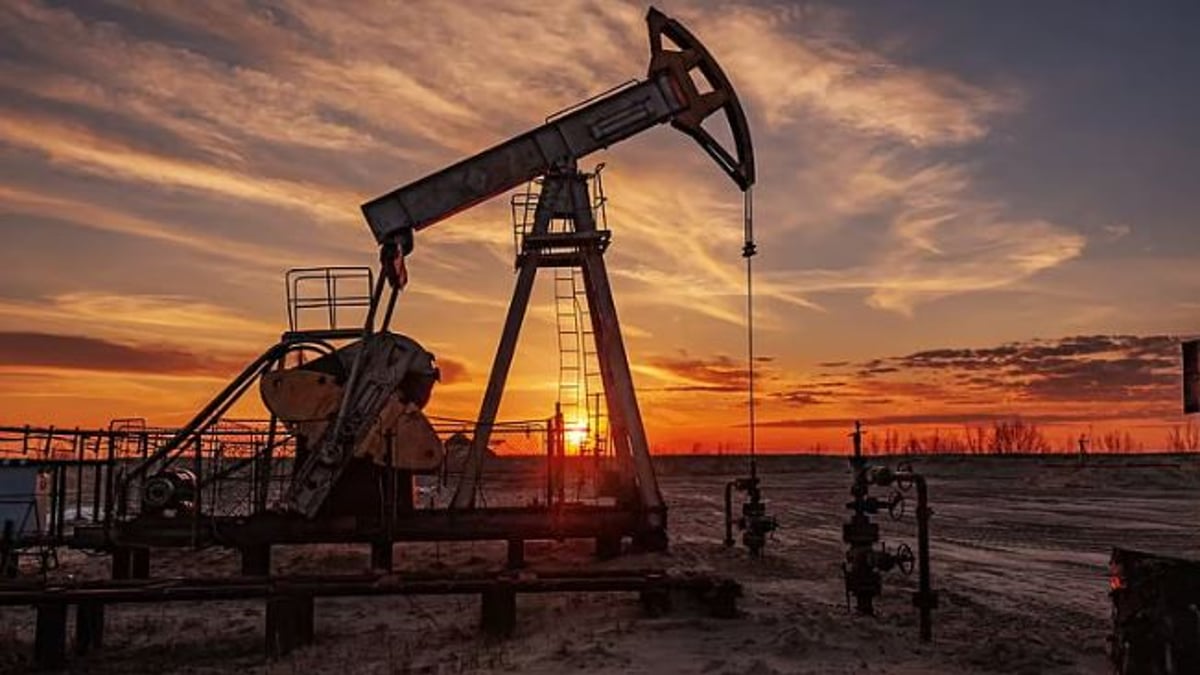
Oil futures fell on Friday but are still heading for significant weekly gains due to supply disruption concerns in the Red Sea and escalating Iran tensions.
Oil futures fell on Friday, despite continuing to trend towards significant weekly gains, driven by concerns over supply disruptions across the Red Sea and escalating tensions in the Iran war.
As of 07:47 GMT, Brent crude futures fell $1.82, or 1.81%, to $98.87 a barrel, after earlier on Thursday exceeding $100 a barrel for the first time since May, recording a 7% rise in the previous session, following the announcement by Iranian-backed Houthis that they targeted two Saudi oil tankers in the Red Sea. Brent crude is heading for a weekly increase of 12%.
US West Texas Intermediate crude futures also fell $1.60, or 1.74%, to $90.59 a barrel, but are also heading for weekly gains of 9.7%.
John Evans, analyst at PVM Oil Associates, explained that oil production centers and major supply routes are surrounded by war, expecting prices to continue rising in the short term.
US President Donald Trump threatened to deliver "tough military punishment" to Iran and its Houthi allies after the strikes in the Red Sea. In response, Iran urged its Yemeni allies to close the Bab el-Mandeb Strait if the United States continues to attack Iran's electricity infrastructure. The Bab el-Mandeb Strait is the second most important passage for oil shipments after the Strait of Hormuz.
The Houthis announced on Monday a naval blockade on Saudi Arabia, which has diverted its oil through a pipeline to avoid the Strait of Hormuz, which Iran is blockading.
JP Morgan analysts pointed out that each additional month of oil supply disruption could add between seven and eight dollars to a barrel of Brent, which could raise the monthly average price to around $114 if the disruption lasts three months.
In a related context, Russia announced on Friday that its forces targeted three Ukrainian ports overnight, damaging loading and unloading facilities and fuel reserves supporting the Ukrainian army.
For its part, the Energy Ministry of Kazakhstan said on Thursday that oil companies had temporarily reduced production after suspected Ukrainian attacks shut down the country's main export terminal on the Black Sea.
Discuss the news with artificial intelligence
Original source: Ajel.sa



Comments (0)
Be the first to comment.