How Cinema Reveals Our Hidden Fears

The Unseen
How Cinema Reveals Our Hidden Fears
In the dark cinema hall, the audience sits breathless, watching the film's hero cautiously hiding behind an old wall, or melting into a dark corner waiting for the unknown.
On the surface, the viewer follows a fleeting suspense shot, but philosophically, they undergo a psychological experience that touches their most primitive innate instincts.
The use of the 'psychology of simple disappearance' and hiding behind walls, and its organic integration with the 'element of darkness,' is not just a directorial skill; it is a visual deconstruction of humanity's eternal fear of the unknown, and its innate desire to take shelter and seek safety. This duality poses an urgent question: How do directors manipulate our consciousness through the duality of light and darkness? And how does cinema transform from a tool of viewing into a mirror of our hidden fears?
This immense psychological impact of cinema and its visual techniques has today become a universal language driving massive investments and a promising cultural industry.
Recent behavioral studies monitoring the 'psychology of visual reception' indicate that '74%' of moviegoers correlate their immediate tension levels with the decrease in screen brightness, as adrenaline rises as soon as characters resort to hiding.
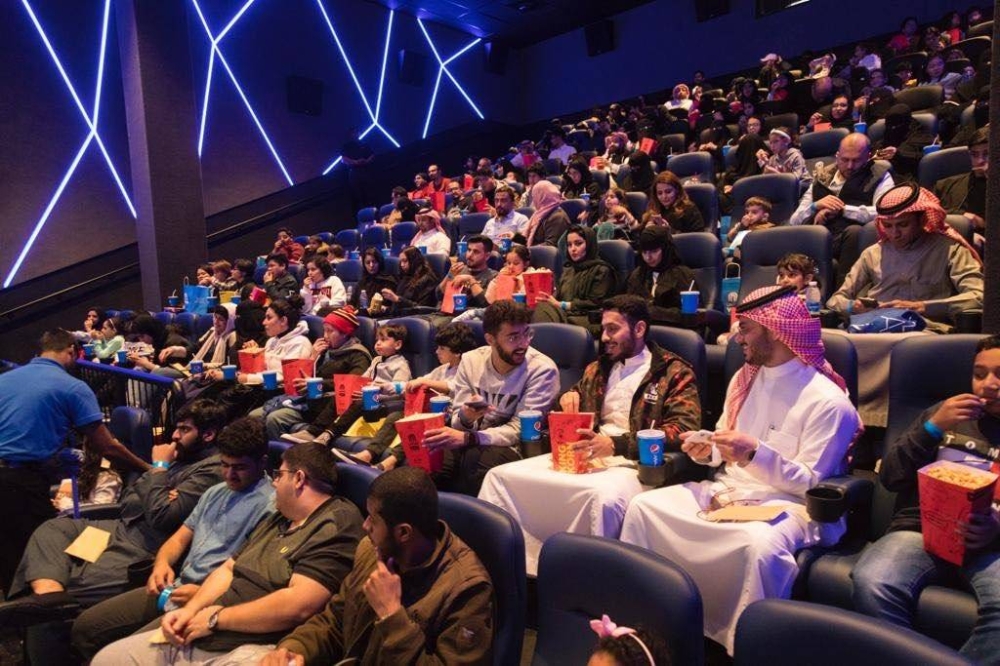
In the context of the local cinematic boom, statistics from the Saudi Film Commission reveal a rapid growth in the passion of the youth generation for cinema, as they represent more than '65%' of cinema-goers and those interested in enrolling in specialized training courses in the fields of directing and cinematography, reflecting a conscious desire to understand the secrets of this visual language, not just consume it.
Directors rely on 'shadow and wall' to achieve what is known in art philosophy as 'silent visual narrative.' The wall in cinema is not an inanimate object, but a psychological defense line embodying the survival instinct; the hero's hiding behind it conveys to the viewer the power dynamics and human weakness without uttering a single word in the script.
As for 'darkness,' it is the strongest directing tool; this philosophically takes us back to the Austrian philosopher and psychologist Sigmund Freud's thesis on the 'fertile valley of fears,' where he argues that darkness activates the psychological mechanism of projection. When the eye cannot fully see the details in a dark scene, the viewer's unconscious automatically begins to fill the gaps with their worst personal fears.
Similarly, we find this philosophical employment in the cinema of the genius director Alfred Hitchcock, the pioneer of suspense, who emphasized that real excitement lies not in the moment of danger, but in the stage of 'anticipation and waiting behind the wall,' where the viewer transforms from a spectator into a partner in fear.
Not far from this philosophical foundation, we find a living embodiment of this duality in both international and local cinema with prominent focus.
While international cinema used hiding behind walls of luxury in the Oscar-winning Korean film 'Parasite' as a tool to deconstruct the psychology of dependence and class hiding, Saudi directors have brilliantly captured this language.
This is clearly evident in the film 'Naqa' by director Mishal Al-Jasser, where the pitch darkness and the heroine's continuous hiding behind the walls of the deserted desert and its dunes become a breath-holding existential defense line embodying the primordial fear of the unknown.
Film analysts and image critics confirm that the psychology of concealment is the main driver of the audience's passion; critics believe that the pleasure of viewing is born from 'obscuring vision' rather than fully revealing it. Partial concealment reformulates the relationship between the screen and the viewer, elevating them from the status of 'passive consumer' to that of 'active interpreter,' whose senses and emotions are aroused by the visual gaps deliberately left in the darkness.
Instead of direct technological tricks, controlling the doses of light and shadow becomes the language that touches the audience's passion and maintains their intellectual anticipation until the final frame.
In the new Saudi cultural and cinematic scene, as we establish a local film industry capable of global competition, we need to move from the stage of being dazzled by technology to the stage of 'camera philosophy.' Understanding the psychology of shadow and wall teaches our young filmmakers that great cinema does not always need astronomical budgets or complex digital tricks; it needs an eye that captures the movement of the human spirit, and knows how to employ light and darkness to tell our stories, deepen our awareness, and highlight our cultural and aesthetic identity on the world's screens.
Original source: Al-Riyadh




Comments (0)
Be the first to comment.