Between Tunisia's Silk and Japan's Architecture: A Fashion Designer Builds a Bridge Between Cultures
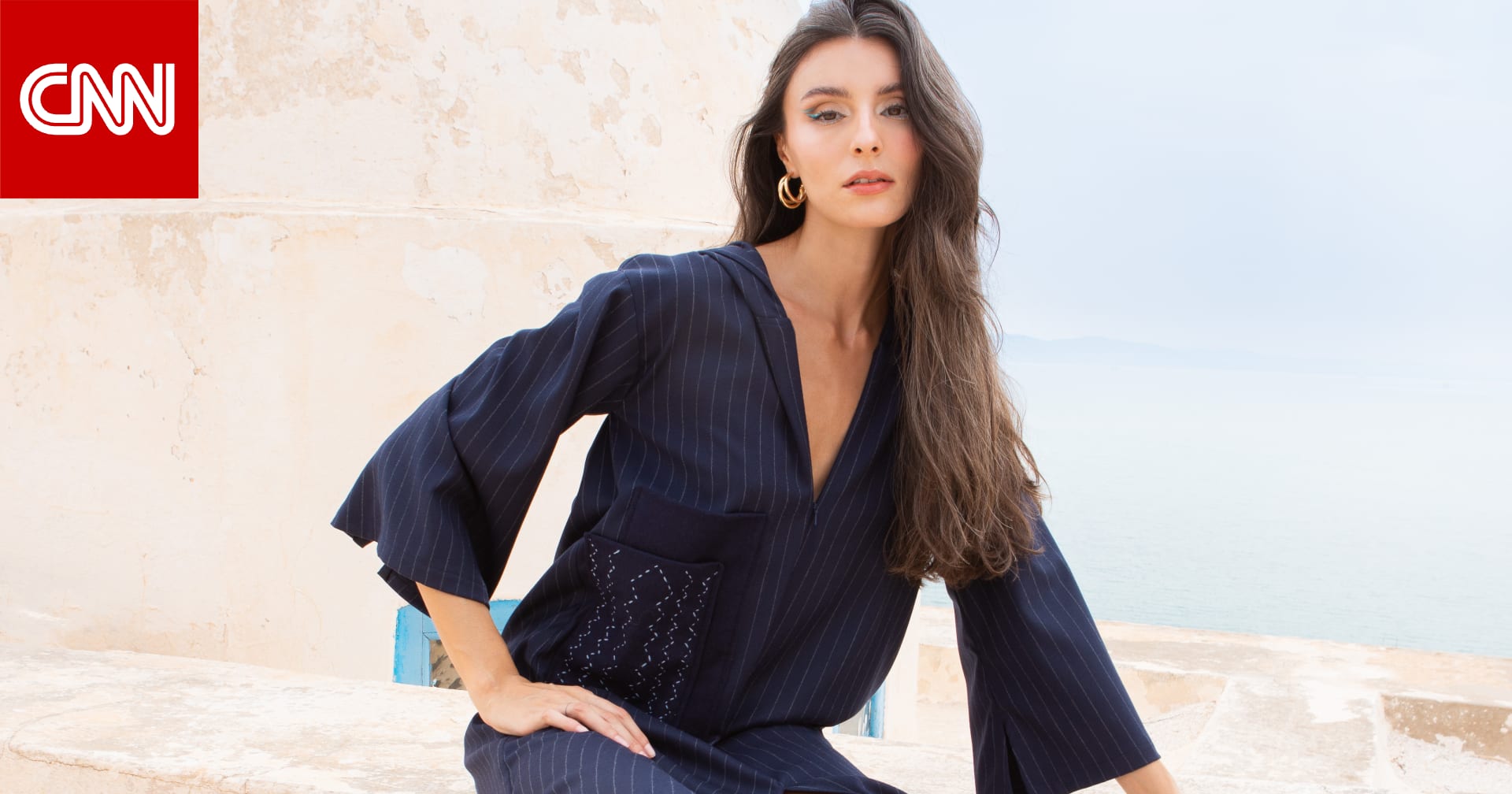
Tunisian designer Anissa Meddeb has blended diverse cultural backgrounds and international experiences that shaped her creative vision in fashion, founding a label based on a contemporary dialogue between North African heritage and Japanese aesthetics.
The designs of Tunisian designer Anissa Meddeb reflect a contemporary dialogue between North African heritage and Japanese aesthetics. Credit: Ash Khmiri
(CNN) -- Tunisian designer Anissa Meddeb has combined diverse cultural backgrounds and international experiences that shaped her creative vision in fashion, founding a label based on a contemporary dialogue between North African heritage and Japanese aesthetics.
The idea of founding a label that merges these two influences stems from two parallel personal journeys in Meddeb's life.
On one hand, returning to her roots represented a personal journey for her, as she believes that Tunisia, with its history spanning more than three thousand years, is rich in crafts, knowledge, and cultural heritage, which has always been a constant source of inspiration for her, and through her work she sought to rediscover and deeply connect with it.
On the other hand, her great fascination with Japan began through different paths, first through fashion history, where she was influenced by Japanese designers who presented a radically different design approach. This interest deepened during her studies there, where she was surrounded by Japanese students, which brought her closer to their way of thinking about design and construction, considering it not just a style but a complete philosophy.
Anissa Meddeb describes her brand's identity as Mediterranean, minimalist, and cultural. Credit: Ash Khmiri
In 2015, her visit to Japan marked a significant turning point, as the architecture, precision, humility, and coexistence of tradition and innovation left a deep impression on her. Thus, the brand Anissa Aida was born at the intersection of these two worlds, in an ongoing dialogue between North African heritage and Japanese aesthetics and philosophy.
Meddeb described the brand's core identity today as Mediterranean, minimalist, and cultural. The Mediterranean dimension is reflected in openness to cultural exchange, connection to craftsmanship, and a visual language based on blue and white inspired by the sea, sky, and architecture of coastal cities.
The minimalist dimension is reflected in clean lines, architectural cuts, and the philosophy of "less is more," where every detail serves a specific purpose. Meanwhile, the cultural dimension is the essence of the brand, as her label reinterprets North African heritage, Japanese aesthetics, and classic Western tailoring in a single dialogue, offering contemporary, comfortable, and flexible pieces that express individuality through volume, shape, and details.
Despite differing contexts between North Africa and Japan, they share similar design principles such as geometry, volume, and a special relationship with fabric. Credit: Ash Khmiri
She explained in an interview with CNN Arabic that the balance between cultural heritage and minimalism in design stems from the observation that traditional clothing in North Africa and Japan, despite differing contexts, shares similar design principles such as geometry, volume, and a special relationship with fabric.
Historically, cutting was minimized to preserve fabric and respect craftsmanship, a philosophy she strongly relates to. She starts from this common ground rather than placing influences side by side, seeking a natural dialogue between them, where the cut may come from a North African tradition and the tailoring from a Japanese garment, or they merge within a single piece, focusing on the essence of clothing that combines form, proportion, and volume more than decoration, along with the role of Western tailoring in introducing precision and structure, aiming to create pieces that carry cultural memory without being folkloric, but rather contemporary and timeless.
The cut may come from a North African tradition and the tailoring from a Japanese garment, or they merge within a single piece. Credit: Ash Khmiri
As for Tunisian heritage, she affirmed that it is at the heart of her work, but it is not a source of replication but rather an element reinterpreted through cuts, volumes, techniques, and materials. She noted that some pieces like the "djarbia" or "saroual" are simple in nature and can be transformed into contemporary pieces by changing the fabric or proportion.
In contrast, she handles more ornate ceremonial pieces by deconstructing their structure and focusing on the basic shape. She cites an example from the Trizashiko Winter 2026 collection inspired by a traditional wedding outfit from Rafraf, where she focused on the architectural structure of the sleeves and turned them into pleats using denim fabric.
The goal of the Tunisian label is to create pieces that carry cultural memory without being folkloric, but presented with a contemporary and timeless spirit. Credit: Ash Khmiri
The designer, who grew up between Tunis and Paris, explained that fabrics for her are not just materials, but carry within them memory and cultural knowledge. Since her first collection, she has worked on using silk woven in the old city of Tunis, a step that helped preserve a craft threatened with extinction. She later developed fabrics that blend Tunisian "fouta" with Japanese dyeing techniques, along with using natural materials such as cotton, wool, and untreated denim, based on her conviction that sustainability is an integral part of the narrative, not a separate element.
The designer affirmed that Tunisian heritage is at the heart of her work. Credit: Ash Khmiri
Regarding challenges, she noted that the most prominent is balancing the real cost of local production with the possible selling price, in addition to difficulties in international expansion due to limited financial infrastructure in Tunisia compared to other markets. Also, choosing the right sales partners is a key challenge, along with the responsibilities of an independent designer that include production, communication, marketing, and financing simultaneously, requiring constant multi-role management.
Meddeb concluded that she wants people who wear her designs to feel like themselves, and for the clothes to give them freedom, comfort, and individual identity away from fast consumption or uniformity, and to feel the depth of the story behind each piece even if they do not know its details.
Original source: CNN Arabic





Comments (0)
Be the first to comment.