Culture.. and the Making of Diversity
تسلط هذه القراءة الضوء على أهمية تجاوز المفاهيم الضيقة للثقافة التي تقتصر على الأدب وحده، لتمتد لتشمل التراث والمأكولات والأزياء والفنون الشعبية.
It is common to view culture as literature alone, or the novel, or library shelves, as if the rest of human output—arts, customs, and lifestyles—does not qualify as culture?
Related News
Culture is not a single mold, nor a personal taste, nor a decision issued by an individual or institution. It is the living memory of society, with all it carries of language, literature, architecture, music, fashion, cuisine, crafts, customs, celebrations, values, and human experiences accumulated over time. There is no doubt that literature is one of the most important tributaries of culture. Through novels, we get to know societies we have never visited, live with characters we have never met, learn new vocabulary, and expand our ability to imagine and understand humanity. Without literature, epics like the Iliad and the Odyssey would not have reached us, nor would the works of Shakespeare, Tolstoy, and Naguib Mahfouz remain present in human consciousness to this day.
But the question worth asking is: Is literature alone culture?
If we contemplate societies deeply, we would find that cuisine sometimes tells their history more than books do. The popular dish is not just a recipe, but a social and economic document, telling about the nature of the land and its produce, climate, trade routes, migrations, and cultural exchange. Even famous popular dishes were not fixed throughout history, nor identical across regions that consider them part of their cultural identity; rather, their ingredients changed according to the environment and available resources, and were influenced by trade routes and migrations, thus becoming evidence of societies' openness and interaction with others, not of their insularity. This does not detract from the authenticity of those dishes, but rather confirms that culture grows through interaction, not isolation.
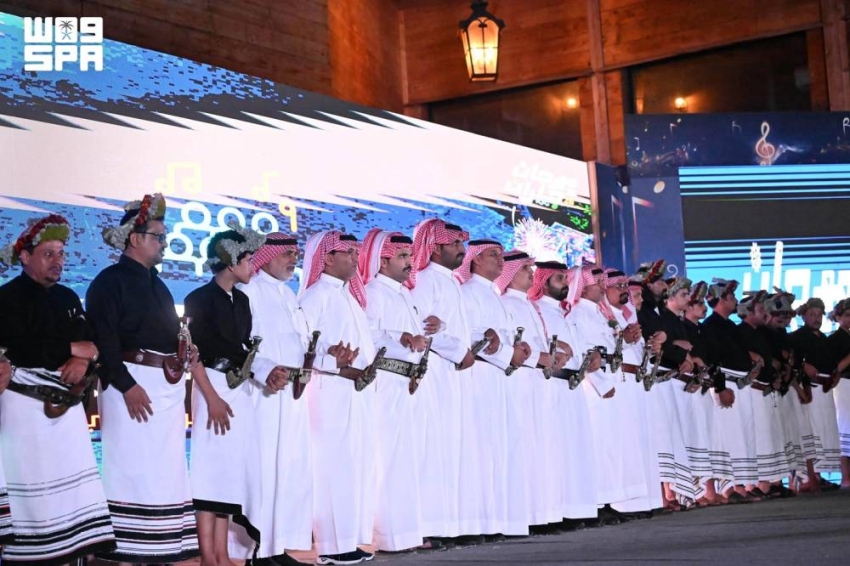
The same applies to fashion. Traditional dress was never a single copy; each region was distinguished by its colors, patterns, fabrics, and embroidery styles, influenced by environment, climate, resources, and trade relations with neighboring peoples. This diversity was not a reason to dismantle identity, but a source of its richness. Hence, traditional dress today has become part of countries' soft power, because it encapsulates an entire history in a piece of cloth.
As for folk arts, they are the language of societies before being performances on stages. They are not just artistic performances, but a living record in which peoples store their values and collective memory. Each society has its dances, chants, and rhythms, reflecting its history, environment, and experiences, and passing from generation to generation as an authentic part of its cultural identity. For this reason, it is not surprising that many countries have sought to register elements of their intangible cultural heritage on UNESCO lists, recognizing that culture is not reduced to books, but extends to everything that shapes the identity of individuals and society.
The most dangerous thing any cultural institution may face is not weak production, but a narrow concept of culture. When culture becomes captive to a single taste, a single specialization, or a monolithic vision, we are not protecting culture but placing it under guardianship. Guardianship does not produce creativity because it begins by defining what deserves to be called culture and what should be excluded.
Living culture does not exclude; it embraces. It is not afraid of difference, because it realizes that great civilizations were not built on similarity, but on interaction between peoples, exchange of knowledge, cross-fertilization of ideas, and accumulation of human experiences. Therefore, the role of cultural institutions is not to favor one art over another, or literature over others, but to nurture this diversity and allow all its tributaries to grow side by side. The cultured person is not only one who reads a novel, but also one who preserves a craft, develops a dish, designs a garment, plays a tune, or tells a folk tale.
Culture, in the end, is not a shelf of books... it is a whole life. @DrLalibrahim
Original source: Al-Yaum

Comments (0)
Be the first to comment.