Mohamed Khan... His Films Bear Witness to a Better Artistic Era
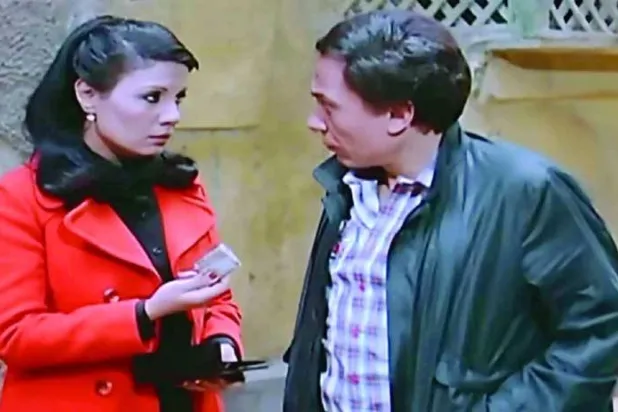
The tenth anniversary of the passing of Egyptian director Mohamed Khan, who died on the 26th of this month in 2016, is coming up in a few days. He had suffered a health setback days before his death, did not recover, and passed away in a Cairo hospital.
Over the past 10 years, few Egyptian films worthy of appreciation and admiration have been released. Not because ambitious directors capable of producing good work are completely unavailable, but because the purely commercial orientation of Egyptian cinema has grown more aggressive and has become the first choice and the main title of its productions, supported by the turnout of Arab viewers. There is progress in the use of technology in action films, and many young talents taking part in performances, but there is no real concern for the intrinsic value of cinema.
The situation, as a whole, is not strange. It had already been prevalent in Mohamed Khan's days. Between 'A Sweet Day... A Bitter Day' (1988) and his later film 'Days of Sadat' (2001), there were 12 years. And between 'Heliopolis Apartment' (2007) and his next film 'Factory Girl' (2014), there were 7 lean years. That's because producers washed their hands of directors of his caliber, whose works do not yield profits that satisfy them.
Egyptian director Mohamed Khan in an archival photo (Al-Cinema.com)
Between 1979 and 2014, Khan made 24 feature films. Looking at them today, they appear more diverse than previously thought. True, he worked on thriller films such as 'Sunstroke' (1979), 'The Vendetta' (1980), 'Half a Rabbit' (1982), and 'The Knight of the City' (1992), but most of his films were social with serious themes. Among them were comedies like 'He Went Out and Did Not Return' (1984), and others centered on the human being torn between emotional and family affiliations, such as 'The Professional' (1983) and 'Return of a Citizen' (1986), and one of them, 'Days of Sadat', was a biographical film. Even those films that could be described as thrillers never lacked a social vision and serious treatment of their characters.
Hind Kamel and Nabila Fathi in the film 'Hind and Camilia's Dreams' (Misr Al-alamia)
Early Features
His debut in feature films, after a few short films, materialized in a film written by the late Fayez Ghali and starring Nour El-Sherif, who also produced the film. That was 'Sunstroke', which carried several features of what Mohamed Khan's style would be like in his later films. It is a film about Cairo and its labyrinths. That does not mean it is good in every aspect of its work; the night photography is weak in its lighting distribution, Kamal Bakir's music is overused, and there are gaps in the writing, such as a photojournalist leaving his camera on his bicycle and then being surprised by its theft. Alongside these, Khan began a professionally fruitful working relationship with editor Nadia Shoukry, which lasted a long time.
But what the film reveals is successfully executed outdoor photography designs, an important feature in Khan's later films, through which he captures the city's breath.
We will note that Khan, from this film until his wonderful film 'The Professional' (1983), worked with only two writers, Fayez Ghali and Bashir Al-Deek, and with one cinematographer, Saeed Shimi, who quickly covered up the gaps in Khan's first film, and emerged as a supporter of the working style of the director and his generation.
Two of Khan's films were adapted from foreign films: 'Al-Raghba (Desire)', based on F. Scott Fitzgerald's novel 'The Great Gatsby', which had been filmed several times, the best being Jack Clayton's 1974 version, and 'Al-Tha'r (The Vendetta)' (1980), adapted from the American Western film 'The Bravados' (Henry King, 1958). In both, the story was transformed to suit Egyptian society.
Between 1979 and 2014 Khan made 24 feature films.
Women and Men
Khan's fourth film 'A Dinner Date' came in 1981, with a script by Bashir Al-Deek, who wrote a romantic story about a married woman (Suad Hosni) with a domineering husband (Husni Fahmi), who relives her love for a young man she once knew (Ahmed Zaki in his first collaboration with the director). What can be noted here is the real beginning of Mohamed Khan's interest in women in his films, which he expressed in 'The Wife of an Important Man' in terms of portraying the relationship between an oppressive man and a woman deserving a better life. The film impressed director Ano Quaoudri, who adapted it as the subject for the British film 'Clara' years later.
There is another deprived wife in Khan's next film 'A Bird on the Road' (1981), played by Ferdous Abdel Hamid alongside Ahmed Zaki (their second collaboration) and Farid Shawqi, before the director returned to action cinema in 'Half a Rabbit' (1982).
'The Professional' in 1984 witnessed the maturation of all those previous visions and treatments. A drama about the marginalized. A film more realistic than anything Khan had done up to that point, and one of his best films alongside 'The Wife of an Important Man', 'Hind and Camilia's Dreams', 'Return of a Citizen', and 'Supermarket' (1990). In these films, Khan's frustrated characters evolve, having reached the end of their roads. They have nothing left but to accept what they have achieved and resign themselves to what has not been achieved.
'The Knight of the City' (1992) is another wonderful film, and a good launch for its hero Mahmoud Hemida, and in my opinion, it is the best thriller Khan ever made. It is more than an action film about a man torn between life's concerns and emotions.
And since there is not enough space to list all of Khan's other works, such as 'A Very Hot Day' (1994), 'Days of Sadat' (2001), and 'Factory Girl' (2014), each of them conveyed an honest picture of life in Egypt. Even 'He Went Out and Did Not Return' (1984), with Yahya El-Fakharany, Laila Elwi, and Farid Shawqi, starts in Cairo, but its events take place in the countryside, where the forgotten beauty of life lies.
It is necessary to pause at his last film 'Before the Summer Crowds' (2016), which did not find much interest among Arab critics. Yet it is a beautiful film, a romantic story without explicitly declaring itself as such. This film carried a special breeze, as if it were a declaration of love from Khan to cinema, in the simplicity of its elements and the depth of its implications.
Original source: Asharq Al-Awsat



Comments (0)
Be the first to comment.