'The Odyssey' in Theaters: What Do We Know About Christopher Nolan's Anticipated Film?
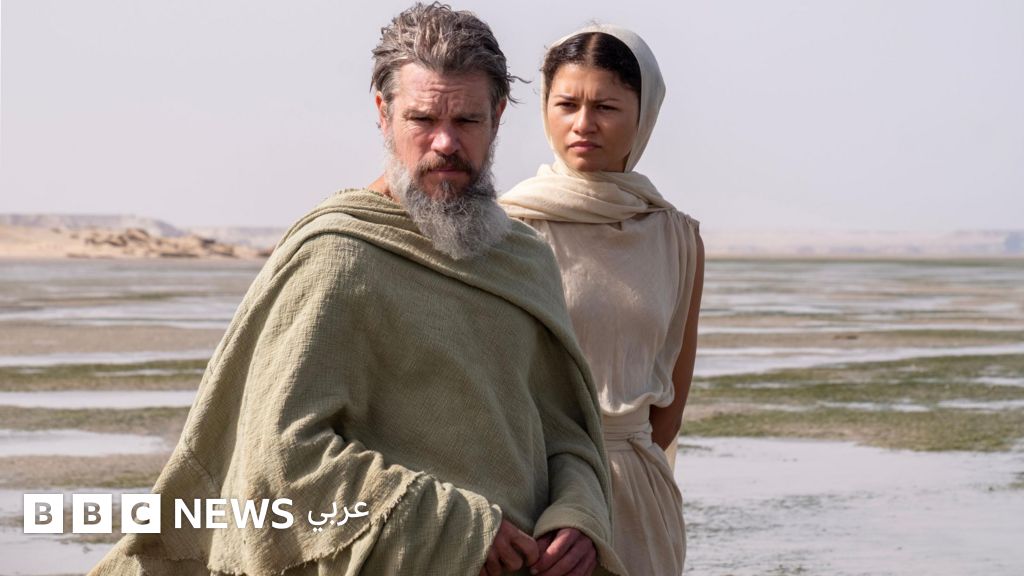
Christopher Nolan's 'The Odyssey' hits theaters amid widespread anticipation and critical praise, as the director brings Homer's epic to the screen with a grand vision that has also sparked debate over casting and treatment.
'The Odyssey' in Theaters: What Do We Know About Christopher Nolan's Anticipated Film?
Image caption, Matt Damon as Odysseus, and Zendaya as Athena.
Published 4 minutes ago
Reading time: 5 minutes
The release of Christopher Nolan's 'The Odyssey' has begun in theaters worldwide, after widespread anticipation ahead of its launch.
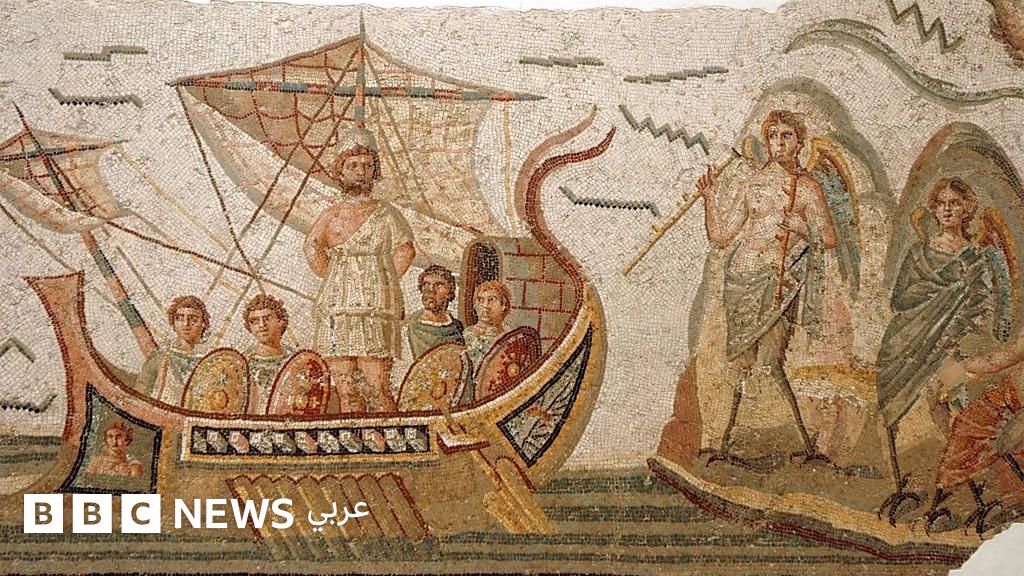
The film offers a cinematic adaptation of the ancient Greek epic 'The Odyssey,' attributed to the poet Homer, which is believed to have been composed in the late 8th or early 7th century BC.
The epic tells the journey of Odysseus, king of Ithaca, on his way back home after the Trojan War, and the dangers and mythical creatures he encounters during his long voyage, while his wife Penelope and son Telemachus strive to protect their family and kingdom in his absence.
'The Odyssey' is the latest film by British-American director Christopher Nolan, who won the Oscar for Best Director for 'Oppenheimer,' while that film also won Best Picture at the 2024 Academy Awards.
The film features a large ensemble of movie stars, led by Matt Damon as Odysseus, alongside Tom Holland, Anne Hathaway, Robert Pattinson, Lupita Nyong'o, Zendaya, and Charlize Theron.
The film's release was preceded by widespread anticipation, as tickets for a limited number of its opening screenings in IMAX 70mm were put on sale a full year before its official release date, an unusual step in the film industry.
So what do we know about 'The Odyssey,' Christopher Nolan's latest work, whose films draw special attention from big-screen audiences?
Why is 'The Odyssey' stirring up so much debate?
Skip the most read and continue reading
Washington ends its strikes on Iran on the seventh night, and the Revolutionary Guards announce 'bombing of bridges in Bahrain and Kuwait'
Who deserves the title of greatest player of all time: Messi, Maradona, or Pelé?
Andy Burnham: Why is the new British Prime Minister a mystery to everyone?
Why do mosquitoes bite some people more than others?
IMAX technology
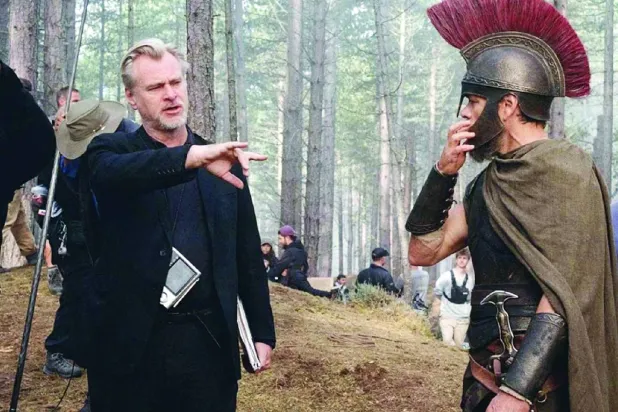
'The Odyssey' was filmed entirely with IMAX film cameras, making it the first feature-length narrative film to be completed in this way.
IMAX is a filming and projection system that relies on large cameras and screens designed to provide a wider and clearer image. In the IMAX 70mm version, a film strip about nine times larger than the traditional 35mm frame is used, allowing for finer detail and an image that fills a wider area of the viewer's field of vision, with a resolution estimated at around 18K.
However, this experience is not available in all IMAX theaters, as most use digital projection systems, while the 70mm version can only be seen in a limited number of cinemas specially equipped for it around the world.
Among them is the BFI IMAX in south London, which The Guardian reported that cinema enthusiasts traveled to from the United States, Switzerland, and Ireland to attend the premiere. The newspaper quoted one of them as saying he had to travel after tickets sold out in New York, even though he was among those who bought them a full year before the screening.
Massive action scenes
BBC film critic Caryn James wrote that Nolan employs IMAX cameras in a series of massive and rapid-fire scenes to highlight the vastness of Odysseus's journey, as well as the extent of human helplessness before the gods.
Much of the film takes place on a sapphire-blue sea, where the horizon stretches wide, while enormous cliffs rise up, making the boat carrying Odysseus and his men appear tiny. James added that the film immerses the viewer in its atmosphere to the point of giving them a sense of being on the boat with them.
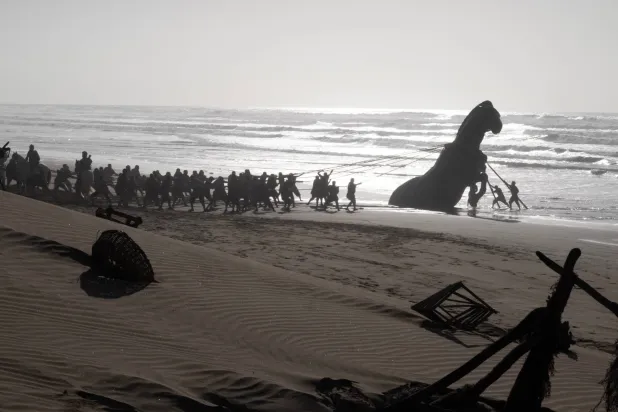
She said that the massive action scenes achieve the same degree of immersion, as every sword strike, spear thrust, and arrow launch is precisely designed. These scenes seem even more impressive because Nolan relied heavily on practical effects, with limited use of computer-generated visual effects.
James concluded that Christopher Nolan's treatment of the epic clearly leans toward delivering a massive action-adventure film, rather than aiming to provide a lesson in classical literature.
Discussion and controversy before the release
Skip the podcast and continue reading
Worth paying attention to
In-depth explanation of the most prominent events and topics, to help you understand the key changes around you and their impact on your life
Episodes
End of podcast
'The Odyssey' has sparked controversy since the announcement of its cast, and the discussion widened after the release of the first trailers, to include casting choices, accents, costumes, and ship design.
This is not far from the pattern that accompanied Christopher Nolan's previous films. 'Dunkirk,' which dealt with the evacuation of hundreds of thousands of Allied soldiers from northern France during World War II, sparked debate about his narrative angle and the characters he focused on or omitted. Similarly, 'Oppenheimer,' which told the story of American physicist Robert Oppenheimer and his role in developing the atomic bomb, stirred controversy over the moral responsibility of scientists, the way victims of nuclear weapons were portrayed, and the boundary between scientific achievement and its destructive consequences.
As for 'The Odyssey,' the debate began before the film had a full chance with the audience. Part of it focused on the casting, including Elliot Page and rapper Travis Scott, who plays a poet and singer, as well as Lupita Nyong'o as Helen of Troy, daughter of Zeus and queen of Sparta, whom Homer described as 'white-armed.'
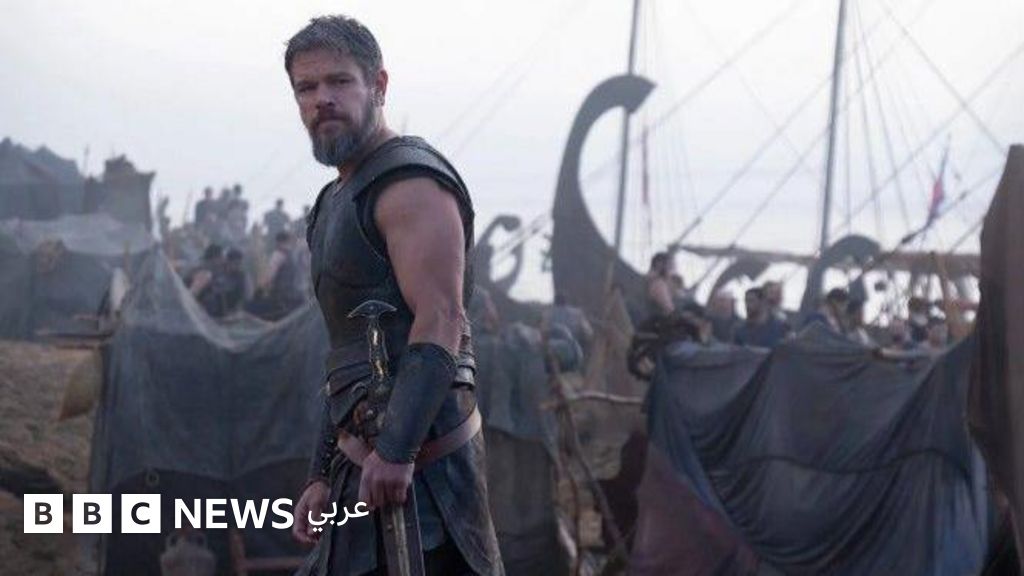
Some viewers also objected to the actors' accents, as several of them, including British actors, speak with an American accent or contemporary dialogue. The criticisms extended to visual details such as costumes and ship designs, in light of expectations by some that the treatment would approach the imagined image of the ancient Greek world.
In response, defenders of the film argued that 'The Odyssey' is a mythical epic passed down through different generations and reinterpreted many times, and does not represent a historical record that must be followed literally. They also pointed out that any modern adaptation must choose new language, accents, and images, and that Nolan seems intent on reintroducing its themes—such as war, homecoming, power, and human weakness before greater forces—to a contemporary audience.
Thus, the dispute over the film goes beyond the issue of costume accuracy or an actor's skin color, to a broader question about the limits of a director's freedom when adapting a classic text, and whether he is required to preserve the established images around it, or reshape it to suit his vision and era.
What did the critics say?
'The Odyssey' has received widespread praise from critics who saw it ahead of its public screenings, although some reviews were not without reservations.
The Telegraph called the film 'film of the year' and gave it five stars, while The Times called it 'a masterpiece by all measures.' Tory Pryzer, critic for Metro, also gave it five stars and deemed it an achievement that could be a landmark in the film industry.
David Rooney of The Hollywood Reporter felt that the film seems 'uneven' in some parts compared to Nolan's previous works, but praised the cast's performances.
Danny Leigh of the Financial Times had reservations about some of the contemporary dialogue and vocabulary, which he said sometimes took him out of the ancient world atmosphere.
Original source: BBC Arabic


Comments (0)
Be the first to comment.