"Survivor's Guilt" When Survival Becomes a Burden and Salvation a Shame in the Face of Rubble
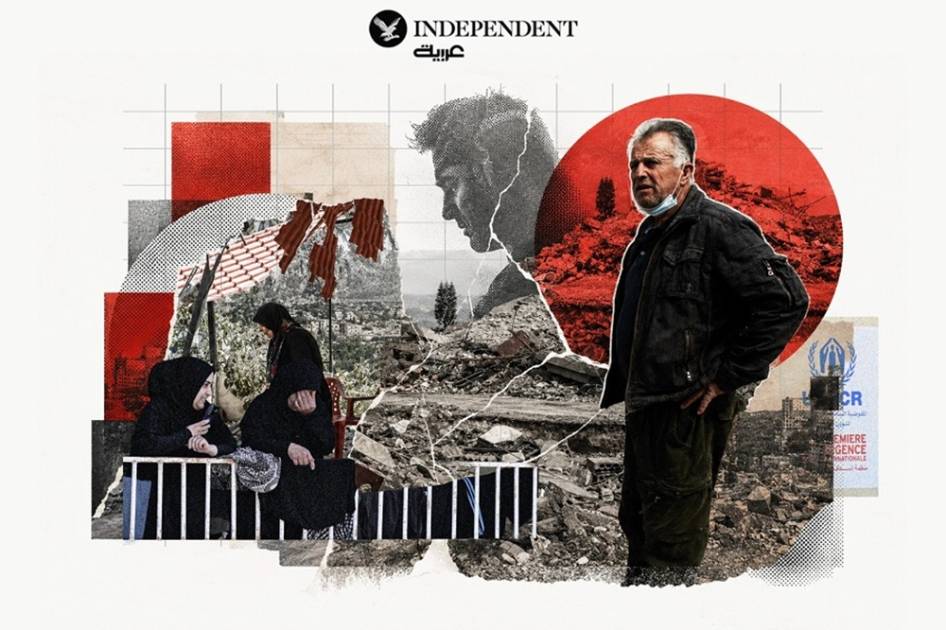
تستكشف هذه الظاهرة النفسية الموثقة الأعباء العاطفية والشعور بالذنب الذي ينتاب الناجين من الكوارث والحروب حين تتحول سلامتهم إلى عبء خفي.
Summary: It is the phenomenon of 'survivor's guilt,' a documented psychological condition that makes survival or the safety of one's property a moral burden and a feeling of guilt in the face of others' losses. Its historical and scientific roots emerge from the testimonies of Hiroshima, natural disasters, and the pandemic, extending to fires and wars in Lebanon, where society sometimes turns sacrifice into a measure of dignity, imposing psychological pressure on survivors that drives them to feel ashamed of their safety.
Why does someone whose house was not destroyed feel guilty in front of a society counting its rubble?
The Japanese boy who carried his baby brother's corpse on his back was not just a symbol of loss; he became an icon of the silence that survival leaves behind. In Nagasaki in 1945, a few days after the atomic bomb was dropped, American photographer Joe O'Donnell captured an image of a ten-year-old boy, barefoot, standing in a semi-military posture, carrying the body of his infant brother on his back in a long line waiting for its turn to burn bodies. His features were not crying, but his tightly pressed lower lip betrayed the collapse he was trying to suppress. That boy, likely the last survivor of his family, stood carrying on his back the burden of being the one who remained alive to carry his brother's body.
That image silently encapsulates, deeper than any words, a question that still haunts everyone who survived a disaster that their loved ones did not: 'Why me? Why did I remain to carry the suffering while others left?' That question, which stood silently behind that child's eyes more than 80 years ago, is the same one that still echoes today in the homes of Lebanon that stood firm while neighbors' houses collapsed, and in the rooms of the wounded who apologize because, in their words, they did not 'deserve martyrdom.' And everywhere, survival without any real guilt becomes a burden carried on the back like an invisible corpse.
Some unconfirmed accounts mentioned that the boy said to a soldier who asked him to throw the corpse because it was heavy: 'It is not heavy; it is my brother.' And some psychologists saw in such experiences the early seeds of what is known as 'survivor's guilt,' that heavy feeling that haunts those who remained alive while others perished.
Although it cannot be confirmed that this boy indeed suffered from this guilt, his image most eloquently embodies the psychological burden that disaster survivors may carry, where survival itself becomes an additional load.
There is a type of guilt in which no mistake is committed, requiring neither confession nor punishment, but it resides in the chest as an invisible heaviness. A guilt you feel without having committed it, caused only by the chance that the shell missed your roof and hit the roof of a nearby or distant neighbor or relative. It is the 'survivor's guilt' of one whom misfortune missed but struck those around him, so he carries the feeling of guilt for survival. And this is not a poetic description clad in emotional exaggeration, for 'survivor's guilt' is a documented psychological phenomenon over decades of wars, earthquakes, and epidemics, making survival feel like an accusation, and the safety of the house turns into shame in the face of great destruction.
The Japanese boy who carried his infant brother's corpse on his back (social media)
Psychiatry calls it
The roots of this guilt are old, and the term for this condition was coined by American psychiatrist Robert Jay Lifton, who in 1962 conducted interviews with 75 survivors of the Hiroshima atomic bomb, resulting in his seminal book 'Death in Life: Survivors of Hiroshima.' Lifton coined the term 'death guilt' and described how survivors remained trapped in a persistent feeling that they owed something to those who died in their place; he later introduced a more precise term, 'anticipatory survivor guilt,' to describe the anxiety of those who also know they might be the next victim. Among the most powerful images in Lifton's research is his documentation of a poet who survived Hiroshima, describing how he looked at grass that grew from soil mixed with the bones of the dead, as if the grass were the eyes of the dead watching those who remained alive. Lifton observed that this guilt is not limited to the individual but extends to become a collective guilt that societies reproduce among themselves, so much so that any new nuclear test anywhere in the world would revive feelings of guilt among Hiroshima survivors themselves, even after a long time.
This phenomenon later recurred in a well-documented manner among survivors of the Nazi Holocaust, as decades of psychological studies show that many of them experienced a feeling that they benefited from the privilege of survival at the expense of relatives, friends, and neighbors who perished. This guilt sometimes extended to their second-generation children who did not even live through the Holocaust. According to the definition of the American Psychological Association, 'survivor guilt' is a feeling of regret because one survived a catastrophe that others did not, or because one did not endure the tragedies that others endured, and this feeling often stems from an inner sense of failure to do enough to save others.
The guilt of the house that remains standing amidst the rubble of neighbors' houses (Independent Arabia)
The earthquake does not choose, but
On February 6, 2023, two earthquakes measuring 7.8 and 7.7 struck south-central Turkey and northwestern Syria, followed by more than 570 aftershocks within just 24 hours, affecting about 26 million people and killing more than 50,000.
About two years later, a study published in the journal Behavioral Sciences in 2025 examined 127 survivors and concluded that 'survivor guilt' acts as a psychological bridge between deeply rooted negative thinking patterns and the severity of post-traumatic stress disorder symptoms, meaning guilt is not a side or marginal symptom but a link that keeps the wound open and the pain alive.
Another study involving 642 survivors of the Kahramanmaraş earthquake (southern Turkey), conducted about two years after the disaster, found that levels of depression, anxiety, and PTSD remained high even after that long period, confirming that this type of psychological wound does not heal with time alone. Psychology Today explains this paradox with a statement: 'Disasters are random by nature; a hurricane may wipe out one family's home and leave the neighbor's house completely intact. A person may survive a mass shooting while the person standing next to them is seriously injured. Layoffs may affect an entire department and leave a few employees. But this randomness in the distribution of catastrophe is difficult for the human mind to grasp, so many resort to feeling that they did not deserve to survive at all.'
In a related context, the Trauma Resource Institute found that among the most recurring thoughts among disaster survivors are questions about why their house specifically survived, what they could have done to help neighbors, and that the destruction of the entire neighborhood also means the disintegration of the social network that provided support, increasing feelings of isolation even among those who lost nothing materially.
Inspecting houses after their destruction in Bint Jbeil, southern Lebanon (Independent Arabia)
From COVID to fires
Original source: Independent Arabia




Comments (0)
Be the first to comment.