Saudi Arabia: Saving Lives of 12 Patients with Organs from 5 Brain-Dead Donors
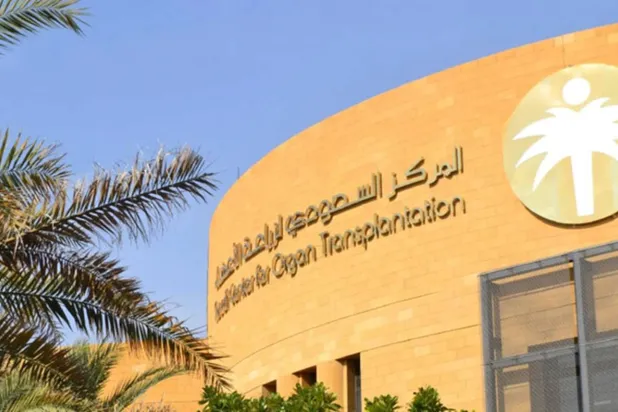
The Saudi Center for Organ Transplantation team contributed to saving the lives of 12 patients, including 4 children, ending their suffering from organ failure diseases, and restoring joy and happiness to their families.
Crisis of Public Performance Rights Escalates... Khairy Beshara Threatens Legal Action
Egyptian director Khairy Beshara threatened to take legal action to collect public performance rights for his famous film 'Ice Cream in Gleem', which starred Amr Diab and Simone, and was shown in the 1990s, becoming one of the icons of Egyptian cinema.
Beshara interacted with demands from creators to obtain public performance rights, stressing in a post on his Facebook account his desire to take legal action and search for a lawyer to handle the case. The post came hours after a meeting held by the Actors' Syndicate, attended by a number of artists, including Yehia El-Fakharani, Lebleba, Elham Shaheen, and Senator (second chamber of parliament) Yasser Galal, to discuss the steps taken in this context.
The Cinema Industry Chamber had rejected, in a meeting last week, the actors' demands to obtain public performance rights for their artistic works, affirming its refusal to draft unified contracts demanded by the artistic unions, and insisting on the producers' exclusivity to financial dues.
Actors' Syndicate head Ashraf Zaki told Asharq Al-Awsat: 'A meeting will be held at the syndicate to discuss public performance rights and the mechanism for activating them, and whether it will include old works that have been previously presented, or will its application be limited to new works,' noting that all proposals are discussed seriously and within legal frameworks to achieve the interest of all.
Lawyer Yasser Kantoush, who was recently authorized by the Society of Authors and Composers to take legal action to protect creators' rights, confirmed that 'the law does not have retroactive effect,' adding to Asharq Al-Awsat: 'On the other hand, there are original rights for authors of works that must be paid,' pointing out that the matter requires discussion and dialogue to reach a formula that satisfies all parties.
Part of the actors' meeting (Lebleba's Facebook account)
Senator (second chamber of the Egyptian parliament), artist Yasser Galal, had submitted last May a proposal to the Culture and Media Committee of the council to activate public performance rights, according to the Intellectual Property Protection Law (No. 82 of 2002), to ensure that performing artists, including actors, singers, and musicians, obtain this right as neighboring rights.
Senator Ahmed Khaled Mamdouh said that 'public performance right should apply to all works, whether those to be presented in the future or those previously presented by deceased artists, so that returns are distributed to their legal heirs, which is a globally recognized method,' noting that 'some companies used to stipulate in their contracts the artists' waiver of public performance rights.'
He added that 'with understanding of the producers' point of view, dialogue will be able to reach a consensual formula among the different parties, especially with the movement of artistic unions to represent artists.'
For his part, the Chairman of the Board of Directors of the Association of Sons of Egyptian Artists, and son of the late artist Tawfiq Al-Deqqen, lawyer Madi Al-Deqqen, told Asharq Al-Awsat that legal rules are general and abstract, and apply to works shown through any medium, noting that 'the association has a database of heirs of deceased artists, and they have already obtained previous judicial rulings regarding public performance rights.'
He added that 'the application of the law remains primarily the state's responsibility, and no party has the right to grant or prevent its application, especially since contracts that include waivers of public performance and property rights are deficient,' explaining his viewpoint by 'the spread of platforms, channels, and websites that currently display works, which did not exist at the time of concluding contracts that included waivers of performance rights,' as he put it.
He believed that 'it is a mistake to link the dignity of artists and their families with public performance rights, because what is demanded is a globally recognized right based on a clear legal basis,' pointing to the necessity of real dialogue among the different parties to reach understandings.
Original source: Asharq Al-Awsat




Comments (0)
Be the first to comment.