As You Think, So You Become... Study Links Positive Mindset to Signs of Aging
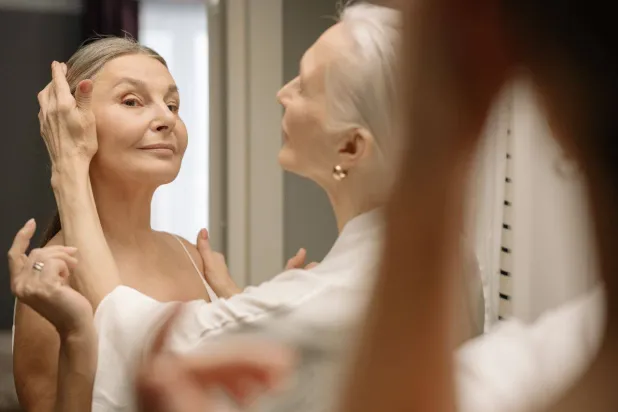
Many expect physical and mental abilities to decline with age, but a new study by Yale University challenges this idea. The results showed that a large number of older adults experienced improvements in their physical and cognitive abilities over time, and that those with a more positive outlook on aging were most likely to achieve such improvement.
Although the study does not suggest that optimism can reverse the effects of aging, it adds new evidence to research confirming that aging does not progress the same way for everyone, and that maintaining physical and mental health in later years may be more achievable than previously thought.
Many older adults saw their abilities improve over time
The study, published in 2026 and reported by Verywell Health, relied on data analysis of more than 11,000 people aged 65 and older, who were followed for up to 12 years as part of a long-term American study on health and retirement.
The researchers focused on measuring changes in cognitive performance, including memory and thinking skills, as well as walking speed, which is a common indicator of fitness and physical ability.
The results showed that more than 45 percent of participants recorded improvement in cognitive or physical performance, or both, during the study period.
The results were as follows:
- About 32 percent improved their cognitive abilities.
- Approximately 28 percent improved their walking speed.
- About 44 percent of those who improved cognitively also saw an improvement in walking speed.
When the researchers looked at the average results of all participants, the typical age-related decline appeared. But when analyzing individual results, it turned out that a large number of older adults achieved improvement in at least one aspect of their abilities over time.
Positive beliefs about aging make a difference
The study also examined factors that might explain this improvement, and found that the most prominent factor was participants' outlook on aging.
People with more positive beliefs about aging were more likely to improve their cognitive and physical abilities, even after accounting for factors such as age, sex, education level, and health status.
Dr. Amy Fitzpatrick, a physician at Boston Medical Center and assistant professor at Boston University School of Medicine, said these findings offer a more optimistic view of aging.
She added, "The study suggests that some people may experience improvement in their quality of life as they age if they receive proper support and adopt healthy habits."
She explained that these findings give families and caregivers hope that many older adults can continue to learn and develop, and possibly regain some abilities they had previously lost.
How does our view of aging affect our health?
The researchers also assessed participants' attitudes toward aging using a validated scientific questionnaire.
The results showed that those with a positive outlook were more likely to improve their physical and cognitive abilities, even after excluding the influence of other factors.
But the researchers stressed that this does not mean positive thinking alone directly leads to health improvement; rather, it may influence the daily behaviors a person adopts.
Fitzpatrick says, "If a person believes they can continue to improve as they age, they are more likely to stay socially active, keep learning, exercise, and seek medical care when needed."
She added, "On the other hand, those who believe that muscle weakness or memory decline is an inevitable part of aging may be less willing to engage in behaviors that help maintain mental and physical abilities."
Is positive thinking alone enough?
The researchers emphasize that the study results do not mean optimism alone can improve health or slow aging.
Because the study is observational, it reveals a relationship between positive beliefs and health, but it does not prove that the former is the direct cause of the latter.
It is also possible that people who are healthier or have greater social support are more inclined to adopt a positive view of aging.
Fitzpatrick believes the study's main message is that a positive outlook may encourage adopting healthy habits, such as regular physical activity, a balanced diet, adequate sleep, maintaining social relationships, and adhering to medical check-ups and care.
How can you maintain your physical and mental health as you age?
Although aging is inevitable, studies indicate that adopting a healthy lifestyle helps maintain physical and mental abilities. Among the key habits experts recommend:
- Engage in daily physical activity, including strength training, walking, balance exercises, and stretching.
- Follow a balanced diet rich in protein and fiber.
- Sleep seven to nine hours per night.
- Maintain communication with family and friends.
- Learn new skills or take up new hobbies.
- Manage chronic conditions such as high blood pressure.
- Keep up with hearing and vision tests and preventive health care.
Fitzpatrick concludes, "The most important lesson from this study is that aging is not determined solely by the number of years we have lived, but is also shaped by the thousands of daily decisions we make, the support we receive, and our ability to remain physically, mentally, and socially active."
Read also
Original source: Asharq Al-Awsat





Comments (0)
Be the first to comment.