Cowpox Outbreak Threatens Livestock in Houthi-Controlled Areas
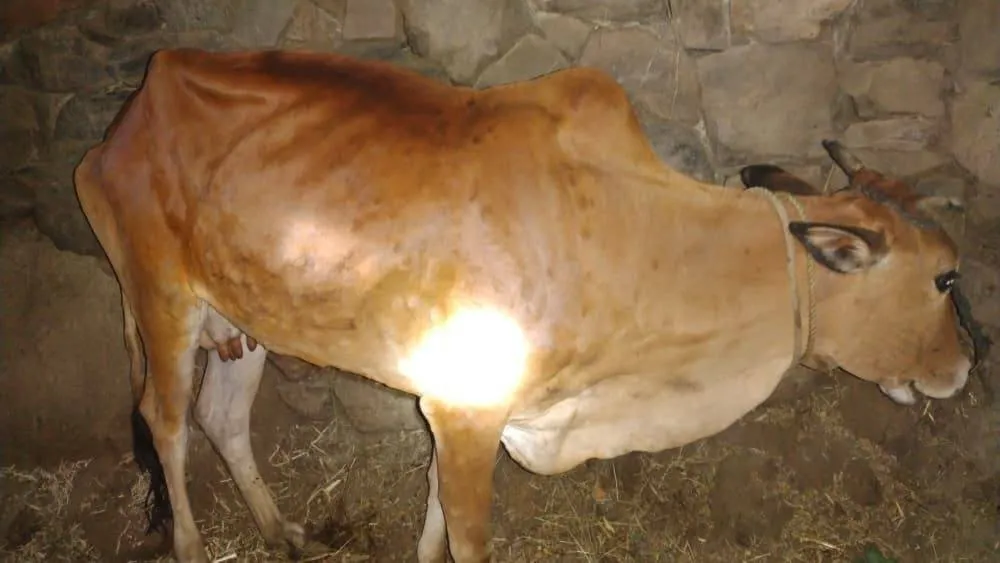
The spread of cowpox is expanding in Houthi-controlled areas amid complaints of lack of vaccination and veterinary services, while the government in Rome presents its plan to boost agriculture.
Concerns are widening in Yemeni areas under Houthi control as the lumpy skin disease, also known as cowpox, spreads rapidly amid complaints about the absence of vaccination campaigns and veterinary services, at a time when agricultural circles believe the continued outbreak threatens the livelihood of thousands of rural families that depend on livestock breeding.
Meanwhile, the Yemeni government presented its vision for developing the agricultural sector during an international conference in the Italian capital Rome, stressing the importance of transitioning to smart agriculture to enhance food security and improve production efficiency.
Residents and livestock breeders in Al Mahwit Governorate, west of Sanaa, reported a noticeable increase in cases of lumpy skin disease in recent weeks, especially in the districts of Hufash, Bani Sa'd, and Milhan, with the highest concentration in Hufash district.
Breeders said that the disease infected hundreds of cows, with symptoms including high fever, skin nodules and swellings throughout the body, as well as a drop in milk production. They confirmed that dozens of animals had died in recent days, causing direct losses to families that depend on livestock as their main source of income and livelihood.
The livestock sector in Houthi-controlled areas faces major challenges (Facebook)
According to local sources, the spread of the disease occurred amid the absence of preventive vaccination campaigns, a lack of basic veterinary services in rural areas, and limited resources for breeders, many of whom cannot afford to buy medicine or obtain the necessary guidance to deal with the disease.
A number of farmers confirmed that the Houthi authorities have not carried out effective field campaigns to contain the spread of the disease, despite repeated appeals by those affected for vaccines and treatments and to save the remaining livestock.
Livestock breeders believe that the continued outbreak threatens to exacerbate losses in the cattle breeding sector, which represents one of the most important sources of income for thousands of families in rural areas. They called for urgent intervention to implement comprehensive vaccination campaigns, provide medicines and veterinary services, and limit the transmission of the infection to new areas.
Complaints of neglect
According to consistent statements from farmers, the Houthi group's attention is mainly focused on collecting fees and levies imposed on workers in the agricultural sector and livestock breeders, while measures to protect livestock or limit the spread of epidemic diseases are absent.
Agricultural specialists confirm that combating lumpy skin disease requires a rapid response that includes preventive vaccination, controlling virus-carrying insects, strengthening veterinary surveillance, and implementing awareness programs for breeders on prevention methods and mechanisms to limit transmission.
This comes at a time when the livestock sector in Houthi-controlled areas faces mounting challenges due to the significant rise in feed and veterinary medicine prices, and the decline in purchasing power, making it harder for breeders to bear additional burdens or confront massive waves of livestock deaths.
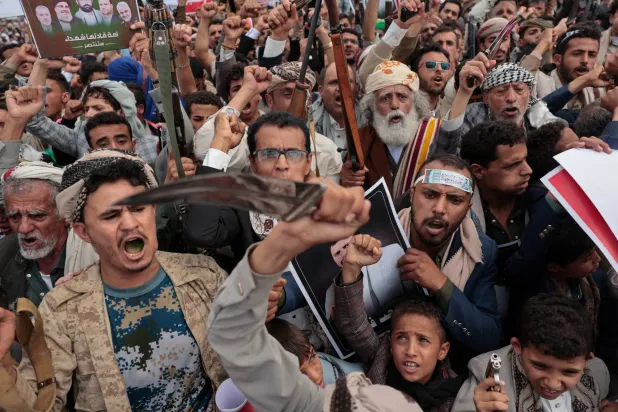
Houthis force farmers to donate livestock to fronts (Houthi media)
Specialists believe that continued neglect in providing necessary vaccines and treatments, coupled with the imposition of more fees and levies on workers in the sector, exacerbates economic pressures on rural families and weakens the sector's resilience, despite its importance in providing food and income for large segments of the population.
Agricultural workers warn that the spread of the disease without urgent intervention could lead to a decline in livestock numbers and a drop in dairy and meat production, affecting food security in rural areas and increasing the living burdens on people already facing difficult economic and humanitarian conditions.
Government vision
Meanwhile, Yemen's Minister of Agriculture, Irrigation and Fisheries, Salem al-Soqatri, participated in a high-level roundtable titled "Governance for Inclusive and Sustainable Smart Agriculture" as part of the World Conference on Smart Agriculture of the United Nations Food and Agriculture Organization (FAO) in Rome.
Al-Soqatri affirmed during his speech that governance is the essential pillar for transforming digital and technological innovation into practical results that serve farmers, especially small-scale producers, and contribute to enhancing food security and achieving sustainable agricultural development.
He explained that building an enabling environment for smart agriculture requires developing institutional frameworks and national policies that support digital transformation, investing in digital infrastructure, agricultural information systems, and early warning systems, in addition to building farmers' capacities and strengthening partnerships with international organizations, the private sector, and research and innovation centers.
Yemeni minister presents his government's vision in Rome (Saba)
The minister reviewed a number of initiatives implemented by the Yemeni government in cooperation with international and regional partners, including expansion in the use of greenhouses, hydroponic applications, and modern irrigation techniques such as drip and pivot irrigation, along with supporting agricultural information systems and early warning, and promoting climate-smart agricultural practices.
Al-Soqatri pointed out that the ministry is working to enhance integration between agricultural technology and national policies to serve sustainable development goals, raise agricultural production efficiency, and improve the livelihoods of farmers and fishermen. He stressed the importance of continued international cooperation, exchange of expertise, and providing financing and technology to developing countries to build more efficient, sustainable agricultural systems capable of meeting future challenges.
"); googletag.cmd.push(function() { onDvtagReady(function () { googletag.display('div-gpt-ad-3341368-4'); }); }); }
Original source: Asharq Al-Awsat




Comments (0)
Be the first to comment.