Humans Ingest Plastic Through Cooking
Up to 50 grams of microplastic per year
You are likely ingesting plastic every time you cook; here is one big change you can make. A wave of advice has spread online about making the kitchen a toxin-free environment. Here are the scientific facts explaining why people are giving up plastic, and the changes that are truly worthwhile, as written by Samantha Stevens(*).
* 50 grams of microplastic per year released by a plastic cutting board *
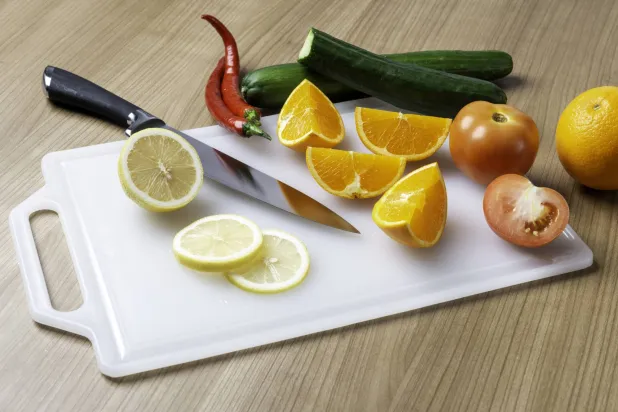
Cutting vegetables on a plastic board
Every time you cut vegetables on a plastic cutting board, tiny plastic particles (microplastics) may fall directly into your food; a 2023 study described plastic cutting boards as 'a potentially significant source of microplastics (in human food),' and found that a polyethylene cutting board may release between 7.4 and 50.7 grams of microplastic per person per year.
Plastic food containers and utensils
But it doesn't stop there; you have to consider all the potential sources of microplastic transfer, from food storage (such as plastic takeout containers), cooking utensils, plastic wrap, to plastic detergent pods used in dishwashers. Even microfiber towels, praised for their quick-drying ability and made from plastic fibers, may shed during cleaning and scrubbing, according to Food & Wine magazine.
Why is this topic getting attention now?
Content about toxin-free kitchens has become trendy on TikTok, as part of a broader shift in how people view the materials that touch their food; more research confirms that some of the most common kitchen tools are also among the most overlooked sources of daily chemical exposure.
And Tracy Woodruff, a professor at the University of California, San Francisco, who studies the impact of microplastics on human health, told NPR that 'it is very likely' that a significant part of our exposure to microplastics comes from the food we eat.
Forever chemicals in frying pans
And the problem is not limited to cutting boards; nonstick pans coated with PTFE can release PFAS particles when scratched, and may leak chemicals when heated. PFAS are classified as 'forever chemicals' linked to long-term health concerns.
In another context, a 2023 study showed that heating food in plastic containers releases millions of microplastic particles and billions of even smaller nanoplastic particles.
Confirmed results from animal studies
None of this means your kitchen has become a danger zone or an emergency; the U.S. Food and Drug Administration (FDA) states that 'current scientific evidence does not demonstrate that the levels of microplastics or nanoplastics detected in foods pose a risk to human health.'
Researchers are still figuring out how important this is, and most of the stronger evidence so far comes from animal studies, not humans. But as Susan Brander (an environmental toxicologist at Oregon State University) told NPR, this knowledge gap may not last long; she says: 'If this is happening in fish and rodents in peer-reviewed published experiments, it's likely happening in us too, but we haven't proven it yet.'
Important steps
It is not necessary to throw away all plastic utensils in your kitchen at once, but when it's time to replace plastic food storage containers, you might want to try using glass containers instead. The general advice is to be mindful of the tools you use for cutting, cooking, storing leftovers, and cleaning; replacing any of them with a non-plastic alternative is a good first step to avoid microplastic exposure.
* 'Ink' - Tribune Media Services
Original source: Asharq Al-Awsat





Comments (0)
Be the first to comment.