Widespread chickenpox outbreak in Gaza worsens ongoing health crises
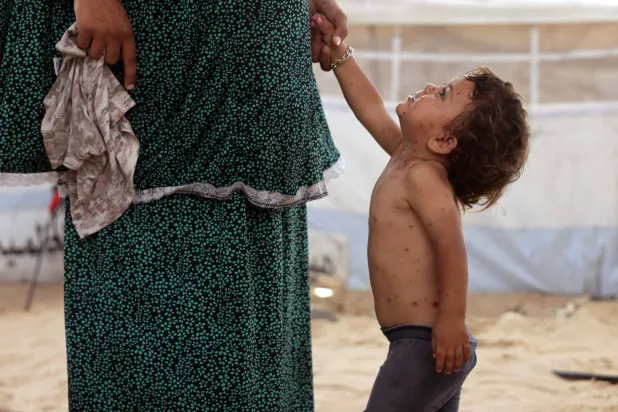
Health crises in Gaza have worsened, with the widespread spread of chickenpox among displaced people in tents adding to the suffering of the population, alongside a shortage of medicines for serious diseases such as cancer.
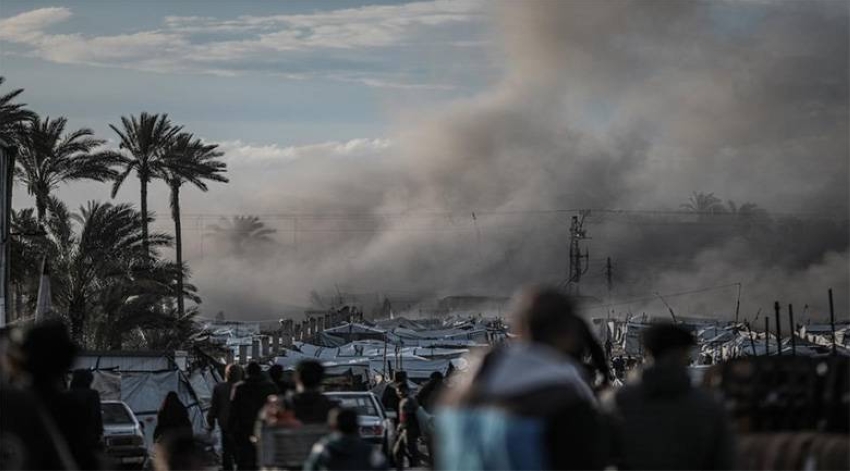
The outbreak of chickenpox has been concentrated in areas crowded with displacement tents, such as Al-Mawasi west of Khan Younis (southern Gaza), amid deteriorating environmental and health conditions that have contributed to the spread of diseases primarily affecting children.
Doctors at Nasser Medical Complex in Khan Younis reported receiving dozens of cases daily, most of them children infected with chickenpox. Dr. Amer Al-Masri, a dermatology consultant at the hospital, told Asharq Al-Awsat: "There is a clear spread of chickenpox in crowded gatherings of displaced people, due to the difficulty of immediately isolating the infected, which leads to rapid transmission of the infection, in addition to the camps' lack of the bare necessities of human life."
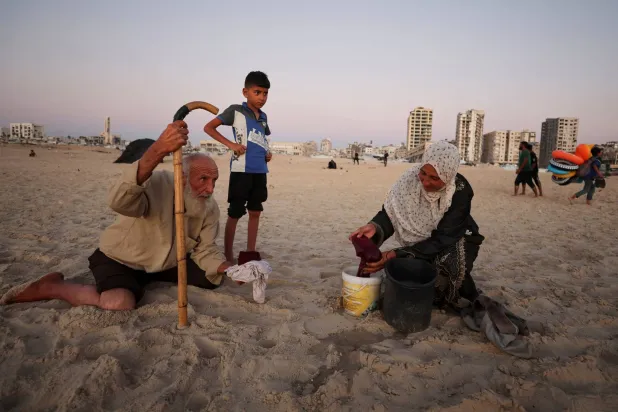
A worker from local authorities in central Gaza sprays insecticide to control rodents and insects at a camp for displaced Palestinians in Deir al-Balah on Wednesday (AP)
Al-Masri explained that "the viral infection of chickenpox spreads quickly to others before the skin rash appears on the body, and the contagiousness lasts for about ten days, while the virus incubation period extends to about two weeks, and symptoms appear for 14 days after infection."
Nihal Sharab (41), a Gazan woman from the Mawasi area of Khan Younis living in a tent camp for the displaced, said she noticed the disease spreading to three of her children, whom she took to Nasser Medical Complex in recent days. However, after receiving initial treatment, she was forced to return them to the tent they live in and try to isolate them from the rest of the family.
The woman told Asharq Al-Awsat that she faced "many obstacles in controlling her children and isolating them amid the hot summer weather and their need to leave the tents, and searching for what could alleviate the heat and the contagious disease that infected them, given the severe itching that accompanies chickenpox."
Unusual increase
The Gaza Ministry of Health has been using social media to try to educate the population on how to deal with chickenpox, amid a lack of resources for field awareness.
The Ministry and the "Health Cluster" led by the World Health Organization announced on July 7, recording about 9,300 chickenpox cases within just two weeks inside the Gaza Strip, reported by more than 130 health facilities.
Health officials attributed the sharp rise to severe overcrowding in displacement sites, deterioration of water, sanitation, and hygiene services, as well as the impact of high summer temperatures.
They indicated that more than half of the cases are in Khan Younis Governorate in the southern Strip, whose western part includes the crowded Al-Mawasi area where basic necessities of life are absent.
According to the cluster, the Gaza Strip contains about 1,600 displacement sites, with a widespread presence of rodents and external parasites reported in 83% of these sites.
Dr. Muhammad Abu Afash revealed in statements to the official "Voice of Palestine" radio about "an abnormal increase in skin diseases, recording about 5,000 cases weekly. He noted that hundreds of cases are recorded within every 24 hours once the first case is detected anywhere."
Severe medication shortage
The spread of skin diseases coincides with a severe and unprecedented shortage of essential medicines, especially for cancer patients, putting the services provided to them at their most difficult level.
The Gaza Ministry of Health said in a statement on Tuesday that some items have completely run out, including life-saving drugs, chemotherapy, supportive treatments, and other items have reached critical levels; leading to the suspension of chemotherapy protocols for breast, colon, rectal, gastrointestinal, head and neck, sarcoma, and other cancers, while service departments have become unable to accept new breast cancer cases.
The Ministry stressed that the shortage of specialized medicines for cancer patients hinders the preparation of dual chemotherapy, noting that the unavailability of immune-boosting injections that must be given to patients after chemotherapy sessions makes them more susceptible to complications and serious infections, and the lack of palliative drugs and painkillers worsens the catastrophic health condition of cancer patients.
It pointed out that there are more than 4,000 cancer patients out of 11,000 who have medical referrals for treatment abroad waiting for permission to travel, stating that the deterioration of specialized treatment lists for cancer patients, the lack of diagnostic and radiological equipment, and the continued ban on their travel puts their lives under real threat. It appealed to all international and humanitarian institutions to urgently respond to the cries of these besieged patients, whose suffering increases with every hour without treatment, as stated in its statement.
Field escalation
On the ground, Israel continued its military escalation, and the death of a prominent activist in the Al-Qassam Brigades, the armed wing of Hamas, from Jabalia was announced following a strike targeting him two days ago, while another activist was critically injured in a strike targeting him in Jabalia camp on Wednesday morning.
The Al-Zaytoun neighborhood area witnessed, for the fifth consecutive day, a major field escalation and continuous displacement amid the steady advance of Israeli vehicles and the extension of the yellow line, aiming to expand security control inside the Strip.
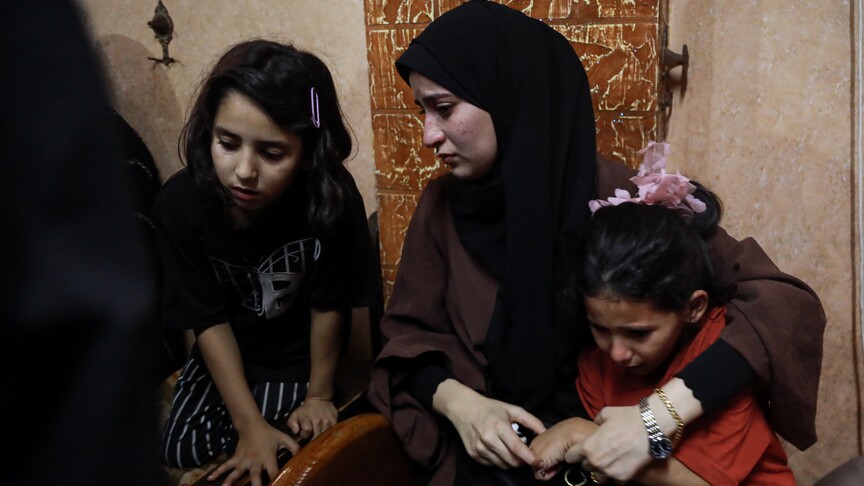
The death toll from the raids on Tuesday reached at least 13 dead, including six from one family wiped out entirely: the family of Hamas activist Firas Al-Masri, who was killed along with his wife and their four children, after a suicide drone struck an apartment they were living in in the Al-Sabra area southeast of Gaza City.
Relatives of Firas Al-Masri, his wife Salsabeel, and their four children who were killed in Gaza City during the funeral ceremony (EPA)
The attack on Al-Masri's family caused a large fire that charred the bodies of the family members, reviving the scene of the use of these drones that had spread terror at the peak of the war on the Strip.
The number of victims since the ceasefire came into effect on October 10, 2025, has risen to more than 1,180 Palestinians.
A worker from local authorities in central Gaza sprays insecticide to control rodents and insects at a camp for displaced Palestinians in Deir al-Balah on Wednesday (AP)
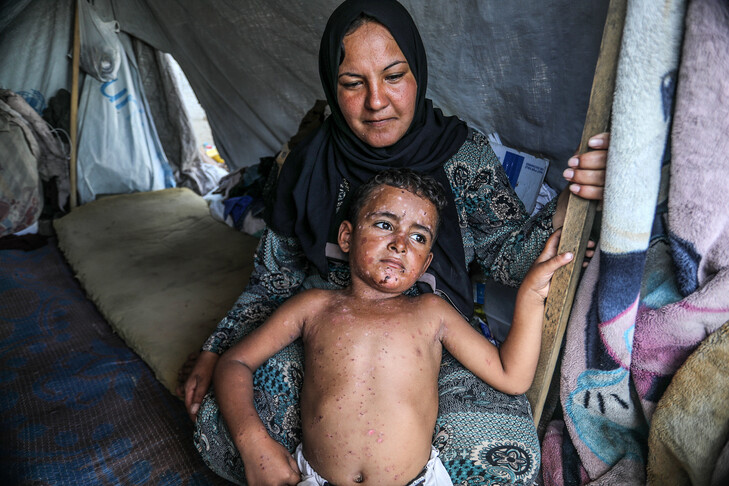
A displaced Palestinian girl infected with chickenpox stands next to her mother inside a tent in Khan Younis, southern Gaza (AFP)
Relatives of Firas Al-Masri, his wife Salsabeel, and their four children who were killed in Gaza City during the funeral ceremony (EPA)
Original source: Asharq Al-Awsat
Comments (0)
Be the first to comment.