Graffiti: Visual Blight Strains Cities and Threatens Urban Landscape
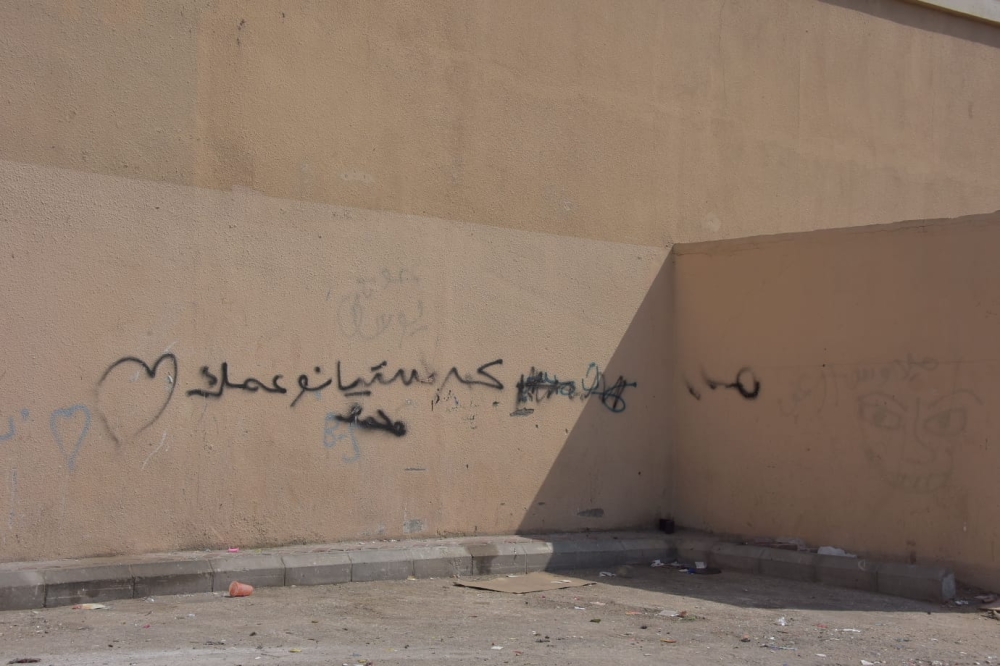
Citizens have warned of the rise of random graffiti on walls, describing it as a visual blight that strains city budgets, emphasizing that awareness, the provision of organized murals, and strict enforcement are key solutions to curb the phenomenon.
The phenomenon of defacing walls is one of the most prominent challenges facing efforts to improve the urban landscape in various residential neighborhoods and service facilities. The effects of these behaviors extend to schools, public parks, and fences, placing increasing burdens on municipal authorities and field maintenance teams to continuously address them.
Related News
Disfiguring Cities
Citizen Abdulaziz Al-Turki explained that random graffiti strips cities of their aesthetic identity and disfigures facilities built specifically to serve the community and provide a suitable environment for residents. He noted that the spread of this phenomenon around schools and public facilities leaves a deep negative impression on visitors and residents alike. Al-Turki added that these vandalistic practices are often unorganized, carrying inappropriate phrases or drawings that compound their negative impact on the public view, pointing out that this tampering undermines the ongoing efforts of regional secretariats to improve quality of life and preserve national assets and gains. Meanwhile, citizen Mubarak Al-Hussein pointed out that removing graffiti from surfaces and walls is not as easy as some imagine, but requires engineering and technical intervention, noting that treatment consumes time, effort, and special chemicals, especially if the walls are affected by multiple layers of paint or deep engraving tools.
Al-Hussein stressed that these direct encroachments incur exorbitant and recurrent financial costs for the concerned authorities to repaint and periodically maintain walls, emphasizing that this financial drain constitutes a huge burden on operational budgets that could have been directed to other service and development projects benefiting the community.
Strictness in Applying Regulations
In the same context, citizen Saleh Al-Dreweish stated that wall graffiti reflects behaviors resulting primarily from a lack of community awareness about the importance of preserving facilities. He explained that some individuals, especially youth and teenagers, are swept away by imitating others without a precise understanding of the legal or social consequences of their actions. Al-Dreweish called for strict enforcement of regulations and activation of the municipal penalties list to deter violators and prevent recurrence of these transgressions, stressing the importance of strengthening the role of the family and school in instilling values of respect, along with intensifying sustainable awareness campaigns targeting different age groups through various platforms. Citizen Nawaf Al-Suwailam touched on the direct negative repercussions of this phenomenon inside schools and educational facilities that require an ideal environment, noting that turning walls into space for inappropriate phrases disfigures the educational environment and negatively affects students' psychological state, causing a bad impression among parents and visitors to the institutions.
Al-Suwailam added that these random practices extend to parks and public walkways, reducing their tourist and recreational appeal and limiting their optimal utilization, explaining that the urban landscape is severely damaged when self-control is absent and public property is left subject to continuous disfigurement without oversight. Al-Suwailam proposed providing civilized and well-studied alternatives to contain young people's energies and express their skills and creativity in positive ways that serve the community, noting that allocating artistic spaces and organized murals under the supervision of relevant authorities would effectively contribute to protecting the public landscape and highlighting young talents while maintaining the aesthetics of cities.
Penalties for Violators
On the legal front, lawyer Maryam Muhammad stated that random graffiti is a clear violation of public taste according to approved regulations. She revealed that Article Five prohibits writing or drawing on the walls of public places, their components, or means of transport unless licensed by the relevant authority. Regarding the prescribed penalties, the lawyer explained that Article Eight of the regulations imposes a fine of 5,000 riyals on violators, noting that the fine doubles if the same violation is repeated within one year, and confirming that the violator may appeal to the competent administrative court. She stressed the need to increase the penalty to exceed 10,000 riyals to achieve effective deterrence and prevent recurrence of violations, calling for prosecuting offenders and referring them to the relevant authorities for potential imprisonment, confirming that this behavior constitutes visual blight requiring concerted efforts to apprehend violators in streets and neighborhoods.
Original source: Al-Yaum





Comments (0)
Be the first to comment.