Libya's High Council of State Accuses Government of National Unity of Failing to Solve Electricity Crisis
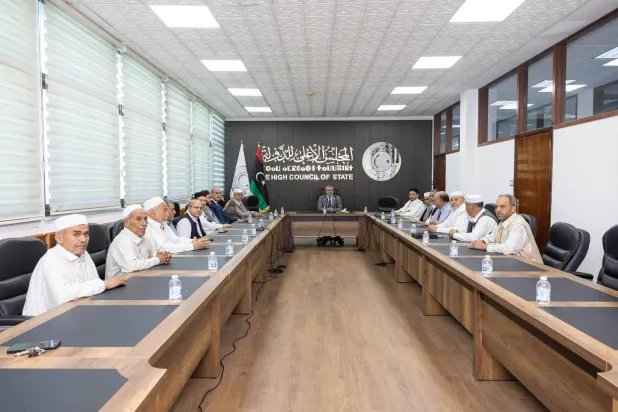
Libya's High Council of State expressed 'deep concern and regret' over the continued power outage crisis and worsening load shedding across the country, calling for an investigation.
The power outage in Libya has heightened the dispute between Mohamed Takala, head of the High Council of State, and Abdul Hamid Dbeibeh, head of the interim Government of National Unity, after the former intervened in the crisis and accused the government of failing to manage the file.
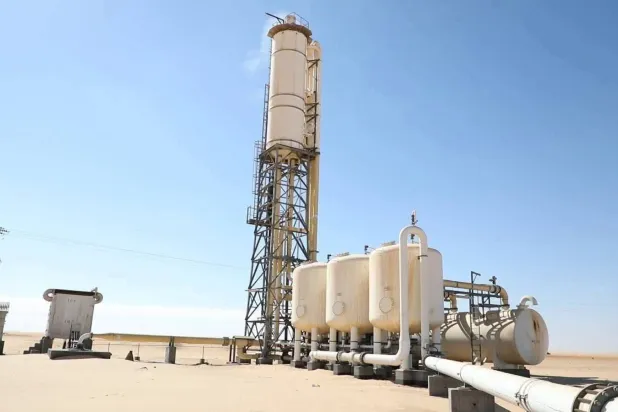
Libya continues to suffer the repercussions of the electricity grid collapse since last week, disrupting daily life in the oil-rich country. The crisis has also affected dozens of wells belonging to the Great Man-Made River.
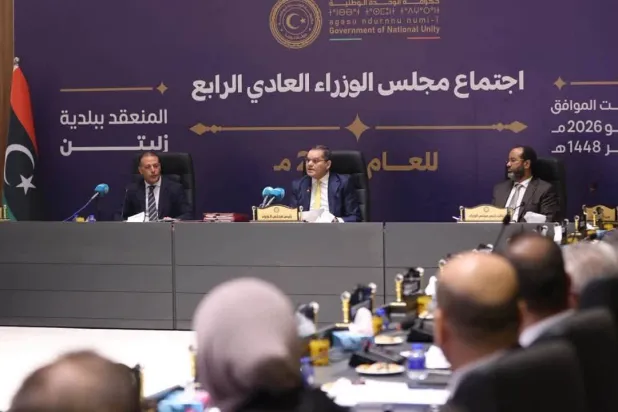
Previous meeting between Dbeibeh and Takala (Government of Unity)
The High Council of State expressed 'deep concern and regret' over the continued power outage crisis and worsening load shedding across the country, noting that it has increased the suffering of citizens, especially amid the extreme heat, burdening families, disrupting public services, and damaging economic and service activities.
The Council said that the continuation of the crisis, despite the huge financial allocations for the electricity sector and announced development projects, 'can no longer be explained as an emergency circumstance, but rather reflects an administrative failure that requires review and serious accountability.'
The Council held the government 'politically and administratively responsible for the failure to manage this file, as it oversees the General Electricity Company and is accountable for monitoring its performance,' stressing that 'management of vital utilities must be based on criteria of efficiency, expertise, and specialization, away from any considerations that do not serve the public interest.'
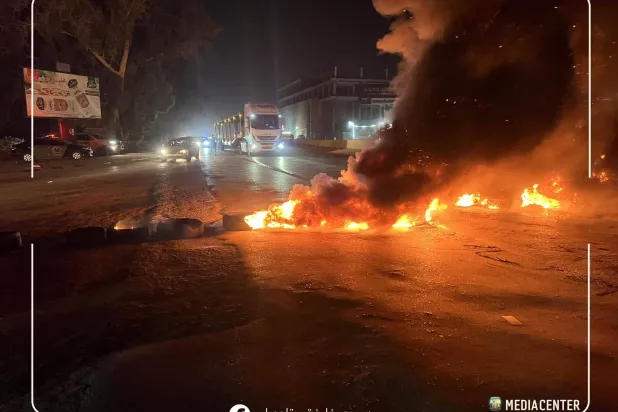
Protesters set fire to tires in Tajoura (west) due to repeated power outages (Sidi Khalifa - Tajoura page on Facebook)
The electricity crisis was not the first point of disagreement between Takala and Dbeibeh, as tensions had previously escalated over a number of political files amid criticism of their management of the transitional period, in addition to differences over the political path and arrangements for holding elections.
As the electricity crisis worsened, the High Council of State called on the Administrative Control Authority, the Audit Bureau, the National Anti-Corruption Authority, and the Public Prosecution to open a 'comprehensive investigation' into the administrative, financial, and technical aspects of the electricity sector to uncover the reasons for shortcomings and project delays, stressing the need to investigate 'any suspicions of corruption or misuse of public funds, announce the results to the public, and hold accountable anyone proven responsible according to the law.'
The power outage crisis, with temperatures approaching 50 degrees Celsius (Thursday), drove citizens to express their anger, setting fire to rubber tires and blocking roads in protest against what they called 'injustice' in the load shedding process.
The power outage crisis affected the operation of the Great Man-Made River in several areas, especially eastern Libya, causing dozens of wells to go out of service and subsequently damaging the water network.
Abdul Hamid Dbeibeh, head of the Libyan Government of Unity (Unity)
The Implementation and Management Authority of the Great Man-Made River reported on Friday that the power outage was due to the disconnection of electrical circuits between the cities of Ajdabiya and Jalu at dawn on Friday, leading to all wells in the Sarir and Tazerbo fields going out of service, noting that this shutdown is the fourth in a week, 'causing problems in controlling the water balance and supplying cities and projects with water.'
The authority said electricity returned to the Sarir well field at 9 a.m. on Friday, 'so work teams immediately began efforts to restart it,' while 'power returned to the Tazerbo well field at 11 a.m., pending voltage stabilization to begin restart operations,' stressing that the power outage for the two fields was beyond its control.
Late President Muammar Gaddafi (Asharq Al-Awsat)
The late President Muammar Gaddafi had announced the inauguration of the 'Great Man-Made River' in 1984 to transport groundwater from the south to the north, making it after about 42 years the 'only lifeline,' without which Libyan cities would face thirst.
The authority had announced on Thursday that the power outage led to 51 wells in the Tazerbo field and 92 wells in the Sarir field going out of service, and noted that 'to protect the pipeline system and maintain the water level in the Ajdabiya reservoir, water supply to some cities will be reduced.'
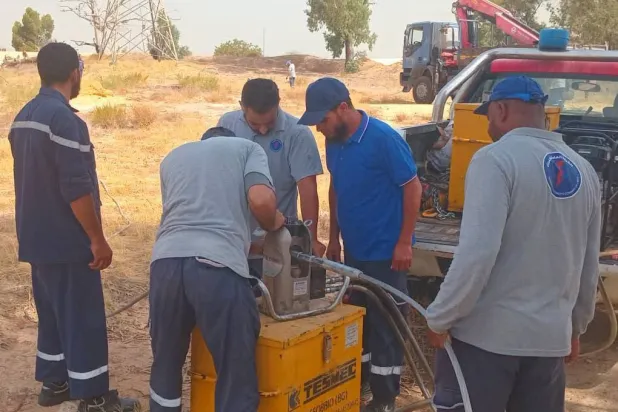
The General Electricity Company says its maintenance teams are working at full capacity to restore power to all areas, and explained that its technicians in the Al-Furnaj distribution district in the capital Tripoli 'are making great efforts, including installing a ready-made Abu Zaanin station in the Zanata area to replace the burnt one to ensure continuity of electricity supply to citizens.'
The company also pointed out that the cable team in the Al-Jafara medium voltage maintenance department (northwest Libya), under the Western Medium Voltage Networks Administration, replaced the power circuits 1/2 feeding Al-Jamal station, and 'replaced the previous defective oil cables with new type 630 cables to improve performance and ensure continuity of supply.'
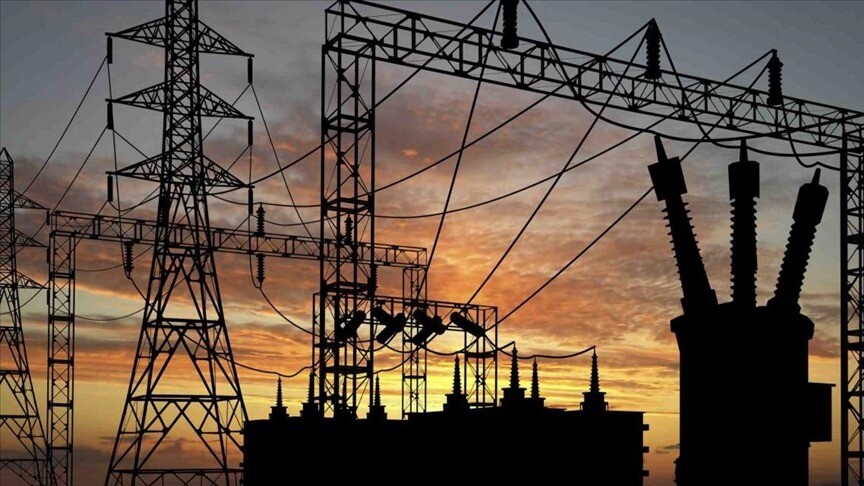
The Libyan electricity grid had suffered a near-total collapse after several power plants and main transmission lines went out of service, leading to the loss of about 1,350 megawatts of production capacity.
\"); googletag.cmd.push(function() { onDvtagReady(function () { googletag.display('div-gpt-ad-3341368-4'); }); }); }
Original source: Asharq Al-Awsat
Comments (0)
Be the first to comment.