3 Reasons That Play in America's Favor.. In-Depth Analysis of the Saudi Nuclear Deal
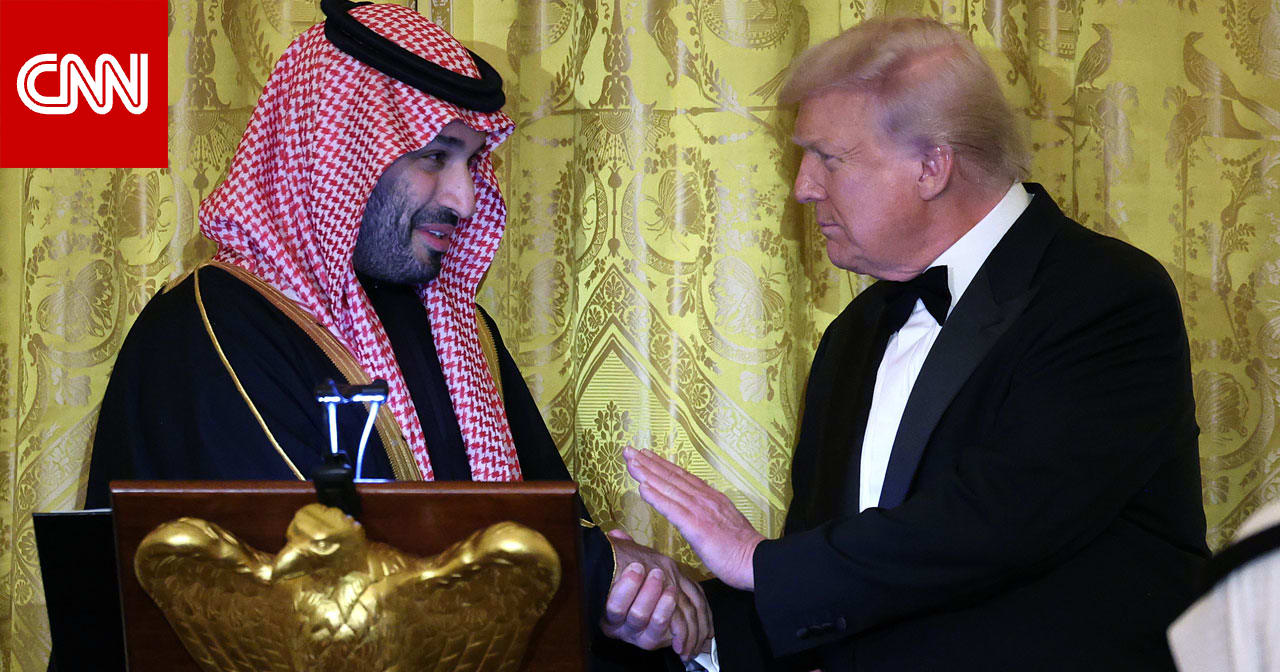
Analytical analysis by journalist Stephen Collinson for CNN
These developments come amid ongoing efforts to form new strategic and economic alliances in the Middle East region.
(CNN)-- The great American disrupter in the Middle East is back to embark on a new adventure.
The recent civil nuclear understanding signed with Saudi Arabia on Wednesday reflects President Donald Trump's accustomed approach to governing.
First of all, it's a 'deal' — that famous commercial formula that forms the core of Trump's foreign policy, indeed the axis of his entire life.
This agreement may end up embodying Trump's willingness to bypass international protocols and norms that have been the pillars of the US-led world order.
By introducing a new element of instability into an explosive region, Trump shows his penchant for major geopolitical risk, even as his previous adventure concerning Iran appears to be spinning out of control.
It is Trump's style par excellence: whether he seeks to reshape the Middle East or renovate the White House, he acts without prior knowledge of what will happen later once things settle and outcomes become clear.
This agreement — worth billions of dollars and spanning thirty years — is likely to help the kingdom build uranium enrichment capabilities. The US administration considers this agreement a gain on several fronts:
As an agreement that meets the highest nonproliferation standards.
As a huge boost to the US nuclear industry.
As a strengthening of ties with a vital ally.
Washington has been paving the way for a civil nuclear agreement with the Saudis for at least a decade, although the Biden administration appeared closer to demanding stricter terms. Had the US not reached this agreement, competitors — such as China — would have rushed to seize this deal with the kingdom, giving them a geopolitical foothold of their own.
In remarks to Fox Business on Wednesday, Energy Secretary Chris Wright confirmed that 'the Middle East in President Trump's agenda is centered on trade, not conflict.'
But critics — including many in Israel — fear that this agreement could ultimately enable Saudi Arabia to enrich uranium to purities high enough for a nuclear bomb, potentially sparking a regional arms race. Riyadh insists it will not seek a nuclear weapon unless Iran does so; however, any step in that direction could prompt countries like Egypt or Turkey to follow suit.
The US-Saudi agreement was concluded under a US law that allows the transfer of US nuclear technology while preventing nuclear weapons proliferation. The Energy Department announced Wednesday that the agreement includes a bilateral safeguards arrangement; which appeared to confirm reports that Saudi Arabia may not be required to join the International Atomic Energy Agency's 'Additional Protocol,' which imposes stricter and more intrusive monitoring and inspection measures. This could set a precedent allowing other powers to bypass international restrictions as they seek their own nuclear agreements — possibly with US adversaries — and empty nuclear safeguards of their content.
In this context, Kelsey Davenport, director of nonproliferation policy at the Arms Control Association, said: 'The agreement itself was reckless and irresponsible, but its broader implications could last for years to come.'
John Erath, senior policy director at the Center for Arms Control and Nonproliferation, said the absence of standard IAEA protocols — which were included in a recent US civil nuclear agreement with the United Arab Emirates — could be a 'very big problem.' He told CNN's Jim Sciutto that these standards are necessary to ensure 'that Saudi Arabia does not engage in enrichment activities that could lead to nuclear weapons capabilities.'
The agreement with Saudi Arabia adds a new state of uncertainty to the region amid the escalating war with Iran
The timing of the agreement also raises questions; it coincides with President Trump's latest escalation steps in the war against Iran, a war he justifies by the need to prevent Tehran from acquiring a nuclear bomb. The US administration hopes the agreement will tip the balance of power further in favor of the United States by strengthening ties with Saudi Arabia.
However, this agreement — by implying that US allies have the right to enrich uranium while its enemies are denied that right — could place enormous pressure on international nonproliferation agreements and push Iran to seek new partners.
The task of negotiating a nuclear deal with Iran was already fraught with risks. The US administration may have made it more difficult by approving an agreement with the Saudis that spans years to come, because Iran will inevitably demand similar enrichment privileges.
The Saudi agreement is not the first time Trump has taken a risk in the Middle East without being able to understand its implications in the years ahead.
His tendency to abandon established norms, disregard international agreements, and follow a destabilizing approach often seems like an end in itself.
The president also appears to take pride in doing the exact opposite of his predecessors.
Most recent presidential administrations sought to avoid war with Iran, while Trump tore up the international agreement that constrained its nuclear program, assassinated Quds Force commander (responsible for national security) Qasem Soleimani during his first term, bombed its nuclear facilities last year, and then launched a full-scale war against the Islamic Republic in February.
Recent administrations also concluded that the best way to ensure Israel's security lies in pushing for a two-state solution with the Palestinians, but Trump gave Israelis the room to eliminate that ambition through hawkish policies in the Gaza Strip and West Bank.
Trump pledged this year to revoke the US designation of Syria as a state sponsor of terrorism — a designation first imposed in 1979 — relying on his friendship with the country's new president, Ahmad al-Shara, who previously led a group affiliated with al-Qaeda. Critics said Trump should have used the change in designation to press for political, human rights, and counterterrorism reforms.
Trump also broke traditional molds in dealing with Saudi Arabia; American presidents have always handled the kingdom and other Gulf states with extreme caution and precision (in a delicate diplomatic balance), as they are vital US allies yet pursue repressive policies contrary to democratic values. In contrast, Trump openly admires strong Arab rulers and sees their wealthy, rising nations as a mine of business opportunities in which his family has significant economic interests.
Why does Trump's team see virtue in taking risks?
Original source: CNN Arabic



Comments (0)
Be the first to comment.