Afforestation is the best solution for summer heat.. A tree absorbs 150 kilograms of 'carbon' annually
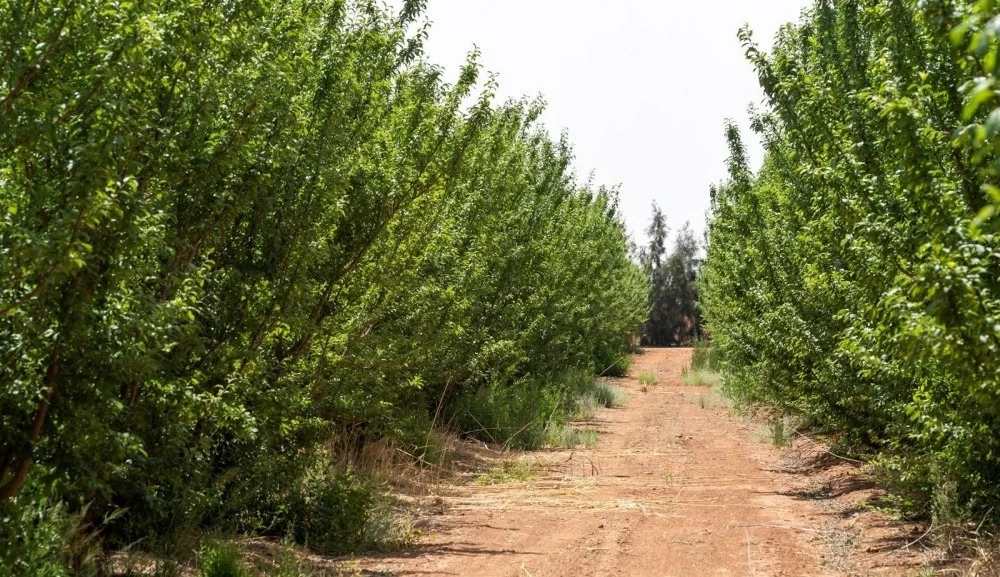
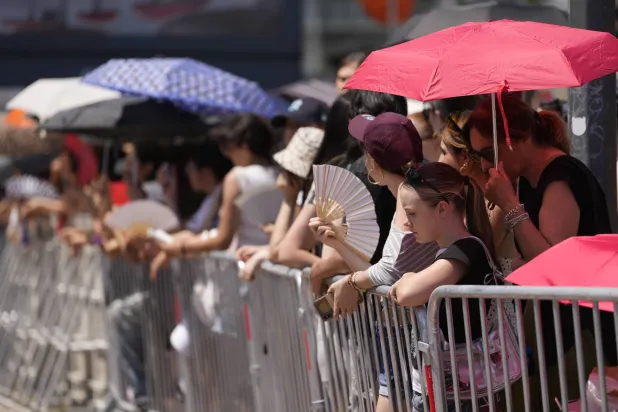
The Ministry of Environment, Water, and Agriculture confirmed that afforestation is one of the most prominent natural solutions to mitigate the effects of rising temperatures in summer, as it contributes to cooling the air, improving air quality, enhancing environmental sustainability, and raising the quality of life. It explained that trees help lower temperatures by providing shade, reducing heat absorption on sidewalks and surfaces, in addition to the transpiration process through which they release water vapor, helping to cool the surrounding air and improve conditions in cities, parks, and open spaces. A tree also absorbs on average about 150 kilograms of carbon dioxide annually.
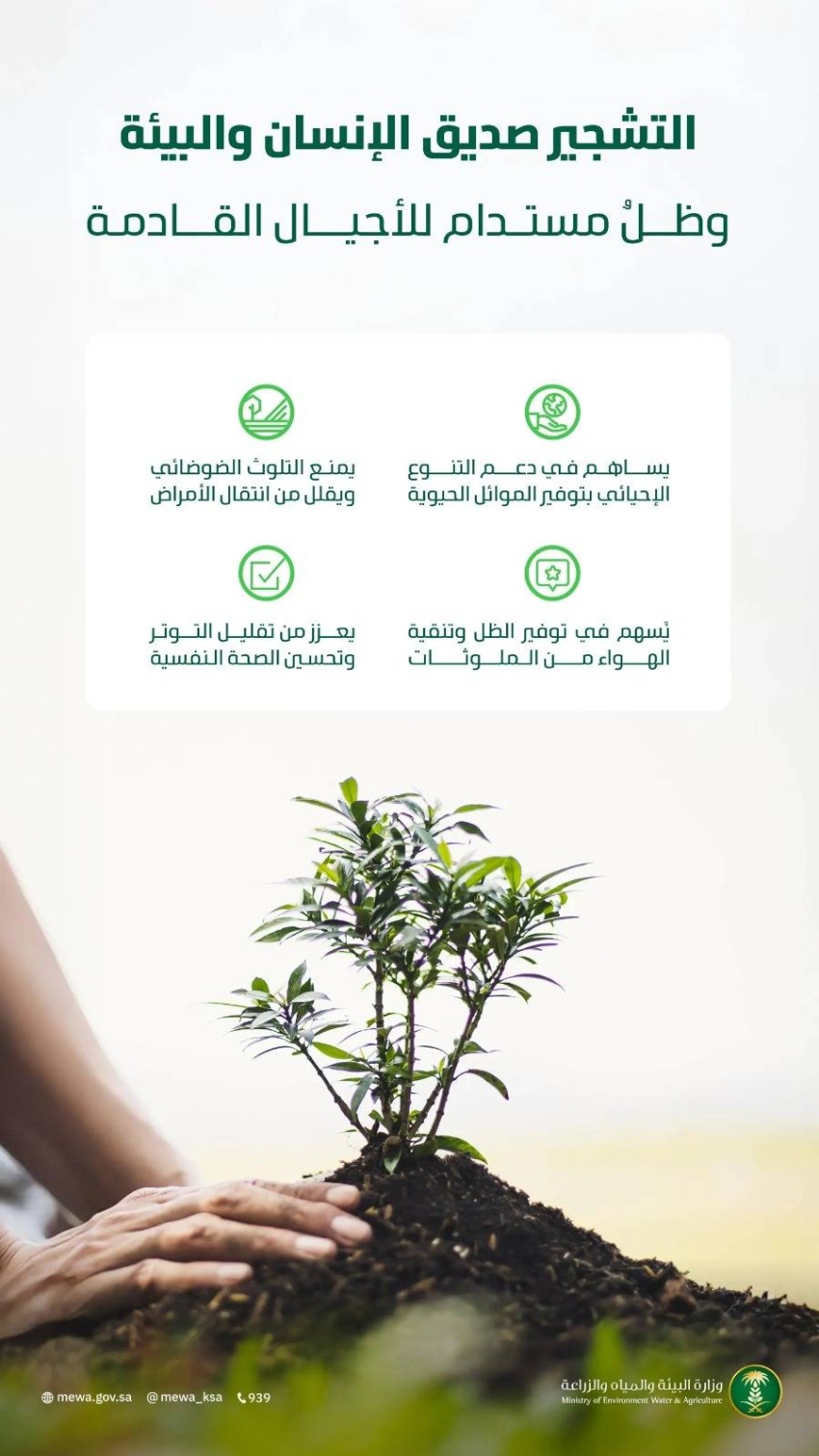
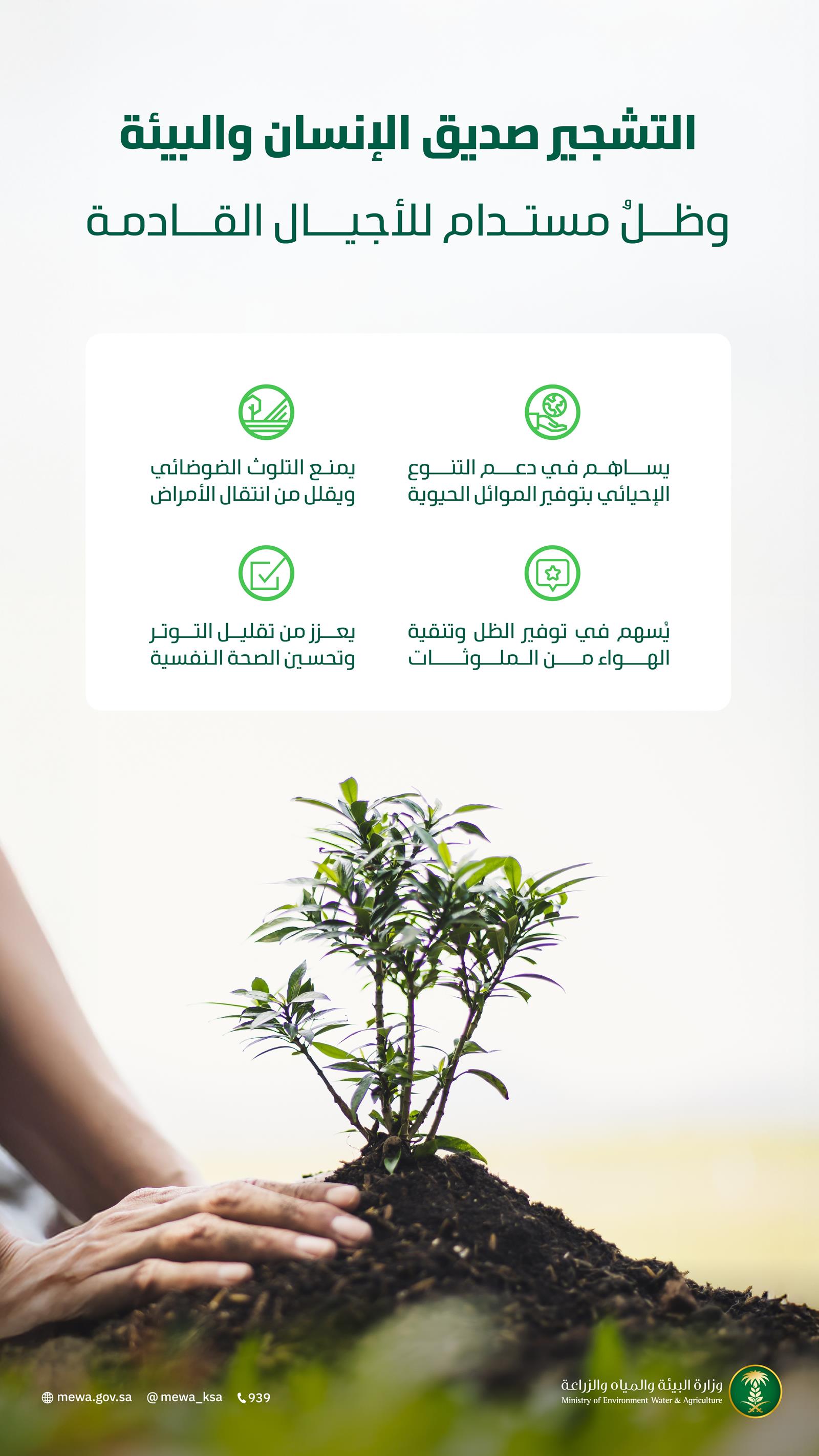
The Ministry of Environment added that the expansion of green spaces positively reflects on human health by reducing stress, improving mental health, purifying the air of pollutants, reducing noise pollution, and supporting rainwater management, in addition to enhancing biodiversity by providing habitats for living organisms and supporting natural pollinators.
The ministry called on community members to choose local trees as they are more adapted to the climatic conditions in the Kingdom and consume less water, which enhances the efficiency of natural resource use and increases the chances of success and sustainability of afforestation projects.
It also urged following sound agricultural practices during the summer, including irrigation at appropriate times, and using drip irrigation systems that reduce water loss through evaporation by up to 50% compared to traditional irrigation, in addition to using organic mulch around trees to maintain soil moisture, regulate its temperature, and limit the growth of harmful weeds.
The Ministry of Environment, Water, and Agriculture has confirmed that afforestation represents one of the most prominent natural solutions to mitigate the effects of rising temperatures in the summer, as it contributes to cooling the atmosphere, improving air quality, enhancing environmental sustainability, and raising the quality of life. It explained that trees help lower temperatures by providing shade and reducing heat absorption on pavements and surfaces, in addition to the transpiration process that releases water vapor, which helps cool the surrounding air and improve conditions in cities, parks, and open spaces. On average, a tree absorbs about 150 kilograms of carbon dioxide annually.
The Ministry of Environment added that the expansion of green spaces positively impacts human health by reducing stress, improving mental health, purifying the air from pollutants, reducing noise pollution, and supporting rainwater management, in addition to enhancing biodiversity by providing habitats for living organisms and supporting natural pollinators.
The ministry called on community members to choose local trees as they are more adapted to the climatic conditions in the Kingdom and consume less water, which enhances the efficiency of natural resource use and increases the chances of success and sustainability of afforestation projects.
It also urged the adoption of sound agricultural practices during the summer, including irrigating at appropriate times and using drip irrigation systems that reduce water loss through evaporation by up to 50% compared to traditional irrigation, in addition to using organic mulch around trees to maintain soil moisture, regulate temperature, and limit the growth of harmful weeds.
Original source: Okaz

Comments (0)
Be the first to comment.