'Al-Karr': A Traditional Tool Defying Time and Preserving the Profession of Palm Climbing
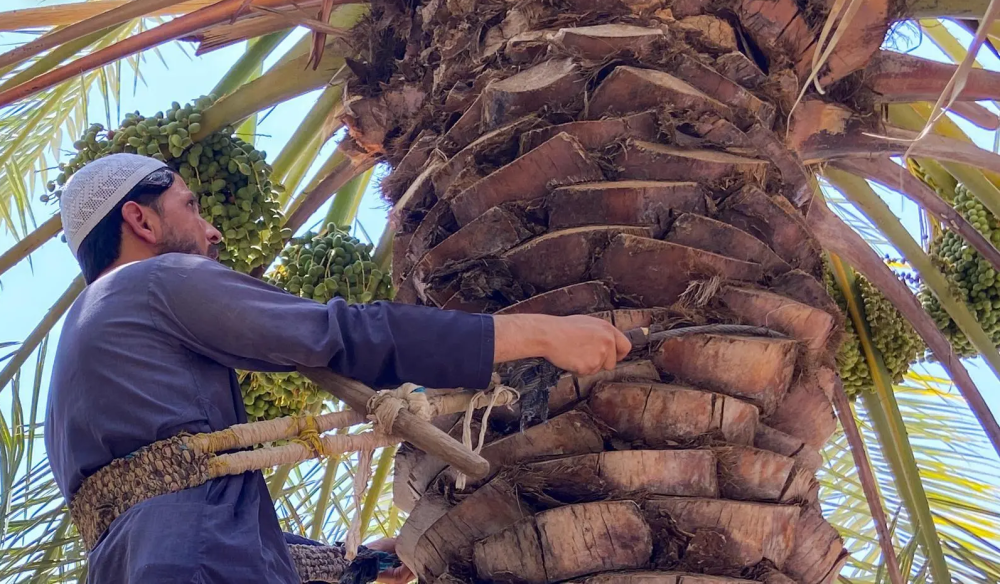
The traditional palm-climbing tool 'Al-Karr' remains vital in Saudi agriculture, enabling farmers to climb trees efficiently. It is part of Saudi heritage, used year-round for tasks like pollination and harvesting, and persists despite modern machinery due to its simplicity and low cost.
Among the traditional tools associated with palm cultivation in the Kingdom, the 'Al-Karr' tool stands out. It has enabled farmers to climb palm trees for decades, before the advent of modern means, and is still present in many farms due to its efficiency and speed in reaching the top of the palm tree and performing various agricultural operations.
'Al-Karr' represents a part of the Saudi agricultural heritage, associated with the profession of 'Al-Tale' or 'Al-Nakkal', the specialist in palm climbing, who possesses high skill acquired through practice and experience, performing precise tasks requiring physical strength and great balance, such as pollination, pruning, cleaning, stripping, and harvesting fresh dates and dried dates.
A Heritage Across Generations
In the Al-Qassim region, where palm farms stretch over vast areas, the sight of a climber carrying 'Al-Karr' and ascending palm trunks remains familiar during agricultural service and harvest seasons. It reflects the continuity of the agricultural heritage passed down through generations, combining experience, skill, and respect for the palm tree as a symbol of generosity and national identity.
Related News
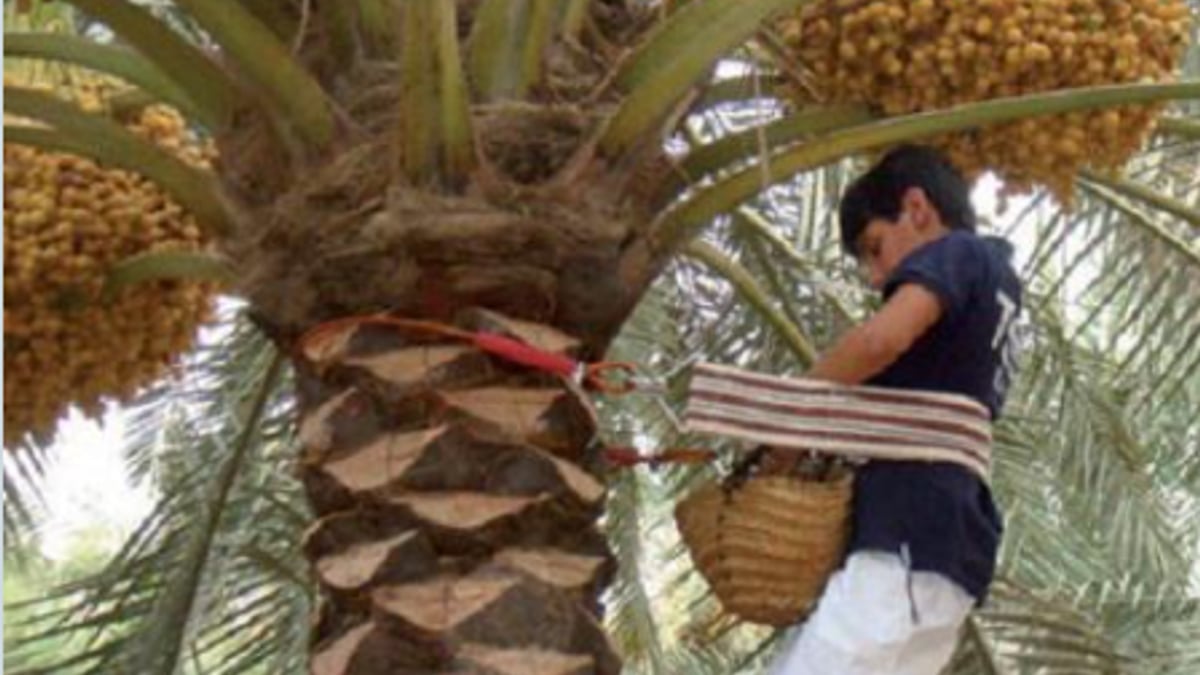
In its traditional form, 'Al-Karr' consists of a belt that wraps around the palm trunk and the climber's body, often made from braided palm fiber and strong ropes. In recent years, developments have included the use of metal wires, padded fabrics, and wear-resistant industrial materials, while maintaining the basic idea of securing the climber around the palm trunk and enabling safe ascent. The climbing method using 'Al-Karr' involves encircling the trunk with the belt, then gradually moving upward by pushing the feet against the trunk and moving the 'Karr' step by step until the climber reaches the top. This process requires complete coordination between hand and foot movements, as well as experience in estimating body balance and dealing with different sizes of palm trunks. The use of 'Al-Karr' is not limited to the date harvest season; it accompanies the palm tree throughout the year, used in pollination during spring, removing dry fronds, organizing and tying bunches, protecting fruits, and then harvesting fresh and dried dates in the harvest season, making it an essential tool in the date production cycle.
Manufacturing 'Al-Karr'
The manufacturing of 'Al-Karr' has become a hereditary handicraft, with craftsmen competing in its perfection by selecting appropriate materials, quality of weaving, and durability, while considering user comfort and safety factors, resulting in a tool that combines authenticity and development. Farmer Abdulrahman Al-Mohsen affirmed that 'Al-Karr' has over the years contributed to the continuity of the palm climbing profession, which is considered one of the most precise agricultural professions. A professional climber can accomplish tasks on a large number of palm trees in a single day thanks to his skill and speed in using the tool. He pointed out that despite the introduction of some mechanical means and modern cranes in large farms, 'Al-Karr' still maintains its presence, especially in traditional farms and sites difficult for equipment to access. Many specialists prefer it for its lightness, ease of use, and low cost compared to other means. 'Al-Karr' embodies the story of a simple tool in its components but great in its impact; it has served millions of palm trees for decades and preserved an ancient profession still alive in the memory of farmers, remaining a testament to the authenticity of Saudi agricultural crafts and the close relationship between humans and the palm tree, which has historically been a source of livelihood and food.
Original source: Al-Yaum



Comments (0)
Be the first to comment.