Al-Shabibiyya Mosque: A Landmark That Encapsulates the History of Al-Bada'i
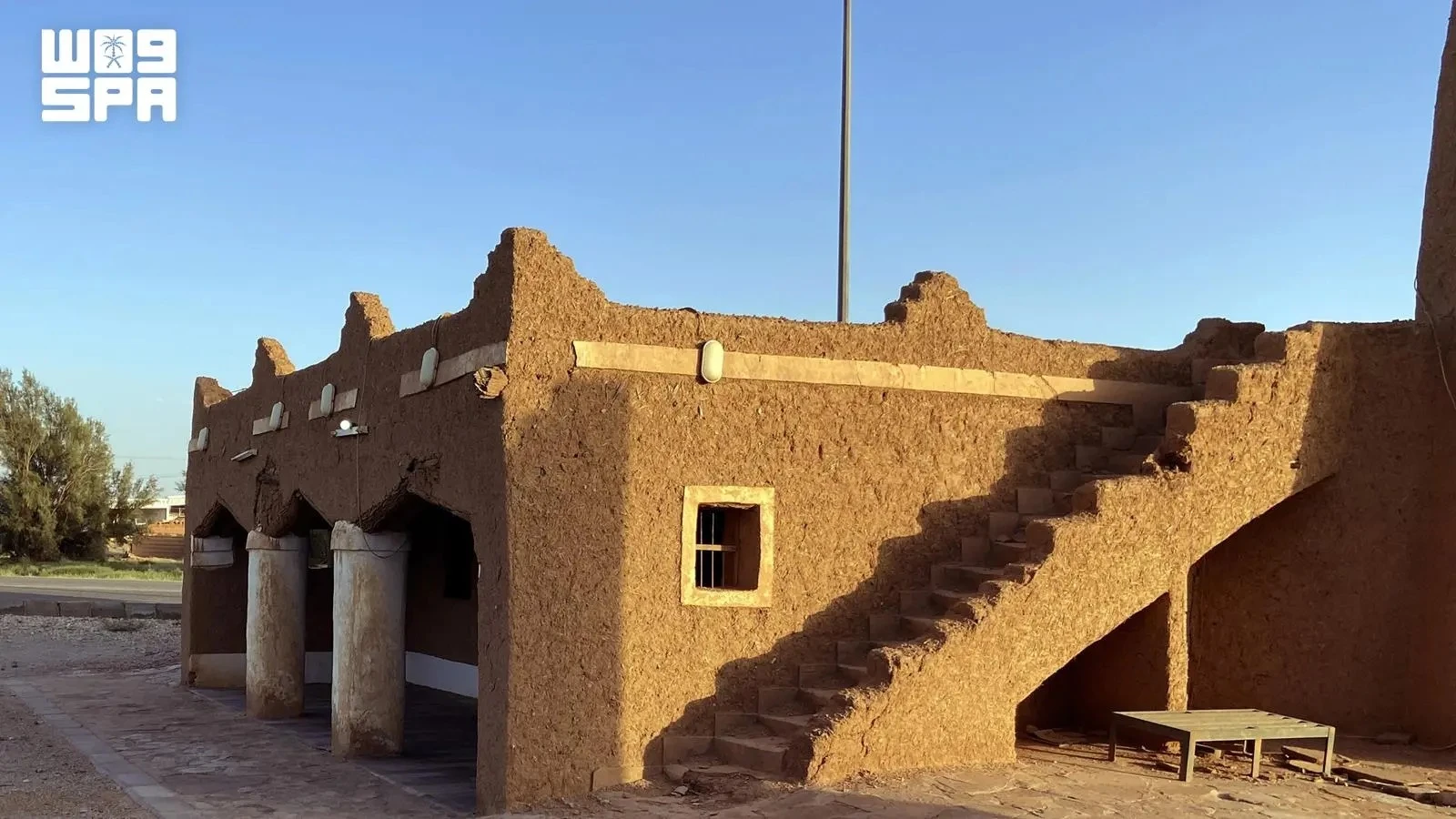
يعود بناء المسجد إلى عام 1353هـ (1934م)، ويتميز بتصميمه النجدي التقليدي، ويُعد من أبرز المعالم التراثية في منطقة القصيم، إذ حافظ على طابعه الأصيل رغم أعمال الترميم.
Al-Shabibiyya Mosque is classified as one of the most prominent historical mosques in Al-Bada'i Governorate, Al-Qassim Region, embodying an important aspect of traditional Najdi architecture linked to the region's social history. The mosque holds heritage significance as one of the ancient landmarks that still stands and preserves its authentic architectural character, making it a destination for those interested in architectural heritage and local history.
The mosque is located in the northeastern part of Al-Bada'i Governorate in Al-Qassim, adjacent to the main road linking Al-Bada'i and Unayzah, in an area considered among the old districts with historical depth in the governorate. It was established in 1353 AH (1934 AD) and is regarded as one of the ancient historical mosques in the region. Some local sources indicate that the Al-Shabibiyya site itself dates back to a period older than the current mosque's construction, as the area is a known historical location in Al-Bada'i.
The mosque represents a clear example of the traditional Najdi style prevalent in the central region of the Kingdom, characterized by simplicity and practicality in design—a known feature of old Najdi architecture. The building lacks extensive decorations except for some simple carvings and embellishments on the main door. The mosque consists of a rectangular prayer hall built from mud, tamarisk wood, and palm fronds, a front portico supported by circular columns, and a conical minaret approximately two stories high.
The minaret was built adjacent to the mosque from the outside, not within the main building block. The mosque's design reflects harmony with the local environment and traditional building materials used in ancient Najdi architecture. The mosque underwent restoration work in 1429 AH (2008 AD), in collaboration between residents and the Al-Bada'i Governorate Municipality, aiming to preserve the historical building and rehabilitate it while maintaining its heritage and architectural identity. These efforts helped keep the mosque among the prominent heritage landmarks in the region.
The mosque forms part of the historical identity of Al-Bada'i Governorate, embodying the lifestyle and construction methods in the region during the first half of the 14th century AH. It stands as a witness to the development of traditional religious architecture in Najd and attracts interest from those engaged in architectural heritage and cultural tourism within the Kingdom.
Original source: Akhbaar24






Comments (0)
Be the first to comment.