(Al-Tarf) Al-Suwaydirah .. A Town of Inscriptions and Antiquities - Dr. Tunaydib Al-Faidi

The Medina region contains many archaeological sites spanning multiple time periods, from prehistoric times to pre-Islamic eras, and then Islamic times. Among these sites is Al-Tarf (Al-Suwaydirah), which is rich in ancient antiquities, featuring animal drawings and Islamic inscriptions carved on rock faces dating back to between the first and third centuries AH / seventh and ninth centuries AD. Al-Tarf (Al-Suwaydirah) is a small town that, until a few decades ago, was a sleepy village on a branch of the pilgrimage routes, especially those heading to Medina. It is located about 60 to 70 km northeast of Medina. Its growth and development were aided by its location on the Qassim-Medina road (the old road), which gave it a new leap toward modernization. One historian says: 'Al-Suwaydirah: the feminine diminutive of al-sadir (the one going out) as opposed to al-warid (the one coming in), a flourishing town located on Wadi Najaz, sometimes called Wadi Al-Suwaydirah, on the road from Medina to Qassim. Its floodwater flows to Al-Mukhalit then to Sadd al-Aqul. It is a narrow passage between mountains; you cannot see the village until you are very close to it. It was known as Al-Tarf. It began to revive and progress after the Qassim road was paved and passed through it, and its valley has water and agriculture that have improved.'
It was named after the well located there, which is still known today. We do not know exactly when the name Al-Suwaydirah appeared, but Al-Samhoudi mentioned it in his discussion of the construction of the Prophet's Mosque by Sultan Al-Ashraf Qaitbay in 889 AH / 1484 AD, following the fire that struck the mosque in Ramadan 886 AH / 1505 AD, indicating that the name Al-Suwaydirah was known in the ninth century AH (fifteenth century AD). Al-Samhoudi said: 'The Sultan ordered the preparation of tools, supplies, and about a hundred craftsmen including builders, carpenters, sawyers, painters, plasterers, sculptors, blacksmiths, marble workers, and others, as well as many donkeys and camels. Then he prepared more than two hundred camels, a hundred donkeys, and over three hundred craftsmen from the aforementioned trades, along with porters, whitewashers, plumbers, and plasterers, and they were given some wages before their journey. The supplies of the faithful were continuous, rarely interrupted by land or sea.' He also said: 'This construction was accompanied by indescribable good fortune and ease, and God facilitated for them construction materials that we had not thought possible in the region of the noble city, especially doom palm wood. They cut wood from the place known as Al-Shaqrah, Al-Suwaydirah, Al-Far', and others in quantities that only God can count, as well as samr wood.'
Al-Tarf (Al-Suwaydirah) is also mentioned in the blessed biography, when the Messenger of God, peace be upon him, sent a military expedition to Al-Tarf under the command of Zaid bin Haritha in Jumada al-Akhirah of the year 6 AH, called the Expedition of Zaid bin Haritha to Banu Tha'labah (Al-Tarf). Zaid went to Banu Tha'labah with fifteen men, and the Bedouins fled, fearing that the Messenger of God had marched against them. He captured twenty of their camels without any resistance and was absent for four nights. Their slogan was 'Amat, Amat.'
The site of Al-Suwaydirah was a well-known station on the pilgrimage route branching from the Kufa-Mecca road (Darb Zubaydah), which is the Naqrah road (Ma'din al-Naqrah) to Medina. Its location was after Batn Nakhl (Al-Hinakiyyah) then Medina; Al-Tarf was after Al-Hinakiyyah. Ibn Rustah placed Al-Tarf 22 miles from Batn Nakhl (Al-Hinakiyyah), saying about Al-Tarf: 'It is a station that becomes populated during the pilgrimage season, and it has rainwater from pools.' Ibn Khurdadhbih referred to the same place, saying: 'Then to Al-Tarf, which has rainwater, twenty-two miles.' Yaqut quotes Al-Waqidi: 'Al-Tarf is a water source near Al-Marqa, below the palm trees, and it is thirty-six miles from Medina.' Al-Hamdani mentions: 'From Batn al-Nakhl to Al-Tarf is twenty miles.' Arram mentions: 'Then Al-Tarf for those heading to Medina is flanked by three mountains: one of them is Zulm, a black mountain that covers nothing and grows nothing, and Hazm Bani Awal all belong to Ghatafan.' Al-Firuzabadi says: 'Batn Nakhl, plural of Nakhlah: a village near Medina on the Basra road; between them is Al-Tarf on the road, and it is after Abraq al-Azzaf for the one heading to Medina.' Al-Asadi said: 'From Batn Nakhl to Al-Tarf is twenty miles, and from Al-Tarf to Medina is twenty-five miles.' Al-Tarf was mentioned in the rajz of Ahmad bin Amr among the places where Umm Ja'far (Zubaydah, wife of Caliph Harun al-Rashid) stayed: Then we set out, and our stay was at Al-Tarf, Departing, praising the departure, We travel through the night when it is half, Through every valley and rocks we traverse, Their traveler was on the brink of destruction, Then the water became sweet and drinkable, By the blessing of the one of generosity among us, and honor, She whose fathers are the best of predecessors. Al-Harbi mentions that Al-Tarf was one of the places where the pilgrims of Basra stayed in his time, and that they would leave from Batn al-Rummah and reach Al-Naqrah in the morning, meeting the people of Kufa there. Those who took the main road to Mecca would divert to Medina via two routes: 'One via Al-Usaylah and its environs, and the other via Al-Muhdath and Al-Abraqiyyah, then they would meet at Batn Nakhl, then Al-Tarf, then Medina. Whoever lost the way beyond Qatan would take the right-hand path.' He quotes Al-Asadi in describing the Fayd road: 'From Batn Nakhl to Al-Tarf is twenty miles, and from Al-Tarf to Medina is twenty-five miles.' Al-Asadi also said in describing the Iraq road: it is twenty-five miles from Medina and twenty miles from Batn Nakhl, and he mentioned wells and pools there, saying: 'The upper part of Al-Tarf has the well of Abu Rukanah, ten miles from Medina.'
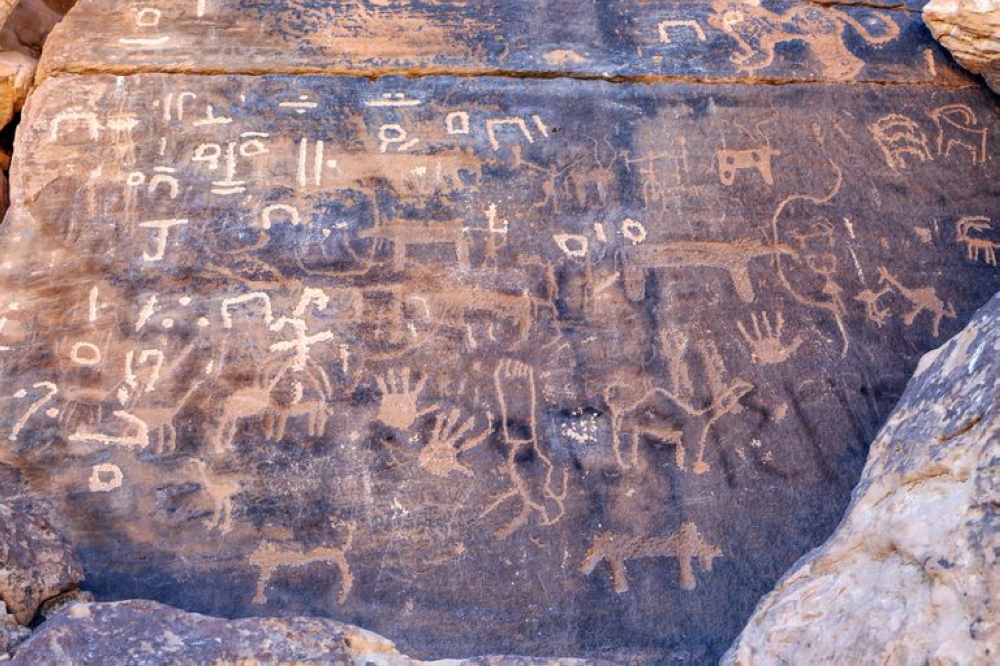
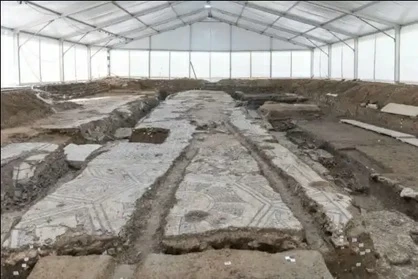
Al-Suwaydirah is distinguished by a number of antiquities, some of which are extremely ancient, dating back to seven thousand years BC. The antiquities are spread along the banks of its valley, which descends from the south of Harrat Khaybar, passing through Al-Suwaydirah, then descending eastward to the harrah located east of Al-Tarf (Al-Suwaydirah), merging with Wadi Al-Shaqrah (this valley is mentioned in the biography of the Messenger of God, peace be upon him, in the context of the Ghazwah of Dhat al-Riqa'), and some other valleys, then heading southwest and flowing into the lowlands of Hadhuda'. In ancient times, water flowed continuously in this valley, making it suitable for habitation due to its abundant water, fertile land, and location on ancient internal trade caravan routes heading to Medina and the rest of central Arabia, passing through Al-Tarf. Among the ancient routes are caravan routes passing through famous historical sites in Arabia such as the historical village of Qaryat al-Faw, Tayma, then the Levant, and the Kufa-Mecca road known as Darb Zubaydah, as evidenced by Islamic antiquities. There are also inscriptions with clear features, written in clear handwriting and in a style reflecting the faith of their authors; some are traditional supplications seeking repentance and forgiveness from God Almighty, indicating that they were written in the Islamic era. The presence of these inscriptions indicates that the site of Al-Tarf (Al-Suwaydirah) was an area attractive to human activity due to its rich nature, abundant water, and vegetation.
Islam There are rock drawings dating back to an extremely ancient historical period, where the researcher finds large images of lions on rock blocks, as well as ibexes, birds, ostriches, camels, horses, mules, goats, and dogs. Some of these rock drawings date back to the Stone Age.
Original source: Al-Jazirah




Comments (0)
Be the first to comment.