Failure of planting 10 trees in Al-Ahsa Oasis
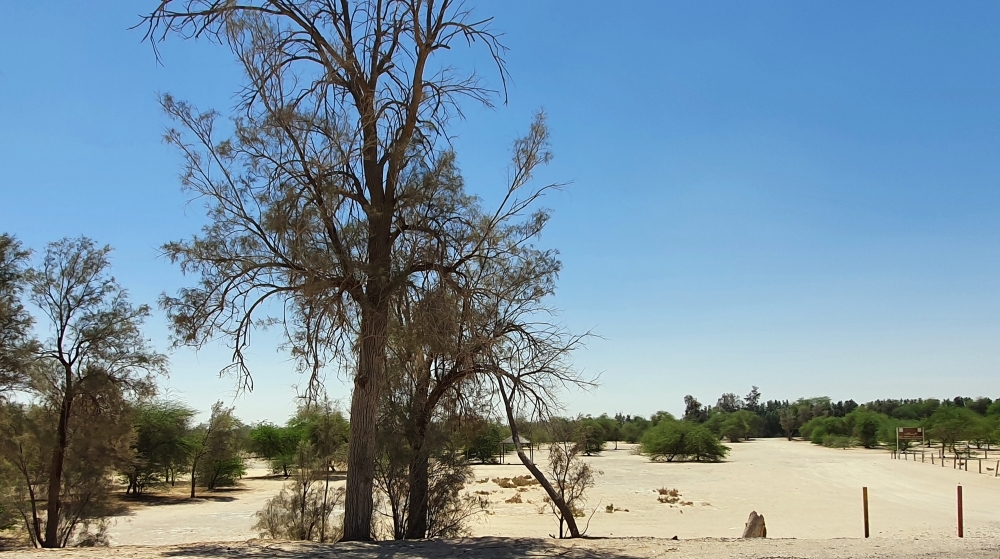
With increasing demand for tree planting and beautification of homes and farms in Al-Ahsa Oasis, specialists and farmers warn that choosing inappropriate species for the local environment may turn trees from an aesthetic element into a source of problems, due to their high water consumption, the impact of their roots on infrastructure, or their weak ability to withstand climatic conditions, in addition to the increase in pests and insects or their spread in ways that are difficult to control. Infrastructure Environmental activist Ahmed Bukhumsin affirmed that describing some trees as unsuitable does not mean they lack beauty or benefit, but rather relates to their suitability for Al-Ahsa's conditions and their ability to achieve sustainability. He explained that tree evaluation depends on their ability to withstand heat and drought, their environmental value, their safety on infrastructure, their maintenance needs, and their long-term success in the local environment. He pointed out that Cassia glauca is among the trees with weak tolerance to heat and drought, especially in exposed sites subject to direct sunlight, which reduces their chances of success in Al-Ahsa. He noted that Conocarpus is at the forefront of trees that may pose a risk to infrastructure, as its roots extend long distances in search of water and may damage fences, underground tanks, and some service networks when planted in inappropriate places. Spread ability He added that Washingtonia palm does not provide environmental value commensurate with its wide spread, as it does not provide sufficient shade compared to other species, and its benefit to wildlife is limited and it does not have high nutritional or environmental value. He stated that Eucalyptus suffers from weak resistance to a number of pests, which may lead to rapid and sudden deterioration of trees, while the problem of Indian Jasmine lies in its misuse, as some rely on it as a main tree despite it being originally a small tree that often does not exceed four or five meters in height. He pointed out that Leucaena has a great ability to spread due to its abundant seed production and ease of germination, which may lead to its transfer to neighboring farms and homes and make controlling it a difficult task over time. Environmental sustainability He indicated that the Royal Poinciana (red) does not tolerate heat and drought sufficiently, and appears at its best only during limited periods of the year, while cypress is not suitable for the high temperatures that characterize Al-Ahsa. He explained that mesquite is one of the most controversial trees, classified among invasive species that compete with local trees and affect their spread, while jacaranda suffers from limited heat tolerance, causing it to spend most of the year in a state far below its ideal appearance in more temperate environments. Specialists stressed that the success of afforestation projects is not only related to the beauty of the tree, but to its compatibility with the local climate and achieving environmental sustainability, contributing to the preservation of water resources, protecting infrastructure, and enhancing the appropriate vegetation cover for Al-Ahsa's environment.
< Previous PageNext Page >
Original source: Al-Watan

Comments (0)
Be the first to comment.