Najdi Doors: A Craft That Preserves Heritage Identity in Hail's Popular Market
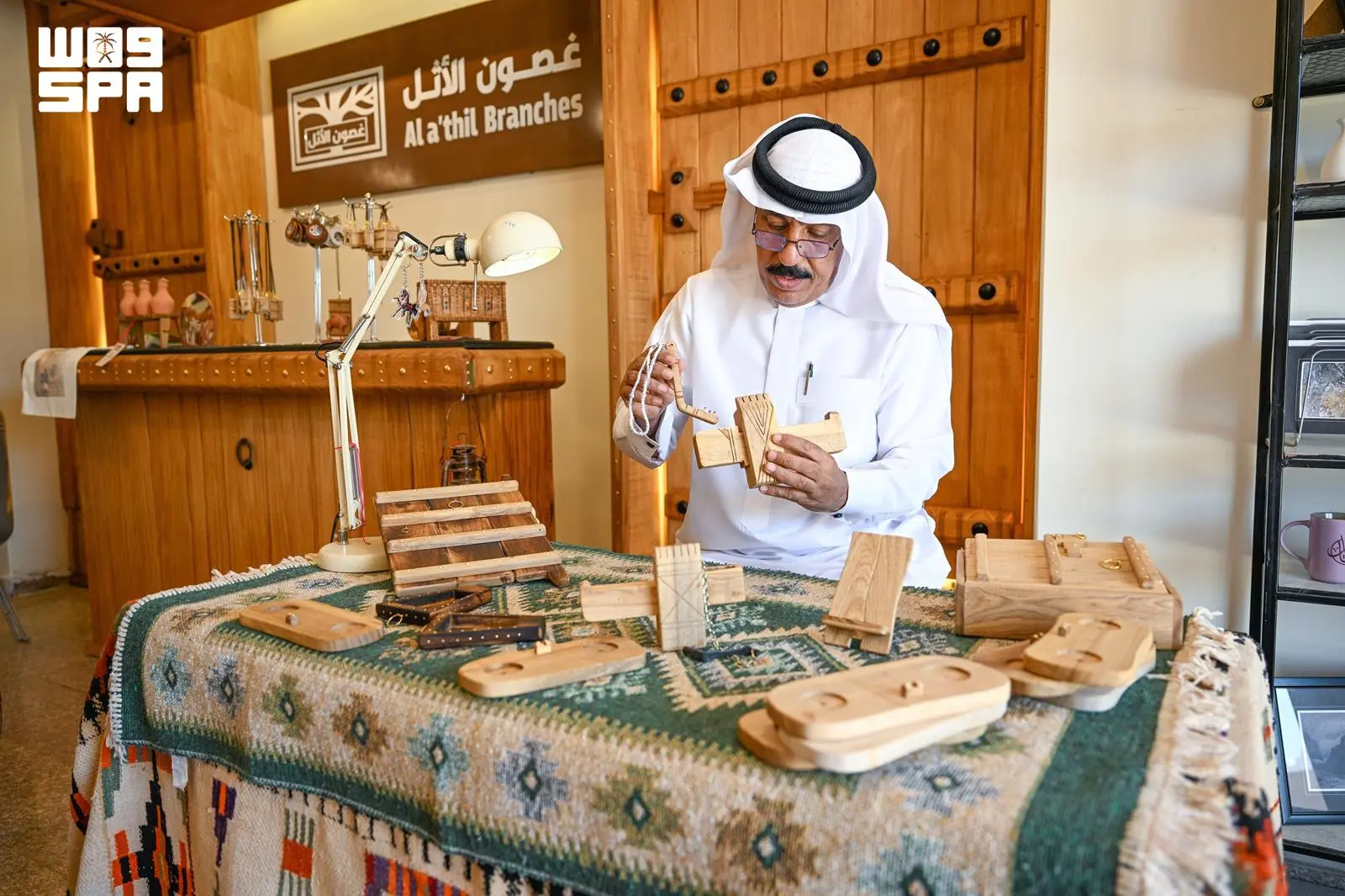
In a corner of Hail's popular market, the traditional architecture of the Hail region is embodied through Najdi wooden doors (crafted in the Haili style) and heritage models skillfully made by the artist and craft trainer Abdullah Al-Khazam, who has dedicated many years to reviving traditional crafts, preserving their authentic details, and passing on his expertise to his sons and daughters—a continuity that reflects the sustainability of the handicraft heritage and enhances its presence among new generations, offering market visitors an experience that evokes the history of old houses and markets in the region. Al-Khazam relies on tamarisk wood and other local woods, which are cut twice a year to maintain their quality and durability, before undergoing stages of shaping, measuring, and hand carving, using traditional tools and precise techniques in engraving, drawing, and coloring, so that his works preserve the visual identity of traditional architecture, known for its durability, precision, and beauty of decoration. Al-Khazam explained that among his works is the Haili door, distinguished by its sturdy construction based on four main wooden beams that give it strength and stability, adorned with rows of iron nails with round heads, along with geometric decorations and hand-carved patterns varying between triangles, squares, and symmetrical lines, while in the center is the traditional wooden lock known as 'al-dabba,' and an iron handle that embodies the authentic character of old doors. Najdi doors are characterized by the beauty of their design and details, often made from three wooden beams, dominated by hand-carved decorations and earthy colors inspired by the local environment, in harmony that combines aesthetic value and practical function, making them one of the most prominent features of traditional Najdi architecture. Al-Khazam's work is not limited to making heritage doors but extends to creating wooden models simulating details of daily life in the past, including the water wheel used to extract water from wells, the shaddad placed on camels' backs, traditional wooden locks 'al-dabba,' in addition to miniature models of mud houses and heritage landmarks, contributing to documenting the cultural heritage and highlighting the social and economic aspects that characterized the region over decades. He stated that he demonstrates the stages of making his works to visitors of all ages, introducing them to the types of wood used and traditional carving and decoration methods, in an interactive experience that enhances awareness of the value of handicrafts as a component of national identity and helps transfer craft expertise and maintain its sustainability. Al-Khazam's pavilion in Hail's popular market is a destination for those interested in heritage and handicrafts, offering works that combine authenticity and creativity, highlighting the architectural and cultural legacy of the Hail region, and introducing visitors to the arts of Haili and Najdi door making, which still retain their status as one of the most prominent symbols of traditional architecture in the Kingdom, a living witness to the authenticity of Saudi cultural heritage and its continued presence in the contemporary craft scene.
Original source: Al-Mowaten



Comments (0)
Be the first to comment.